Kink & Ink
Kink Affirming Consultation
A working-studio guide to what a kink-affirming tattoo consultation actually contains — opt-in photo permission in writi
Book a consultationIs this for you?
Five reasons clients book a kink-affirming consult.
Not every consultation needs the framing this page describes. Five situations where it does — and where the concrete practices below earn their keep.
You want specific without being explained-to.
You know the symbol. You know the meaning. You want to walk in and have the artist treat the piece like any other custom commission — not as a curiosity, not as a confession. The consult is a craft conversation. The reading you brought is the reading we work from.
You're weighing what to disclose.
There's a real question of how much context the artist needs to render the piece accurately versus how much you want a stranger to know about your private life. Working answer: disclose what the design needs — the symbol, what placement means to you, what visibility you want. The rest stays yours.
You want a vetted studio, not a coin flip.
You don't want to gamble on a shop that might shame, lecture, or out you mid-stencil. Vetting signal: published consultation language that names kink work as in-scope, healed-portfolio examples on request, and an opt-in photo policy stated in writing — not a vague 'open-minded' line on the homepage.
You're commissioning for a partner or community.
You want the artist to handle community conventions accurately — flag-stripe order, knot style, collar form, hanky-code references — without you having to teach them mid-consult. Asking what an artist already knows saves an hour and a bad first draft.
You're concerned about photos and discretion.
You want to know upfront how the studio handles portfolio shots, social posts, and walk-in foot traffic before the stencil touches your skin. The default at Apollo for kink-coded work is opt-in for photography — in writing, per-piece, revocable. Get that in the booking conversation, not after.
A kink-affirming consultation isn't a confession. It's a craft conversation that happens to involve a subject the studio refuses to flinch at.
The reading you brought is the reading we work from. We don't reframe it into something more palatable.
You disclose what the design needs. The rest is yours.
12 design directions
The framings clients arrive with.
These are the twelve framings consultations typically settle into within the first ten minutes. Each one carries a different design problem — sizing, placement, audience, pacing — and the consult work follows from which framing the client brought.
The symbol you already know
Codified mark, no subject debate
Triskelion, lock-and-key, leather-flag stripe, infinity-heart. The client arrives with the symbol settled. The consult work is sizing, line weight, placement, and aging — not whether the symbol is appropriate. The artist confirms convention details (orientation, stripe order, knot type) and moves to craft.
The personal glyph
Non-codified, invented or inherited
A mark the client invented or inherited from a single relationship or community circle. The consult work is making it readable to the client across decades without locking it into a single chapter. Often paired with a small ornamental frame so the glyph reads as composition rather than as inventory.
The memorial variant
Tribute to a partner, mentor, or community elder
Treated with the same respect as any memorial piece. Sources, dates, and names discussed privately. Apollo's working position: dates close doors. Symbols that read 'this chapter of me' age better than a partner's initials in serif.
The hidden reading
Public read first, community read second
Imagery that reads as botanical, geometric, or ornamental in public, and as something specific inside the community. The consult calibrates how hidden the reading should be — fully embedded so only the wearer notices, or hinted so a fluent viewer might catch it.
The reclamation mark
Survivor-affirming, client-led pacing
A piece the client is taking back from trauma, shame, or a coercive relationship. Pace is client-led; the artist's job is craft calibration, not therapeutic processing. If the piece is connected to recovery, your therapist is the right person to talk to about timing — we'll make the room work however you need it to.
The couple or triad piece
Multi-person matching work
Each person consults separately first. Group conversation only with every party's explicit yes. Power imbalance lives in tattoo decisions like it does anywhere; we keep each person's reading clean and don't let one voice answer for another.
The community-convention piece
Iconography with codified meaning
Pieces where convention matters — flag-stripe order, hanky-code colors, collar style, knot pattern. The artist confirms whether the client already knows the convention or wants help with it. If we don't have the fluency, we say so and route to a peer studio that does.
The 'I don't want to explain' piece
Once meaning is established, craft only
Some clients have explained themselves enough in their lives. The consult respects that. Once the meaning is on the table, the artist's questions stay craft-focused — placement, scale, line weight, aging — and don't loop back to the why.
The anniversary or milestone
Calendar-bound commemorative
Years in a dynamic, training milestone, community-event year. Calendar-bound by intent. Designed so the piece ages by being legible without the date carrying the whole weight — symbols outlast specific years better than the years outlast the symbols.
The aesthetic lift, not the identity
Visual lineage without claiming membership
Client wants leather-era visual language, Tom-of-Finland line economy, or hanky-code-adjacent iconography for the look — without claiming community identity. Honest framing. The artist confirms intent and may flag conventions where the rendering would otherwise read as appropriation.
The cover-up with context
Covering ink from an earlier dynamic
Covering work from a relationship or chapter that ended badly. The consult handles the emotional weight before the design call. Client paces. Larger replacement work is multi-session by default; we plan the cover with the long view, not the impulse.
The first public mark
Coming-out commemorative
Client coming out to themselves, to a partner, to community. Pace is gentle. Placement options discussed including discreet first — the piece doesn't have to broadcast on day one to mean what it means. Visibility is one axis the client controls.
Six visual approaches
The category drives the consult conversation.
Six approaches cover almost every kink-coded commission. Picking the approach early narrows the rest of the consult — placement options, scale floor, aging behavior, and which artists on our floor are the strongest match.
Fine line
Quiet, modern, urban
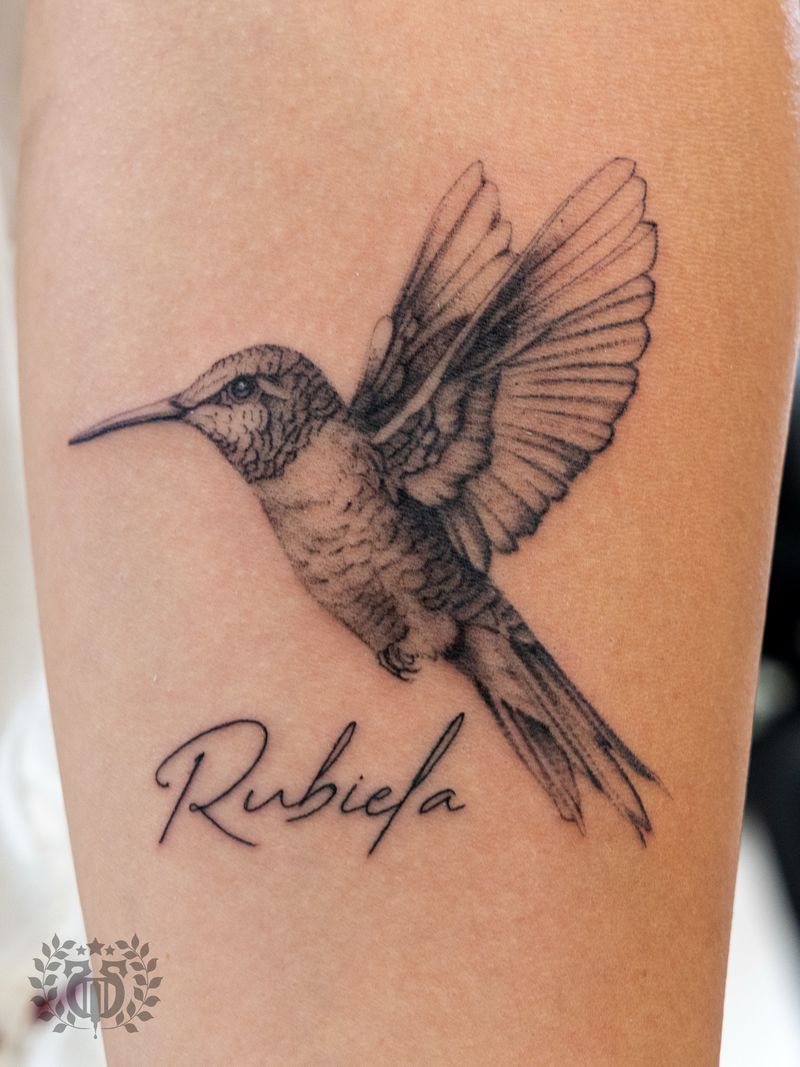
Hairline single-needle outline. Lets symbol clarity carry the piece without ornament. The default approach for clients who want the symbol present but not loud. Holds well on stable-skin placements (forearm, ribcage, sternum); softens faster on high-flex zones.
Blackwork
Solid weight, ages serious
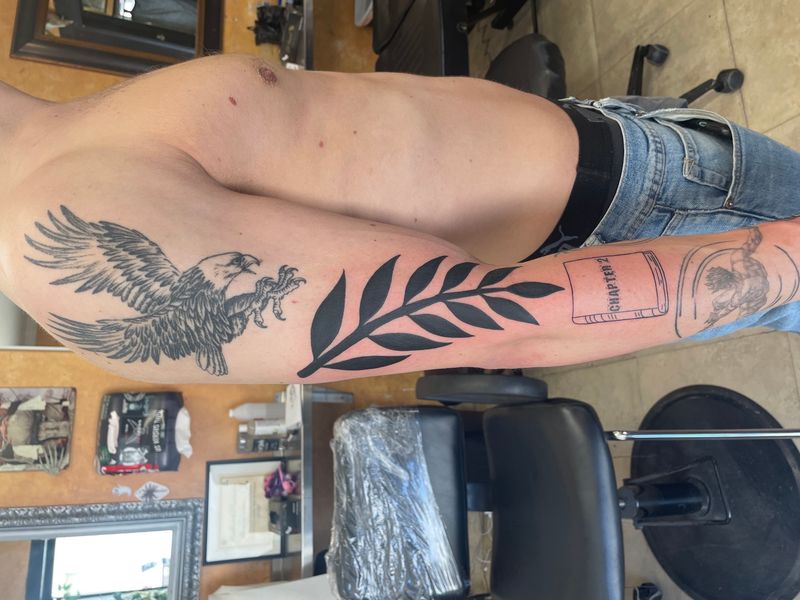
Saturated black with negative-space detail. Reads architectural and declarative, fits the leather lineage and reclamation work. Asks for an artist who laminates saturation evenly — patchy blackwork is hard to correct.
Neo-traditional
Bold outline, banner-and-symbol stacks
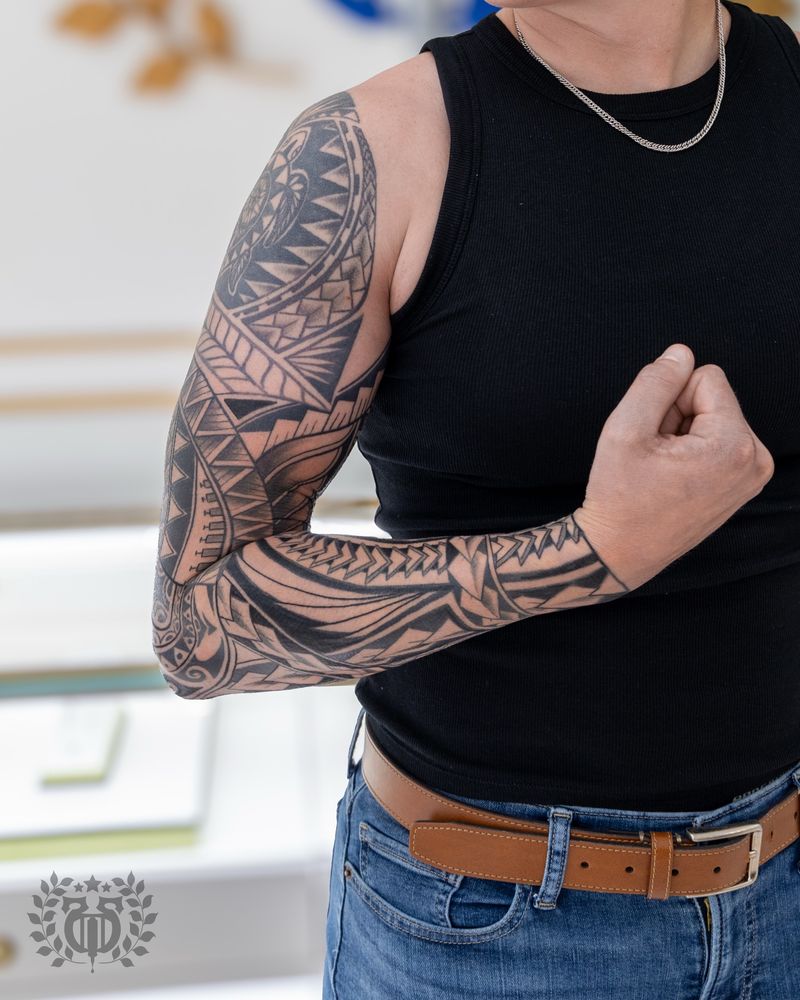
Heavier line weight, dimensional shading, sometimes a muted color wash. Pairs well with traditional flash-lineage elements (lock, key, dagger, banner) and stacks cleanly for matching pieces and community-convention work.
Illustrative
Figurative, narrative, character-driven
Tom-of-Finland-adjacent line economy and figure work. Carries character and narrative without explicit content. Often used for couple-piece narratives, animal-and-figure compositions, and architectural-detail pairings.
Geometric / minimalist
A single mark, clean
The 'I don't want to explain' piece often lives here. Pure line, pure form, no shading, no surrounding ornament. Reads cleanly at small scales and ages well because there's nothing to drift.
Ornamental / decorative
Botanical or pattern frames
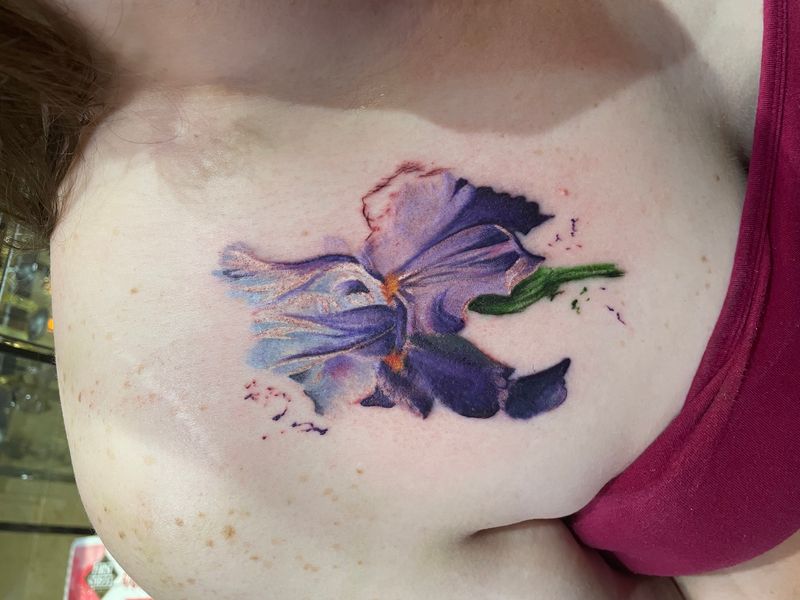
Botanical or pattern work that hides the reading inside conventional imagery. The hidden-reading approach lives here — what looks like a thorned-rose frame to most viewers carries a triskelion in the negative space for fluent ones.
Five placement zones
Visibility is the variable that drives everything else.
Name the audience layer before you discuss size. Five zones cover almost every choice a client actually makes — and most placement regret traces back to a consult that sized first and visibilityed second.
Always-visible
Forearm · hand · neck · lower leg below shorts
Client wants the piece readable in daily life, including at work. Apollo confirms the employment context exists before recommending hand or neck placement. Some workplaces remain unforgiving regardless of how thoughtful the piece is.
Sleeve-covered
Upper arm · ribs · inner bicep
Visible at the gym, the beach, intimate settings; covered at the office. The most-requested placement category for kink-coded work. Lets the wearer choose audience by sleeve length on a given day.
Torso
Chest · sternum · sides · back
Self-facing or partner-facing; rarely public; large-scale options. Often the placement for narrative or memorial work where the scale needs room. Multi-session common above seven inches.
Hip / thigh / glute
Hip · upper thigh · glute · inner thigh
Quiet by default; visible in lingerie, swimwear, scene contexts. The placement for clients who want the piece readable to chosen audiences and invisible elsewhere.
Hidden by underwear / under-the-hem
Lower hip · inner thigh · under-waistband
Maximum privacy; readable only in chosen contexts. The endpoint of the visibility axis. See our companion guide on placement and visibility control.
Scale honesty
Four tiers. Your scale sets your approach.
Not the other way around. If you want detail or surrounding ornament, commit to the scale that holds it. If your scale ceiling is small, commit to a rendering that ages well at that size.
Eight pairings
Pairings change the read more than line weight does.
Eight compositional pairings, each landing the symbol in a different category. The pairing decision usually does more design work than the rendering — and it's the decision most often skipped.
Symbol + script
Triskelion or knot with a single word in a chosen language — a name, a virtue, a chosen-name initial. Calligrapher consultation if the script isn't Latin. Couple's stop-words exist; use with care.
Symbol + date (with caution)
Anniversary or commemorative piece. Apollo's working note: dates close doors. A symbol that reads 'this chapter of me' ages better than a partner's specific year.
Symbol + flora
Triskelion in a thorned-rose frame; lock-and-key with ivy. Botanical softens the read without erasing it; the symbol is for the wearer, the frame is for the room.
Symbol + animal
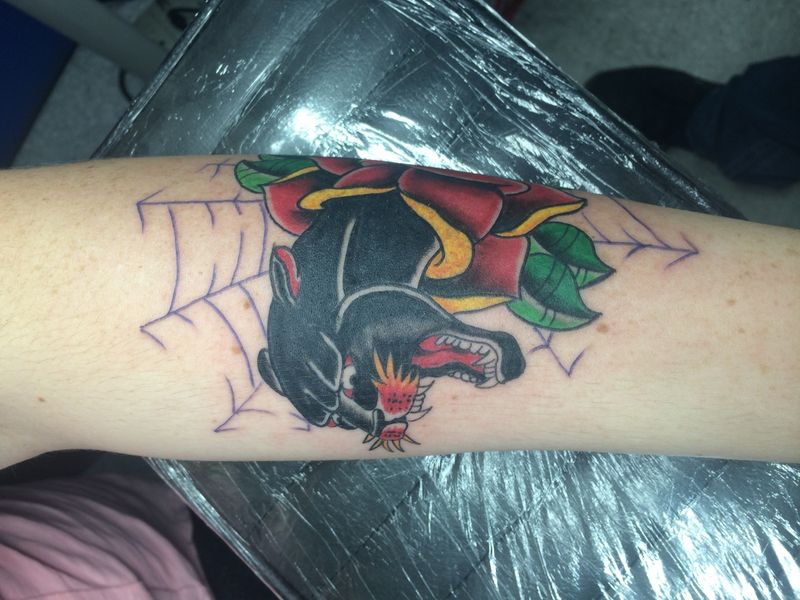
Wolf, bear, raven, snake. The animal carries an emotional register the symbol alone doesn't — protective, predatory, watchful, transformational. Pairs especially with leather-lineage and reclamation work.
Symbol + architectural detail
Knot inside a window arch; key inside a doorway. Reads narrative. Often used for couple pieces where each wearer carries half of the architectural element.
Two symbols stacked
Leather-flag stripe + lambda; collar + key; triskelion + bear paw. Stacks community readings into one composition. Ask the artist about flag-stripe order and convention details before the stencil.
Symbol + memorial element
Initials, year, single name in serif numerals beside the mark. Memorial work for community elders, partners, mentors lost. Treated with the same respect as any memorial piece.
Symbol + partner's matching mark
Mirror or complement, not identical. Each person consults separately first; group conversation only with both clients' explicit yes.
Bring to the consult
Six questions that compress an exploratory consult into a craft consult.
Six questions to ask any studio before booking — and to bring into the consult itself. Each one points at a concrete practice the studio either does or doesn't do; if the answer is vague, the practice probably is too.
How does the studio handle photo permission?
Default for kink-coded work at Apollo is opt-in: nothing is photographed for portfolio or social without your written sign-off, granular by surface (close-up, wide, face cropped, no face), per-piece, and revocable later — we'll take posts down if you change your mind. Get the answer from any studio in writing before booking.
Who else sees the stencil and the work during the session?
Walk-in clients, other artists, front-desk staff, the back-room view from the lobby. Working studios with private rooms or screens are different from open-floor shops. If discretion matters, ask which station and what the sightlines look like before you commit to a chair.
Have you done this kind of imagery before — and can I see healed examples?
Fresh photos flatter every artist. Healed work, six-plus months out, is the honest portfolio. If healed examples in this subject area don't exist, that is real information — not a deal-breaker, but worth the consult conversation. Healed photos are the honest photos.
Are you comfortable with this subject matter?
Ask plainly. A flinch in the consult is a flinch at the chair. An honest 'no, but here's a colleague who is the right match' is the field working correctly — that's routing, not rejection. Decline-and-refer is a documented industry convention, not a personal slight.
What community conventions do you already know?
Saves you teaching the artist mid-stencil. If the artist already knows leather-flag stripe order, triskelion ball orientation, and hanky-code conventions, the consult moves faster and the work lands more accurately. If they don't, an honest 'I don't have that fluency, let me route you' is the correct answer.
What's the design-revision protocol if I want to adjust visibility?
One round of revisions is the working-studio standard. Visibility — size, placement, opacity of a hidden reading — is a legitimate axis to adjust. The protocol matters because adjustments at the stencil stage are cheap; adjustments after the line lands are not.
Photo permission for kink-coded work is opt-in, in writing, per-piece, and revocable. Nothing leaves the room without your sign-off.
The artist's job is calibration. The therapist's job is processing. We try not to confuse them.
Symbols outlast dynamics. Names outlast nothing.
Common mistakes
Eight consult patterns to watch for.
Most disappointing kink-coded commissions trace back to one of these eight consult-stage misses. Catching them at the consult is cheaper than reworking later — and most of them are cheap to fix once they're named.
Treating disclosure as all-or-nothing
Either over-explaining your private life because the room feels formal, or refusing to disclose what the design needs because you don't want a stranger to know anything. Fix: disclose what the artist needs to render the piece accurately — the symbol, what placement means, what visibility you want. The rest stays yours.
Bringing a partner who answers for you
Consultation is one client at a time. A partner whose anxiety you'll absorb, or who tends to answer for you, turns the consult into a group project. Fix: the partner can wait in the lounge. Each person involved in matching or partner work consults separately first; the joint conversation, if any, comes after.
Booking with an artist you suspect won't be comfortable
Hoping a hesitant artist will warm up at the chair. Fix: ask before booking. A studio that publishes kink-affirming intake language has done the staff conversation already. If your first-pick artist visibly stiffens at the reference review, that is the answer to the booking question.
Assuming photo permission is automatic
Assuming the artist will (or won't) photograph the work without an explicit conversation. Fix: get it in writing, per-piece. Apollo's standard for kink-coded work is opt-in, granular, revocable — nothing leaves the room without your written sign-off, and you can pull permission later.
Treating the artist as therapist
Asking the consultation room to do the processing work that belongs with a clinician. Fix: tattoos can mark a chapter; they don't process one. If a piece is connected to recovery, your therapist is the right person to talk to about timing. The NCSF Kink Aware Professionals directory and AASECT's referral list are public starting points for kink-aware clinicians.
Skipping the 'who sees this?' question
Walking in without naming your audience layers. Fix: talk through the layers — work, family, partner(s), community, future-you. Placement and scale resolve once the audience is named. This is the single most-skipped question and the single biggest source of placement regret.
Locking in a partner's name or a relationship-specific date
Putting a particular dynamic into permanent ink. Fix: symbols ride better than names. The triskelion outlasts a particular partner; the partner's initials in serif do not. Consider iconography that reads 'this chapter of me' rather than 'this person' — and keep dates for milestones the wearer owns alone.
Apologizing for the subject matter
Opening the consult with apology, hedging, or qualifying language about what the symbol 'really' means. Fix: you don't have to. A working artist at a kink-affirming studio is being hired for craft. Apologizing primes both of you to treat the piece like a confession instead of a commission.
The first-consult guide
Eight things to walk in with on purpose.
Walk in with all eight prepared and the consult turns into a craft conversation rather than an exploratory one. Most of these are cheap to do and they shave significant time off the chair.
Personalization
Three layers turn a community symbol into your tattoo of one.
A community symbol becomes yours in three layers — element substitution, script choice, and placement. Most clients think only about the first. Placement usually does the heaviest design work.
Single-element substitution
Use the codified symbol but swap one element to mark your relationship to it — a specific flower in the triskelion's negative space, a specific knot inside a leather-flag stripe, a chosen initial inside a lock motif. The community layer reads to fluent viewers; the substitution roots the piece in your specific story.
Script in a chosen language
A word — a name, a virtue, a chosen-name initial — in a script that means something to you (Greek, Hebrew, Tibetan, Arabic, Cyrillic). Calligrapher consultation if the script isn't Latin. Couple's stop-words appear here too, and they're worth a careful conversation before the stencil.
Placement as personalization
The same symbol on two clients reads differently at the wrist (always public) versus the inner thigh (chosen-context only). Visibility is the personalization. For kink-coded pieces, placement often does more design work than the rendering itself.
Matching and partner work
Match the people, not the relationship.
Matched and partner pieces are common appointments and commonly under-planned. Four working notes — each separate consults, complement rather than identical, time-stamp choices that don't tie to a person, and design for the piece to outlive the dynamic.
Each person consults separately first
Group conversation only with both clients' explicit yes. Power imbalance lives in tattoo decisions like it does anywhere; the artist's job is to keep both readings clean. We don't let one voice answer for another — even when both parties insist that's fine.
Mirror or complement, not identical
Identical matching pieces age the relationship into the design. Complements (lock + key, sun + moon, two halves of a knot) age better. The matching is in the relationship between the pieces, not in their being indistinguishable.
Time-stamp choices that don't time-stamp the relationship
Year of the friendship, year of the move, year of sobriety — relationship-adjacent commemoratives without naming the partner. The piece outlives the relationship if the relationship doesn't outlive itself. Most relationships do; some don't. Design for the wearer either way.
Plan the 'if this ends' question into the design
Not pessimism — design literacy. A symbol that survives the relationship's end is a symbol that survives any future the wearer lives. Even matched pieces should read as solo pieces if circumstances change.
FAQ
Nine questions every kink-affirming consult intake surfaces.
Questions covering what kink-affirming means in practice, what to bring, photo policy, booking discretion, the pause mechanic, artist-routing, and the clinician hand-off for survivor work.
What does 'kink-affirming consultation' actually mean — in concrete practices, not adjectives?
Six concrete practices. (1) Photo and social permission for kink-coded work is opt-in, in writing, per-piece, and revocable. (2) Photo ID is verified at the consultation, not just at the appointment, because the studio's policy on adult subject matter settles before design starts. (3) Booking, intake, and billing reference the appointment generically — 'consultation, Apollo Tattoo' — never the subject matter. (4) You can stop the consult at any point — pause, change topic, take a break, reschedule, walk out — without explaining and without losing your deposit slot. (5) If your first-pick artist isn't the right craft match, we route you to a colleague or a peer studio rather than bluffing through. (6) For work touching trauma, the artist defers to your clinician on timing. None of these is 'open-minded' as a vibe; they are practices the studio either does or doesn't do.
Do I have to explain why I want this tattoo?
No. You explain what the artist needs to render the piece accurately — the symbol, what placement means to you, what visibility you want. You don't owe an account of your private life. A working artist asks calibration questions; they don't audit your reasons. A consult that interrogates the why instead of the how is a consult that has lost the script.
How do I know a studio is actually affirming, not just 'open-minded'?
Read what they publish. An affirming studio names kink work as in-scope in its consultation language, lists healed-portfolio examples available on request, takes an opt-in stance on social and portfolio photography for kink-coded work, and confirms that position in writing. Staff don't react when the subject comes up. Ask before you book. A studio comfortable with the conversation will answer plainly; a studio that euphemizes is telling you what the chair conversation will feel like.
Will the artist photograph my tattoo?
Only with your written, granular consent. Apollo's working standard for kink-coded work is opt-in: per-piece sign-off, choices about close-up versus wide and face-cropped versus no-face, and the right to revoke later. We'll take posts down if you change your mind. The photo decision is separate from the booking decision and should be settled in the consult, not at the stencil.
What if I want the symbol but I'm not 'in the community'?
Tell the artist plainly. Some symbols — leather-flag colors, the BDSM triskelion, hanky-code references — carry community-specific meaning, and a working artist at a kink-affirming studio knows the conventions and can advise on whether the piece reads as you intend or as appropriation. The honest framing keeps the consult clean. If the artist doesn't have that fluency, an honest 'I don't, let me route you to someone who does' is the right answer — that's routing, not rejection.
Can I stop the consult if it goes somewhere I didn't expect?
Yes. You can pause, change topic, take a break, reschedule, or walk out — without explaining and without losing your deposit slot. Pause is a complete sentence. Some of this work touches hard things, and a consult that gets heavy is a consult that should slow down. We're tattooers, not therapists; if a piece is connected to recovery or survivorship, your therapist is the right person to talk to about timing — we'll make the room work however you need it to.
Is the booking flow itself discreet?
Booking, intake, and billing reference the appointment generically — 'consultation, Apollo Tattoo' — never the subject matter. Calendar invites and email subject lines stay neutral; charges read as the studio name, not as a service category. If a partner or family member shares your card or calendar, tell us at booking and we'll match a contact channel that doesn't surface where you don't want it surfaced.
What if the artist seems uncomfortable mid-consultation?
Better the flinch shows now than at the chair. Ask plainly: 'Are you the right artist for this piece?' An honest 'no, but here's a colleague who is the right craft match' is the field working correctly. Decline-and-refer is a documented industry convention — artists routinely route work outside their stylistic comfort or specialty to a peer, and that routing is professional, not rude. A consult that didn't feel right becomes a tattoo that doesn't feel right.
I'm thinking about a reclamation piece marking something difficult. What do I bring?
Bring the same things any consultation needs — three references, photo ID, deposit funds — and bring your pace. Reclamation work is client-led on timing. The artist's job is craft calibration; the therapist's job is processing. Tattoos can mark a chapter; they don't process one. The NCSF Kink Aware Professionals directory and AASECT's referral list are public starting points if you want a kink-aware clinician in the loop on timing. We'll work alongside that conversation, not in place of it.
Ready to book the consult?
Three references. Photo ID. Placement conviction. Visibility goal.
Apollo kink-affirming consults are craft conversations — opt-in on photos, generic on billing, paused without penalty if you need it, routed by craft and not by judgment, and deferred to your clinician where the work touches things a tattoo can mark but not process. Book the consult and walk out with a design whose audience, placement, and photo policy all agree on what the piece is for.