Piercings
Lip Piercing Shop In LA
A working-studio guide to lip piercing in Los Angeles — labret, monroe, medusa, vertical labret, and snake bites — with the placement, jewelry, healing, and oral aftercare details from The Apollo Tattoo Studio in Santa Monica.
Book a consultationPlacement map
Seven placements. Each one a different lip geometry.
Lip-piercing consultations start with a look at the actual lip and philtrum. Placement is millimeter-sensitive. Below: what we pierce most often, with healing notes and jewelry defaults for each.
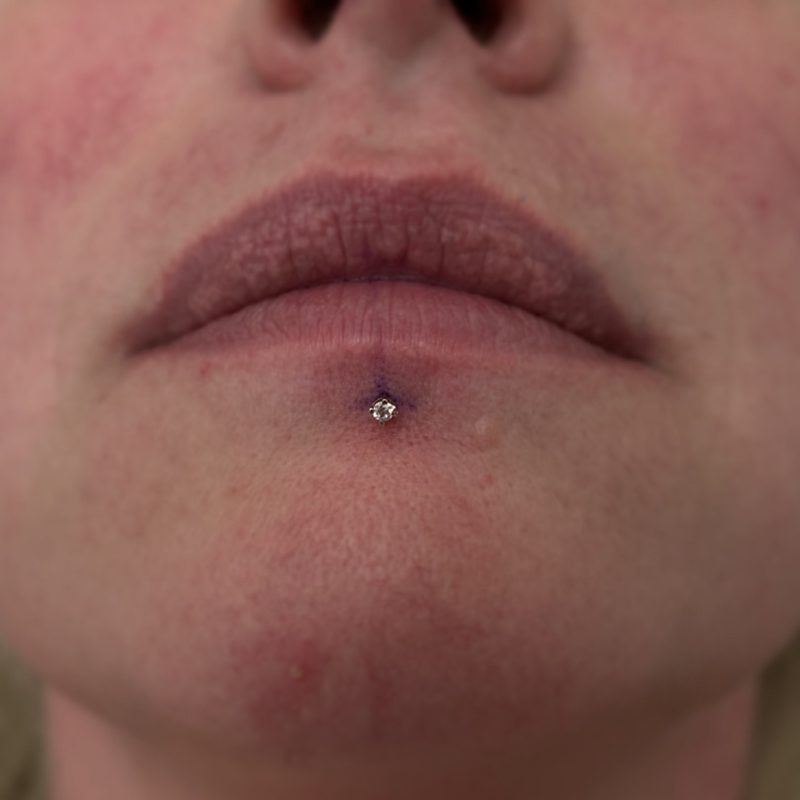
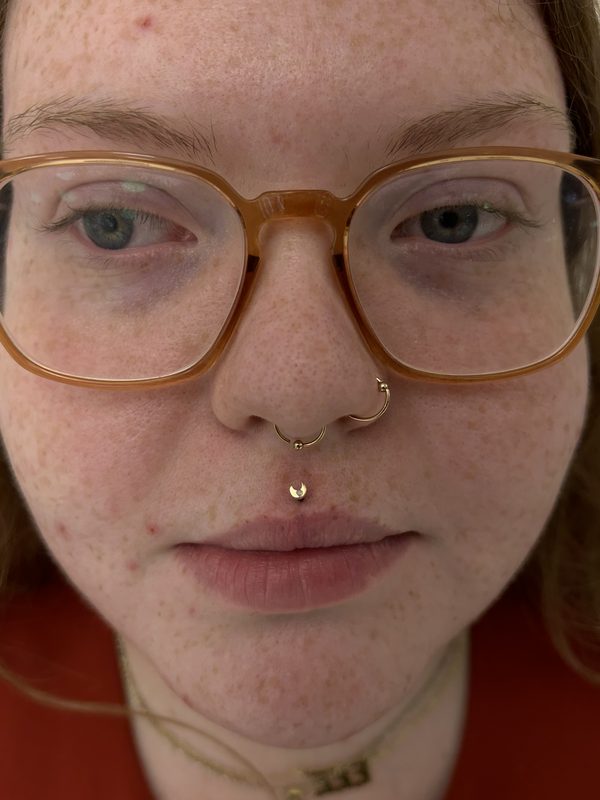
Labret
Center, below the lower lip
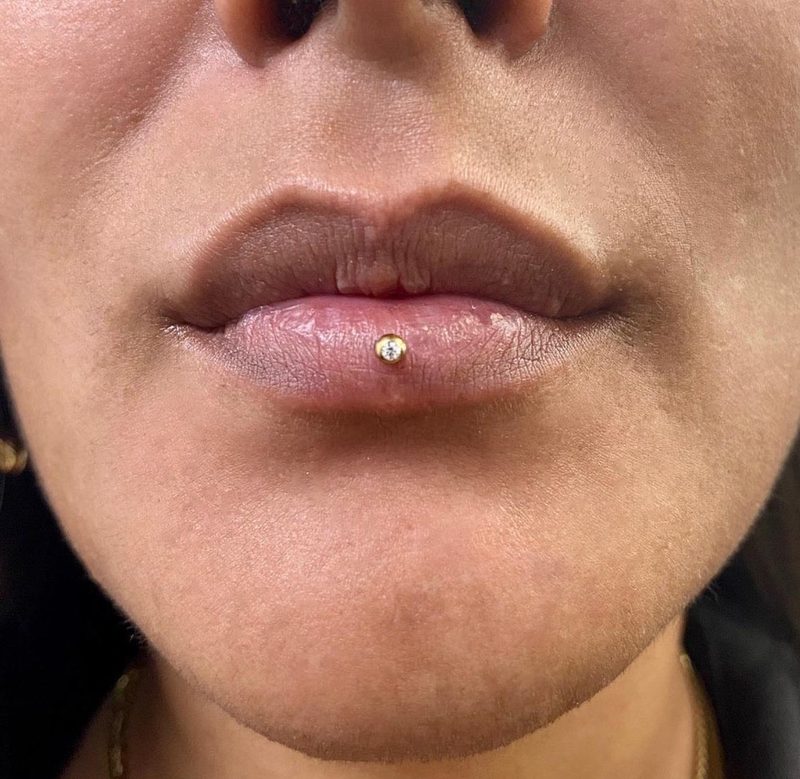
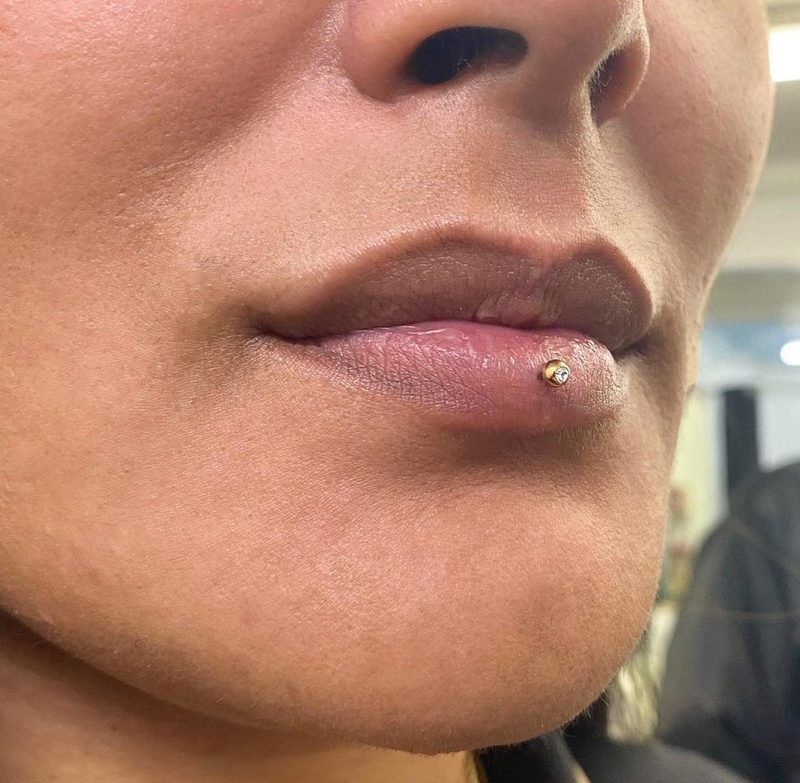
The classic lip piercing — one puncture centered below the lower lip, passing through skin and exiting just below the lip line on the inside. Flat-back labret stud at install. Heals in 6–10 weeks. The most forgiving lip placement and the standard starting point.
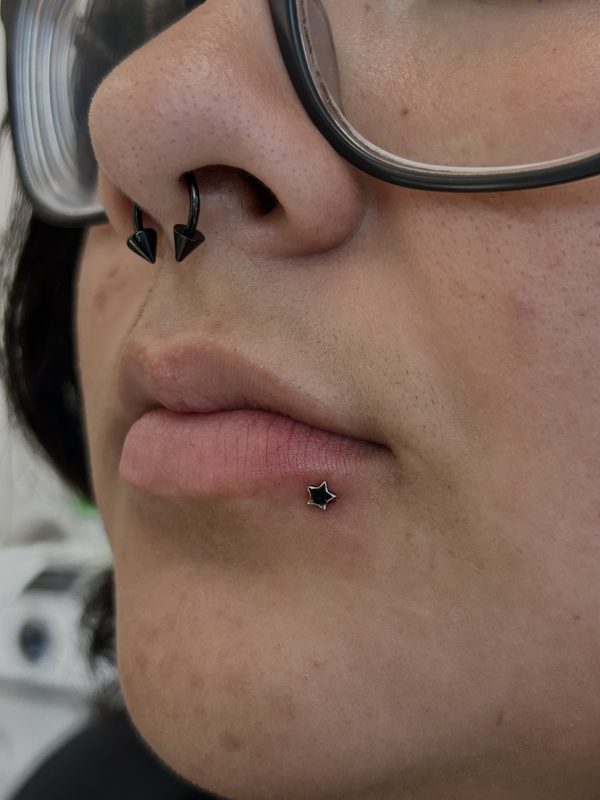
Monroe
Off-center, above the upper lip
Named for Marilyn's beauty mark — sits on the upper lip, left of center. Flat-back labret stud at install. Heals 6–10 weeks. Symmetric placement read depends entirely on millimeter-level positioning; the mirror check matters as much as the pass itself.
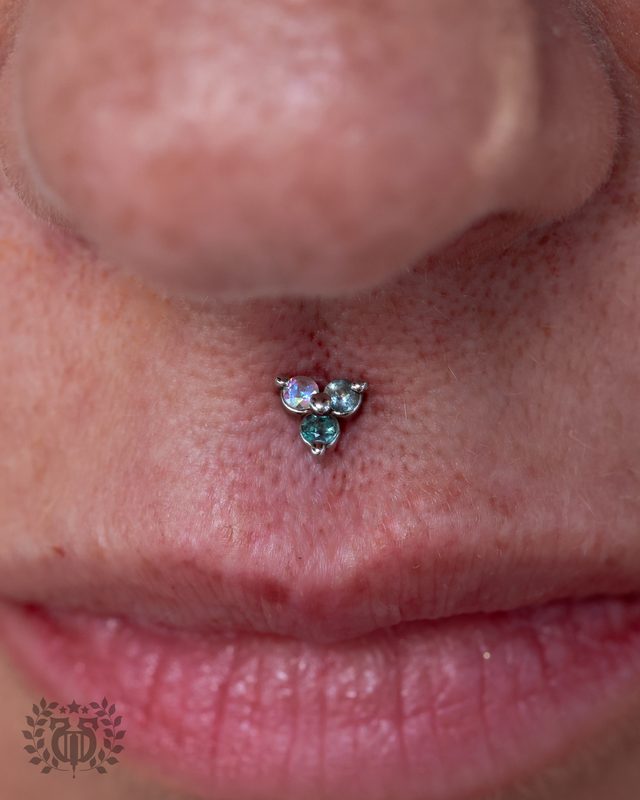
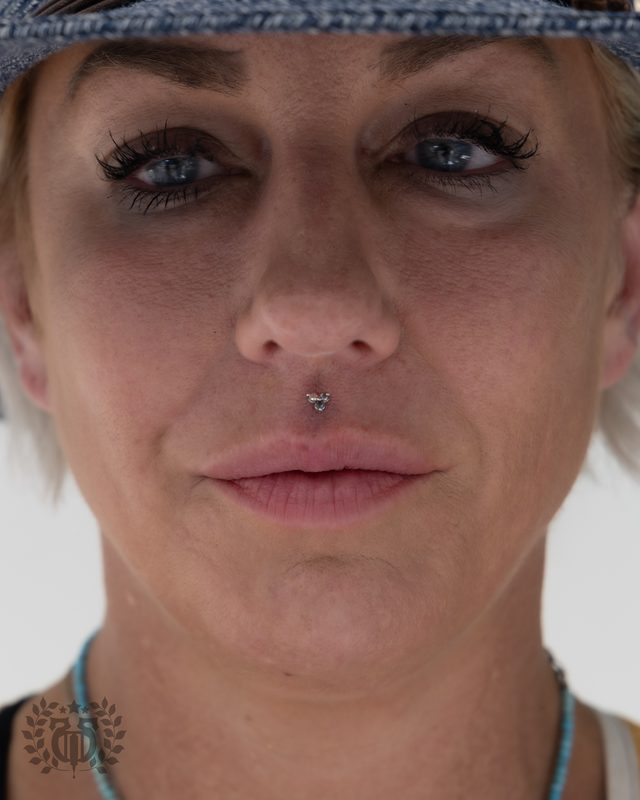
Medusa (philtrum)
Centered in the philtrum
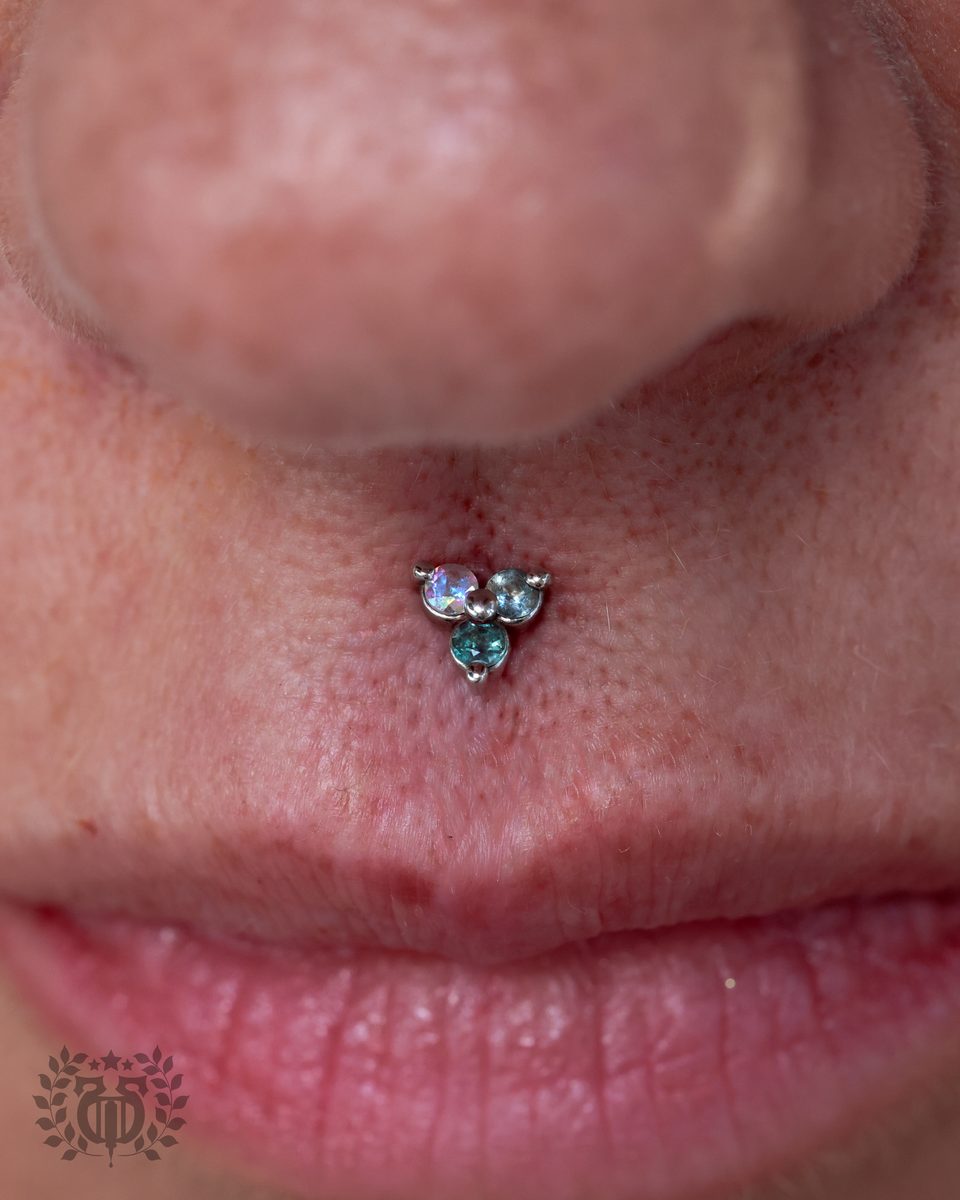
Sits in the small vertical groove (philtrum) between the nose and the upper lip. Flat-back labret. Heals 6–10 weeks. One of the most striking single-point lip piercings when centered well — and one of the most unforgiving when placement drifts by even half a millimeter.
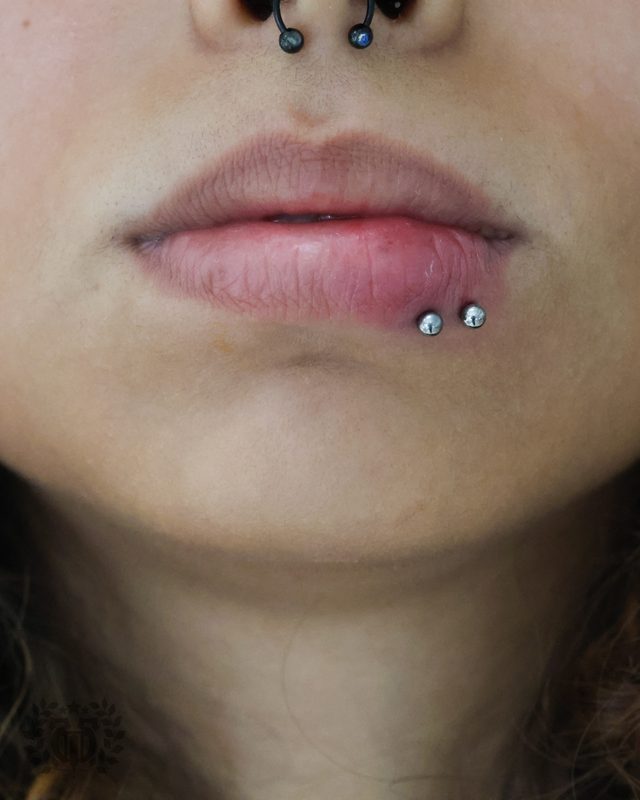
Vertical labret
Through the lip itself
A true lip piercing — enters the front of the lower lip and exits the top of the lip edge (not into the mouth). Curved barbell with two visible ends. Heals 6–8 weeks. Lower oral complications than standard labret because the jewelry does not sit against the teeth or gums.
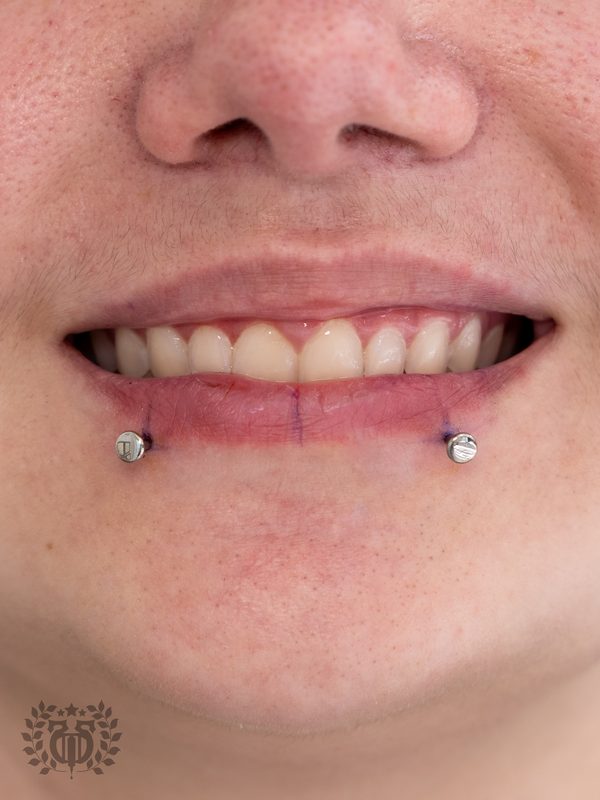
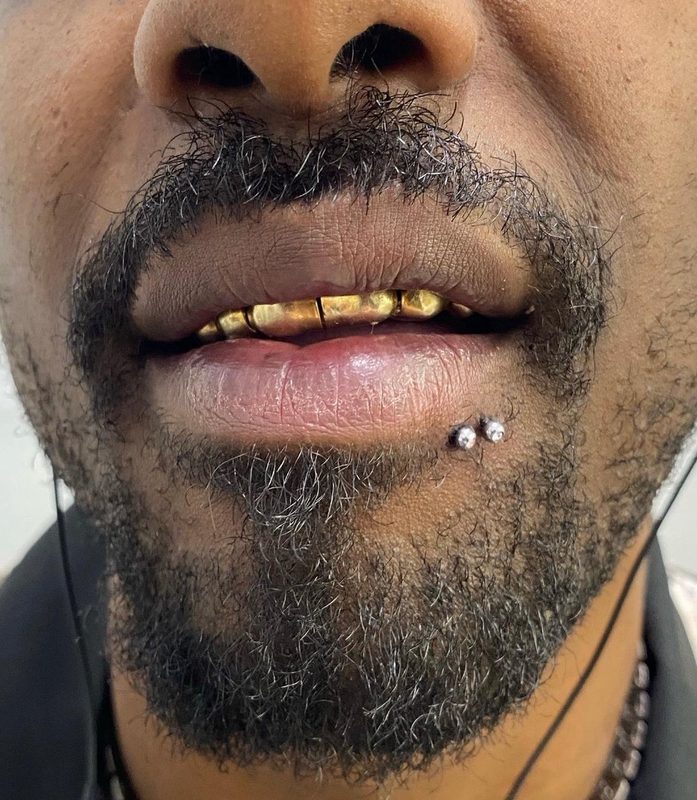
Snake bites
Paired labrets on the lower lip
Two symmetric labret piercings on either side of the lower lip. Each one is a full piercing with its own healing; Apollo schedules snake bites as two single-point appointments spaced by 6+ weeks, not as a same-day pair. The immune system does not serve two fresh oral-adjacent piercings well at once.
Spider bites
Two piercings close together on one side
Two piercings placed close together on one side of the lower lip — typically 5–7mm apart. Same scheduling logic as snake bites: spaced appointments, not same-day. Placement requires enough lip margin to support both piercings without tissue stress.
Ashley
Through the lip, exits the inside
Enters the center of the lower lip and exits into the mouth through the wet-dry line. Unlike the vertical labret, the back of the jewelry sits inside the mouth. High dental wear if the jewelry seats against the teeth — Apollo consults carefully on whether the anatomy supports this placement without oral complications.
A lip piercing lives in a mouth. Aftercare has to account for that reality or the piercing will not heal.
The downsize is where enamel wear is prevented. Skipping it is the most expensive mistake in lip piercing.
A labret 2mm off-center looks wrong forever. The mirror check is not a formality — it is the decision.
Before you commit
Three principles every lip-piercing consult opens with.
A lip piercing is an oral-adjacent commitment. Three principles shape how Apollo approaches the consultation.
Lip piercings interact with the mouth
Unlike an ear or a brow, a lip piercing lives in a wet, bacterial, high-motion environment. Eating, talking, kissing, brushing — everything that happens in a mouth happens at the piercing. Healing strategy and jewelry choice have to account for that reality.
Oral health is part of the consultation
Receding gums, enamel wear at the jewelry contact point, and tooth chipping from a metal ball grinding against molars are the three most common lip-piercing regrets. Apollo consults on these risks at the first appointment and recommends switching to bioplast or a soft-back at the back-inside of the mouth.
Symmetry is the hardest part
A labret 2mm to one side of center looks wrong in every photo for life. A monroe that sits too high reads as acne rather than a piercing. The mirror check is not a formality — it is the permanent decision being made.
Jewelry standards
Six rules for what goes in a fresh lip piercing.
Jewelry at install is a medical decision. The metal touching a fresh oral wound determines whether it heals.
Implant-grade titanium (ASTM F-136)
The default install metal at Apollo. Biocompatible, nickel-free, MRI-safe, professional-studio standard for fresh piercings.
Solid 14k or 18k gold
Nickel-free solid gold only — never gold-plated. Allowed at install when requested and stocked.
Flat-back labret at install
Every standard lip piercing at Apollo installs with a flat-back labret stud. The flat disc sits against the inside of the mouth without a protruding ball — that geometry minimizes early tooth and gum contact.
Bioplast backing as an option
For clients with a history of dental sensitivity, the flat backing can be swapped for a medical-grade polymer (bioplast) once the initial healing is complete. This reduces enamel wear meaningfully over years of wearing the piercing.
Curved barbells for vertical labret
Vertical labrets and ashley piercings use curved barbells because the piercing geometry requires a bend. Both ends are visible in a vertical; one end is internal in an ashley.
What Apollo never installs fresh
Sterling silver, gold-plated, any jewelry with external threading on the post, rings at install. Rings are allowed at full heal only — the swelling window of a fresh lip piercing does not accommodate ring geometry.
Healing timeline
Five phases. Downsize at week 4–6.
A lip piercing heals in the mouth and on the skin. Both sides need a clean protocol. The downsize is the milestone that protects enamel.
Age policy
Apollo's working minimums for lip piercing.
Age is placement-specific and dental-state-dependent. California parental consent law applies; so does our requirement that active dental treatment be finished first.
Standard lip (labret, monroe, medusa, vertical)
Ages 16 and up at Apollo's discretion. Many studios in LA County are 18+ for all lip work; Apollo considers 16–17 on a case-by-case basis with parental consent and a clear commitment to oral aftercare.
Snake bites and spider bites
Ages 18 and up. Paired lip piercings are a two-visit commitment — we want an adult who can manage the scheduling, the aftercare, and the downsize on both pieces.
Ashley
Ages 18 and up. The dental risk is higher on this placement; adult-only at Apollo.
Parental consent
California law requires a custodial parent or legal guardian to be present with government ID for every body-art appointment on a minor. Grandparents, aunts, and older siblings do not satisfy California body-art code.
Dental clearance
Clients with ongoing orthodontic work, recent oral surgery, or active gum disease are asked to complete their dental treatment before a lip piercing. We will not pierce around braces, dental implants still in healing, or untreated periodontal disease.
Oral health
The four dental risks every lip-piercing client should know.
Enamel, gum, tooth, and speech. Each has a prevention strategy; all of them start with the downsize.
Enamel wear at the ball
The back of a labret stud rests inside the mouth. Over years, a metal ball grinding lightly against the front of lower or upper teeth causes measurable enamel wear. The fix is to downsize the post so the ball sits closer to the gum, and to consider bioplast backing once healed.
Gum recession at the jewelry contact
A long labret post that tucks behind the gum line instead of against the enamel rubs the gum tissue continuously. Over decades, this causes gum recession visible in dental X-rays. The fix is the post-healing downsize — same mechanism as enamel protection.
Tooth chipping on the ball
Catching a metal ball on a bite-down is the most common acute dental injury from a lip piercing. Fix: soft-backing (bioplast) once healed. Hard dental chipping is rare but irreversible.
Speech adjustment
The first 1–2 weeks of a labret or medusa often come with a minor lisp as the tongue learns to navigate the jewelry. This resolves on its own. Clients who need clear speech for work (teachers, podcasters, performers) should account for this transition window.
Aftercare
Six habits that decide how the piercing heals.
Aftercare on a lip piercing is more work than most placements. Saline outside, mouthwash inside, soft food, no oral contact.
Saline outside, saline rinse inside
Sterile saline spray (0.9% wound-wash) on the outside of the piercing twice daily. After every meal, every drink of anything other than water, and before bed, rinse the mouth with alcohol-free antimicrobial mouthwash diluted 50/50 with sterile water. The inside of a lip piercing is not self-cleaning.
Soft foods for the first 3–5 days
Chewing pulls the jewelry against the healing wound. Soups, yogurt, soft eggs, smoothies. Avoid anything sticky, crunchy, spicy, acidic, or too hot. Cold foods also reduce swelling meaningfully.
No kissing, sharing drinks, oral contact
For the first 4–6 weeks at minimum. Saliva from another mouth is the most common introduction of pathogens at a healing lip piercing. This is not a moralistic rule — it is a microbiology rule. Stick to the timeline.
No smoking, limited alcohol
Cigarette smoke, marijuana smoke, and vapor all introduce heat and chemical irritation directly at the piercing. Alcohol in mouthwash (or as a drink) dries healing tissue. Reduce or eliminate during the healing window.
Hands off, phone off
Touching the jewelry or pressing a phone screen against the piercing drags bacteria into the wound. Wireless earbuds help; touching the piercing for 'reassurance' does not.
Watch for infection
Normal: swelling, mild tenderness, occasional crust at the front disc. Not normal: spreading redness up the face or down the neck, fever, pus, escalating pain after day 5. Call the studio or a dentist/physician for anything that reads like infection. We do not diagnose.
No kissing for 4–6 weeks is microbiology, not moralism. Saliva is how fresh lip piercings get infected.
Paired lip piercings are two appointments, spaced by healing. Snake bites in one session is a double immune load.
Oral health is part of the consultation. A lip piercing is not separate from what your dentist sees.
Consultation
Six questions to bring with you.
Walk into the consult with answers to these and you save yourself an hour and a misplaced stud.
Which placement?
Labret, monroe, medusa, vertical, snake bites, spider bites, ashley. Bring a reference photo if you have one. The piercer will confirm the anatomy suits the placement.
One or paired?
Single-point and paired (snake bites / spider bites) are different appointments. Apollo schedules paired pieces across two visits 6+ weeks apart.
Dental history?
Orthodontic work, implants, recent oral surgery, periodontal disease, enamel sensitivity. Flag everything at booking. Some dental states mean we ask you to complete treatment first; others just steer the jewelry choice.
Medical flags?
Medications, nickel allergy, keloid history, immunocompromise, pregnancy, recent oral infection. Standard disclosures apply; the piercer plans around them.
Work / lifestyle factors?
Teacher, performer, public-speaking job, sport that uses a mouthguard, smoker. Each of these affects healing or long-term wear. The piercer can steer the placement or jewelry to fit your life.
Can you commit to the downsize?
Every lip piercing needs a downsize appointment 4–6 weeks out. Skipping it is how enamel wear and gum recession start. Book it before you leave the first appointment.
Common mistakes
Eight patterns to watch for.
Disappointing lip-piercing outcomes almost always trace to one of these eight mistakes. Catching them in the consult prevents them in the chair.
Gun-pierced lip (from anywhere)
No legitimate studio performs lip piercings with guns. Any shop offering a gun-pierced lip is both unsafe and outside California body-art code. Fix: needle-only, at a professional-studio-standard shop.
Skipping the downsize
The #1 cause of enamel wear and gum recession in lip-piercing clients. Fix: book the downsize before you leave the first appointment. Show up for it.
Mouth kisses in week one
The fastest path to a lip piercing infection. Fix: zero oral contact for the first 4–6 weeks. No exceptions for an enthusiastic partner.
Ignoring dental pre-existing conditions
Piercing above untreated periodontal disease, around braces, or near a dental implant still in healing creates complications neither the piercer nor the dentist can correct cleanly. Fix: finish dental work first.
Cheap jewelry at install
Sterling silver and 'hypoallergenic' steel in a wet, bacterial, high-motion environment is a contact-dermatitis and infection generator. Fix: titanium or solid gold, every time.
The mirror-skip at placement
A labret 2mm off-center looks wrong in every photo forever. Fix: take the mirror check seriously. Ask the piercer to reposition. Time spent here is free.
Paired piercings in one session
Asking for snake bites or spider bites on the same day. The immune load doubles; healing suffers on both pieces. Fix: space by 6+ weeks.
No bioplast after full heal
Running the same hard-metal backing for years chews enamel over time. Fix: discuss bioplast backing with the studio once healed, especially if you notice any sensitivity at the tooth contact point.
First lip piercing
If this is your first lip piercing, a standard labret is the right answer.
Forgiving placement, clear jewelry path, a clean healing window that sets up every subsequent lip decision.
FAQ
The questions every lip-piercing consultation surfaces.
Eight questions covering pricing, pain, healing, dental impact, paired piercings, age, mouth contact, and jewelry.
How much does a lip piercing cost in LA?
Apollo pricing is discussed at consultation and varies with the placement (labret, monroe, medusa, vertical labret, snake bites, spider bites, ashley) and the jewelry selected. Implant-grade titanium is the default install metal; solid 14k/18k gold is available. Every fresh piercing includes a return downsize appointment. We quote based on the specific placement and jewelry, not a flat rate.
Does a lip piercing hurt?
A lip piercing is a sharp pinch that lasts 1–3 seconds. The soft tissue of the lip is relatively forgiving; most clients rate the sensation a 4–5 out of 10. The vertical labret feels slightly sharper than a standard labret because the pass travels through lip tissue. Snake bites are two separate pinches done on different days at Apollo. Eating and talking for the first 3–5 days after is where the real discomfort lives.
How long does a lip piercing take to heal?
Standard labret, monroe, medusa: 6–10 weeks surface healing, 3–6 months deep healing. Vertical labret: 6–8 weeks. Ashley: 8–12 weeks. Snake bites and spider bites: each point heals on the 6–10 week timeline. 'Healed' means the surface looks normal; full deep healing takes longer. Downsize happens at week 4–6 — do not skip it. Skipping the downsize is the #1 cause of long-term dental complications.
Will a lip piercing damage my teeth?
Potentially, yes — which is why downsize and post-healing bioplast are standard Apollo practice. The back of a metal labret stud can wear enamel where it contacts the teeth over years. It can also cause gum recession at the contact point. Both are preventable with proper downsize (so the post sits closer to the gum line), bioplast backing substitution after healing (which is softer against teeth than titanium), and regular dental check-ups where your dentist tracks any wear at the contact point. Disclose the piercing to your dentist.
Can I get snake bites in one session?
Not at Apollo. We schedule paired lip piercings (snake bites and spider bites) as two single-point appointments spaced 6+ weeks apart. Two fresh oral-adjacent piercings at once doubles the immune load, lengthens healing on both, and increases infection risk. Spaced appointments give each piercing a clean healing start and let the piercer adjust the second placement based on how the first is sitting.
What's the minimum age for a lip piercing?
Standard lip piercings (labret, monroe, medusa, vertical labret): 16 and up at Apollo's discretion, with parental consent and a clear commitment to oral aftercare. Snake bites, spider bites, ashley: 18 and up. California law requires a custodial parent or legal guardian to be present with government ID for every body-art appointment on a minor. Many LA studios are 18+ for all lip piercing; Apollo considers 16–17 case-by-case.
Can I kiss with a new lip piercing?
No, not for 4–6 weeks. Saliva from another mouth carries bacteria a healing lip piercing cannot fight off, which is why mouth contact is the most common source of lip-piercing infection. This includes kissing, sharing drinks, sharing eating utensils, and oral sex. The restriction is not about romance — it is about microbiology. Hold to the timeline and the piercing heals cleanly.
What jewelry should I start with?
Implant-grade titanium (ASTM F-136) flat-back labret stud is the Apollo default. 3mm plain ball or set gem, with a post long enough to accommodate initial swelling (the downsize shortens it at week 4–6). Solid 14k or 18k gold is the allowed alternative. We never install sterling silver, gold-plated, or unmarked 'hypoallergenic' pieces at a fresh lip piercing — those metals belong only in fully-healed piercings. Rings are not an install option and are only used on fully-healed lips.
Ready for the consultation?
Bring your dental history, the references you like, and the placement questions you have not yet asked out loud.
Apollo lip-piercing consultations begin with an oral-health read and a placement mirror-check, and end with a plan — jewelry selected, downsize booked, healing and dental expectations set out before the needle comes out of the package.
Studio portfolio
Lip piercings by our piercers
Labret, philtrum, vertical labret and paired placements in implant-grade titanium and solid gold.