From the Studio
Tattoos Inspired by the Goddess Hera
Hera, the queen of the Olympian gods in ancient Greek mythology, stands as a figure of majesty and power. As the wife of Zeus, she was highly revered and often depicted a
Ink and Divinity: The Majestic Symbolism of Hera in Tattoo Art
The vengeful goddess
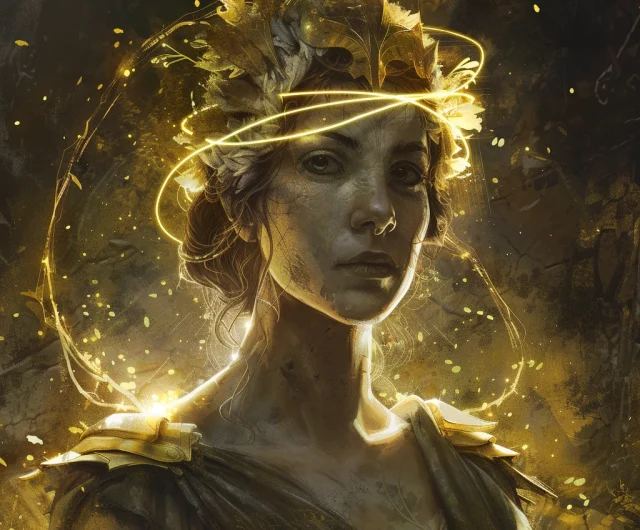
Hera, the queen of the Olympian gods in ancient Greek mythology, stands as a figure of majesty and power. As the wife of Zeus, she was highly revered and often depicted as a regal, matronly figure, embodying the ideal of womanhood and marriage. Hera's symbolism is deeply intertwined with themes of fertility, matrimony, and the protection of women, especially within the confines of marital life.
Despite her association with marriage, Hera's mythology is rich with tales of her jealousy and vindictiveness, particularly towards Zeus's many lovers and offspring. However, these narratives also underscore her role as a protector of women and the sanctity of marriage, as she often sought to right the wrongs done to her and maintain her status and dignity amidst the gods.
Hera's enduring legacy in Greek mythology highlights her complex character: she is both nurturing and vengeful, embodying the dual aspects of creation and destruction. This duality makes Hera a fascinating subject for tattoos, as her symbols and stories carry rich meanings and can be interpreted in various ways to reflect personal or cultural significance.
Hera's Iconography and Symbols
Hera's iconography is rich and varied, drawing from her status as the queen of the Olympian gods and her associations with marriage, fertility, and the natural world. Common symbols that represent Hera include the peacock, cow, and pomegranate, each carrying significant meanings and stories tied to her mythology.
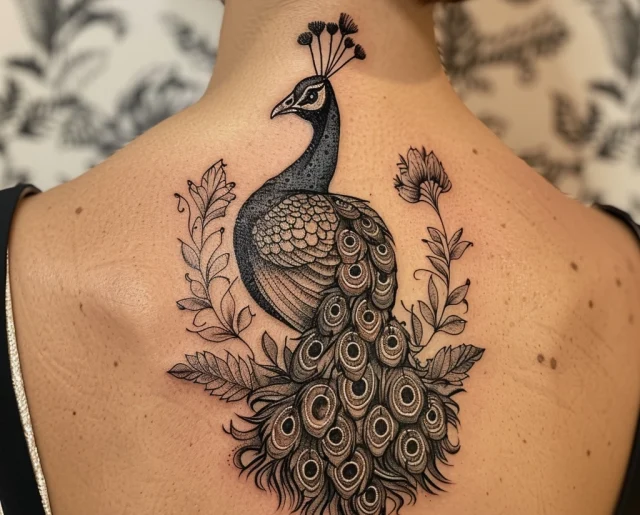
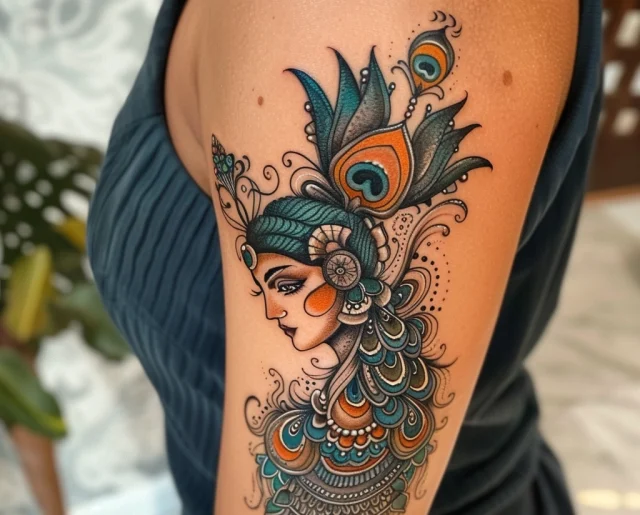
The Peacock: Perhaps the most striking of Hera's symbols is the peacock, whose tail feathers are said to contain the "eyes" of Argus, a hundred-eyed giant whom Hera appointed as a guardian. After Argus was slain, Hera honored his service by transferring his eyes to the peacock’s plumage, creating the bird’s iconic appearance. The peacock thus symbolizes Hera’s all-seeing nature and her concern for vigilance and protection. In tattoo art, the peacock can be rendered in vibrant colors, capturing the bird's majesty and the beauty of its feathers, which can symbolize the watchful eyes of Hera.
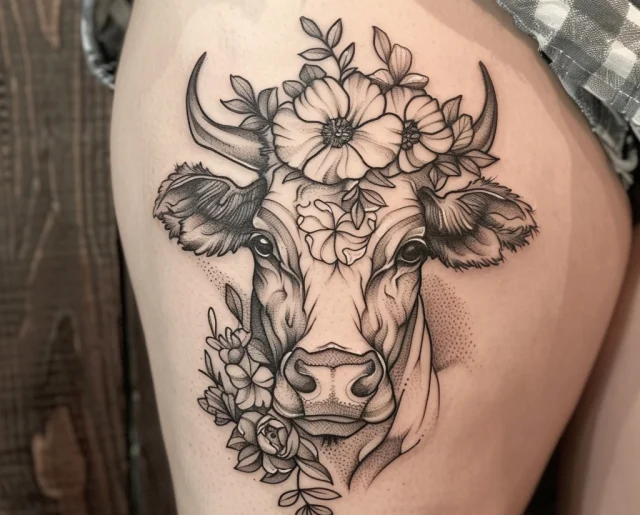
The Cow: Hera is also symbolized by the cow, which represents her maternal and nurturing aspects. The cow's significance comes from Hera's nurturing of Heracles (notably not her son) with her milk, an act that inadvertently granted him divine strength. A cow tattoo might symbolize fertility, motherhood, and the nurturing aspects of Hera, often depicted with a gentle and serene expression, embodying the goddess’s protective and nurturing side.
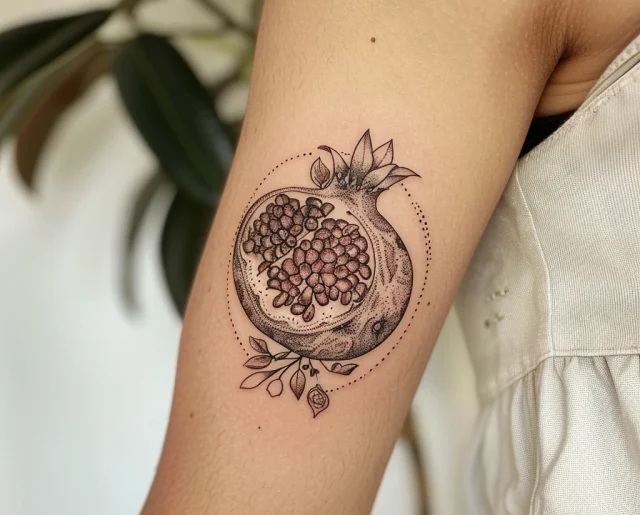
The Pomegranate: Another powerful symbol associated with Hera is the pomegranate, a fruit often linked with fertility and marriage. In ancient Greek culture, the pomegranate was a symbol of life and regeneration, qualities that align with Hera’s role as a goddess of marriage and childbirth. A pomegranate tattoo can symbolize the bearer's respect for life’s cycles, fertility, and the sanctity of marriage, connecting them with the divine essence of Hera.
These symbols, rich in meaning and history, provide ample inspiration for tattoo designs. Each icon connected to Hera not only reflects her mythological attributes but also offers a visual narrative of her complexities and dualities. Whether chosen for their aesthetic beauty or symbolic depth, these elements can be combined or standalone in Hera-inspired tattoos, offering a connection to the ancient world and its timeless myths.
Hera's Myths and Stories
Hera's mythology is filled with narratives that reveal her multifaceted character, from her role as a powerful queen of the gods to her often tumultuous relationship with Zeus and his offspring. Her myths paint a picture of a deity with immense dignity, often responding to the challenges and indignities thrust upon her with a mix of cunning, vengeance, and protection.
The Marriage with Zeus: Hera's marriage to Zeus was not without its troubles, as it was marked by Zeus’s numerous infidelities. Despite these challenges, Hera maintained her dignity and status as queen of the gods. She is often portrayed as striving to keep Zeus in check and to maintain the balance of power on Olympus. Her marriage symbolizes the complexities of her role, where she had to balance her personal grievances with her responsibilities as a goddess of marriage and fertility.
Vengeance on Zeus's Consorts: One of the most recurring themes in Hera's mythology is her jealousy and vengeance towards Zeus’s lovers and their offspring. For example, Hera's pursuit of Leto, the mother of Apollo and Artemis, showcases her vindictive nature. Yet, this aspect of her character also highlights her desire to uphold the sanctity of marriage and the consequences of infidelity. Hera’s actions, though often harsh, reflect her commitment to her matrimonial role and the protection of women’s rights within marriage.
Heracles and Hera’s Trials: The story of Heracles, whom Hera repeatedly tried to kill out of spite for Zeus's infidelity, exemplifies her complex relationship with Zeus's illegitimate children. Her relentless trials for Heracles, including the famous Twelve Labors, were as much about punishing Zeus as they were about testing Heracles’ strength and resolve. Interestingly, Heracles, whose name means "glory of Hera," eventually earned her respect through his heroic deeds, symbolizing a reconciliation of sorts and Hera’s ability to recognize and reward true merit.
Hera's Protective Role: Despite her vengeful acts, Hera was also a protector, especially of women. She is often invoked in matters of childbirth and marriage, embodying the maternal and protective aspects of womanhood. Her protective nature is evident in myths where she safeguards heroes or intervenes in events to ensure justice, demonstrating her complex role as a nurturer and a punisher.
These myths and stories illustrate the depth of Hera's character, showing her as a deity who could be both vengeful and protective, embodying the extremes of nurturing and wrath. In tattoo art, these narratives can be represented through various scenes and symbols, offering a rich tapestry of themes that reflect the dual nature of Hera’s persona.

Tattoo Designs Inspired by Hera
Tattoo art inspired by Hera can encapsulate the various facets of her mythology and symbolism, offering unique and meaningful designs that resonate with individuals. These tattoos can range from literal depictions of the goddess to more abstract representations of her attributes and stories.
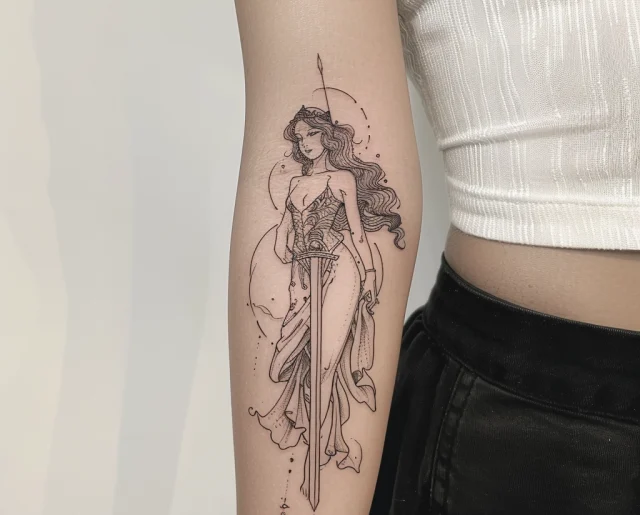
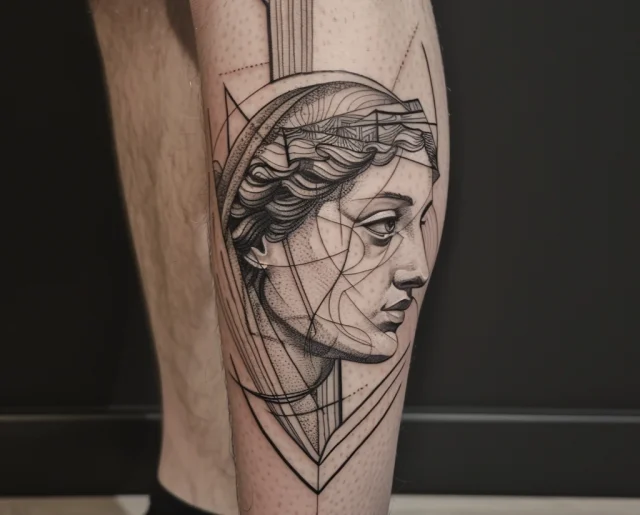
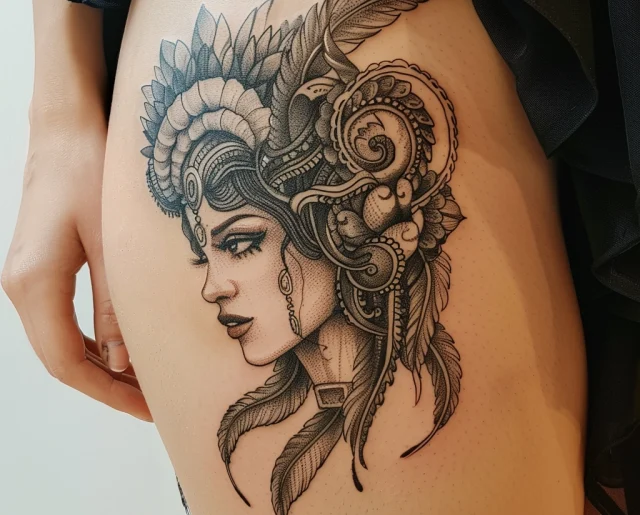
Portraits of Hera: A classic choice for a Hera-inspired tattoo is a portrait of the goddess herself, often depicted in a regal and majestic manner. These designs can portray Hera in her traditional iconography, sitting on a throne as the queen of the Olympians, or holding her symbolic attributes like the peacock, cow, or pomegranate. Such tattoos not only honor the deity’s status but also serve as a reminder of the dignity, strength, and authority she represents.
Symbolic Representations: For those who prefer a more symbolic approach, tattoos featuring Hera’s associated icons like the peacock feather, cow, or pomegranate can be both beautiful and meaningful. A peacock feather tattoo, for instance, can symbolize beauty, immortality, and watchfulness, reflecting Hera’s all-seeing nature. Similarly, a tattoo of a cow might represent nurturing and motherhood, while the pomegranate could signify fertility and the sanctity of marriage.
Narrative Scenes: Tattoos depicting scenes from Hera’s mythology, such as her interactions with other gods, her acts of vengeance, or her moments of compassion, can be compelling choices. These designs can narrate a story, capturing the dynamic and often contradictory nature of Hera. For example, a tattoo showing Hera in the act of bestowing or withholding her favor from mortals or gods can symbolize the dual aspects of her character, highlighting her capacity for both benevolence and wrath.
Modern Interpretations: Contemporary tattoo artists might create modern renditions of Hera, blending traditional symbols with modern styles and sensibilities. These designs can adapt Hera’s mythology to fit personal narratives or contemporary themes, making the tattoos more relevant to the individual wearer. For instance, Hera’s image could be stylized in a minimalist or abstract way, focusing on specific aspects of her persona that resonate with the wearer, such as her strength, independence, or protective nature.
Choosing a Hera-inspired tattoo design is a deeply personal decision, reflecting one’s connection to the mythology and symbolism of the goddess. Whether opting for a detailed portrait, a symbolic motif, a narrative scene, or a modern interpretation, the tattoo serves as a homage to Hera’s enduring legacy and the complex nature of her character.
Cultural and Personal Significance of Hera Tattoos
Hera tattoos carry profound cultural and personal significance, embodying the ancient heritage and timeless themes of Greek mythology. Culturally, these tattoos connect individuals to the rich tapestry of stories, beliefs, and artistic expressions that have shaped Western civilization. Hera, as a symbol of power, marriage, and fertility, represents the complexity of human relationships and the divine forces believed to influence them.
On a personal level, Hera tattoos often symbolize attributes like strength, protection, and dignity. For some, they serve as a reminder of the wearer's own experiences with love, resilience, and the trials they have overcome, mirroring Hera's struggles and triumphs. Others may see in Hera a figure of authority and maternal care, embodying the protective and nurturing aspects of their own lives.
The appeal of Hera-inspired tattoos lies in their ability to convey deep and multifaceted meanings. They offer a connection to ancient wisdom and the enduring power of myth, while also allowing for personal reflection and expression. In a modern context, Hera tattoos can be seen as a statement of empowerment, a celebration of heritage, or a personal talisman, making them a compelling choice for those looking to embody the goddess's legacy in ink.
Considerations for Getting a Hera Tattoo
When deciding to get a Hera-inspired tattoo, several important considerations come into play, ensuring the final piece not only looks beautiful but also holds the intended significance.
Placement and Size: The choice of placement and size for a Hera tattoo should reflect the personal meaning and visibility desired. Larger tattoos can accommodate more detail, making them suitable for narrative scenes or full portraits of Hera. These are often placed on the back, chest, or thigh. Smaller tattoos, like those of a peacock feather or pomegranate, can be placed on more discreet areas such as the wrist, ankle, or behind the ear, serving as subtle reminders of the goddess’s attributes.
Design and Style: The design should resonate with the wearer's connection to Hera's symbolism. It could range from realistic depictions to more stylized or abstract interpretations. The style can also be influenced by traditional Greek art or contemporary tattoo trends, depending on the individual’s preference.
Choosing an Artist: Selecting a tattoo artist experienced in the desired style and symbolism is crucial. Researching artists who have a strong portfolio in mythological or symbolic tattoos can ensure they understand the nuances of representing a deity like Hera. A good artist can also advise on the best execution of the design, from color choices to shading techniques, making the tattoo not only a piece of art but a personal symbol with lasting significance.
Considering these factors carefully will help in creating a Hera tattoo that is both aesthetically pleasing and deeply meaningful, serving as a lasting tribute to the goddess and the values she represents.
Hera’s Influence in Art and Culture
Hera's depiction in art and culture spans millennia, reflecting her status as a pivotal figure in Greek mythology. From ancient artifacts to modern media, her image has been continuously reinterpreted, symbolizing various aspects of her divine persona.
In ancient Greek art, Hera was often portrayed as a majestic, solemn figure, embodying the ideal of womanhood and royalty. Vases, sculptures, and temple friezes depicted her in regal attire, often seated on a throne or beside Zeus, reinforcing her status as the queen of the gods. These representations highlight her attributes of authority, marriage, and fertility, and her significant role in the divine hierarchy.
Renaissance and classical art continued to honor Hera, often focusing on her beauty and power. Artists like Titian and Rubens portrayed her in their works, emphasizing her divine majesty and often complex relationship with Zeus. These pieces not only showcase her status in mythology but also reflect the artists' reverence for the classical traditions and the rich symbolic world of the Greek gods.
In contemporary culture, Hera's archetype finds expression in literature, film, and television, where she is often depicted as a powerful matriarch or a figure of royal bearing and strategic acumen. Her character is explored in various narratives, from sympathetic portrayals of a wronged wife to more nuanced interpretations that highlight her strength, intelligence, and dignity.
Hera's enduring presence in art and culture demonstrates her significance as a symbol of power, femininity, and the complexities of her mythological narrative. This continuing fascination with Hera not only pays homage to her mythological roots but also signifies her adaptability to different epochs and artistic expressions, making her a timeless figure in the pantheon of mythological characters.
Conceptualizing Your Hera Tattoo: From Myth to Design
Creating a Hera-inspired tattoo is a journey from mythological inspiration to artistic expression, where personal interpretation plays a crucial role. The process involves selecting elements that resonate with the wearer’s connection to Hera's attributes and integrating them into a cohesive design.
Initial Inspiration: The first step is delving into Hera's stories and symbols, drawing inspiration from her various depictions in mythology and art. This exploration can reveal aspects of Hera that resonate on a personal level, such as her strength, protective nature, or role as a divine matriarch. The chosen attributes then form the core of the tattoo’s concept.
Symbol Selection: Selecting symbols associated with Hera, like the peacock, cow, or pomegranate, provides visual elements that can be incorporated into the design. These symbols can be used literally or abstractly, depending on the desired aesthetic. For example, a peacock feather might be chosen for its beauty and intricate detail, symbolizing Hera’s watchful eyes and regal nature.
Design Development: With the core concept and symbols chosen, the next step is developing the design. This phase often involves collaboration with a tattoo artist, who can suggest how to best translate the chosen elements into a tattoo. The artist can offer guidance on style, composition, and placement, ensuring the design is both aesthetically pleasing and meaningful.
Personalization: Integrating personal stories or elements into the tattoo can further enhance its significance. For instance, incorporating specific colors, patterns, or additional symbols that hold personal meaning can create a unique connection to Hera’s mythology, making the tattoo a true reflection of the individual’s identity and experiences.
The conceptualization of a Hera-inspired tattoo is a creative process that blends mythological understanding with personal expression. It results in a design that is not only visually striking but also deeply imbued with the individual’s reverence for Hera and the qualities she represents.
The Global Impact and Cultural Reception of Hera Tattoos
Hera tattoos resonate differently across cultures and communities, reflecting varied interpretations of her mythology and the diverse meanings attached to her symbolism. This section will explore how Hera tattoos are perceived and integrated into different cultural contexts, highlighting the universality and adaptability of her image.
Cross-Cultural Appeal: Hera’s mythology, while rooted in ancient Greek tradition, has a universal appeal that transcends geographical boundaries. Tattoos inspired by Hera can be found in various cultures, each adding its unique perspective to her story and symbolism. This adaptability speaks to the fundamental human themes in her myths, such as love, betrayal, power, and protection, which resonate with individuals worldwide.
Modern Interpretations and Controversies: In some communities, Hera tattoos may be embraced for their connection to classical mythology and ancient wisdom, symbolizing a link to the past and a reverence for traditional narratives. In others, they might be viewed through a modern lens, representing feminist ideals, empowerment, or the complexity of female identity. However, these interpretations can also lead to controversies, especially when traditional symbols are recontextualized in ways that challenge conventional narratives.
Cultural Fusion and Innovation: The depiction of Hera in tattoos often involves a fusion of traditional and contemporary artistic styles, blending ancient symbols with modern tattoo techniques and aesthetics. This fusion creates a dynamic space for cultural exchange and artistic innovation, allowing tattoo artists and wearers to contribute to the evolving image of Hera in contemporary art and society.
The global impact and cultural reception of Hera tattoos underscore the dynamic nature of mythological symbols in modern times. They not only serve as personal adornments but also as mediums through which cultural dialogues and reinterpretations of ancient myths can occur, showcasing the enduring legacy and evolving nature of Hera’s image in global culture.
A formiddable conclusion
The legacy of Hera, the queen of the Olympian gods, resonates profoundly in the realm of tattoo art, where her rich symbolism and compelling mythology find new life on the canvas of the human body. Hera's dual nature, embodying both nurturing and vengeful aspects, offers a wealth of inspiration for tattoos that carry deep personal and cultural significance.
From the regal and watchful eyes of the peacock, symbolizing her all-seeing nature, to the nurturing cow and the fertile pomegranate, Hera’s symbols are diverse and meaningful. They encapsulate the goddess's attributes of protection, fertility, and marital sovereignty, making them powerful motifs in the world of tattoo art. These symbols, along with the narratives of her steadfastness, jealousy, and eventual reconciliation with her trials, paint a picture of a complex deity whose traits are as relevant today as they were in ancient times.
Choosing a Hera-inspired tattoo is a personal journey into the realms of self-expression and homage to ancient mythology. It requires careful consideration of the design, placement, and the artist who will bring the vision to life. A Hera tattoo is not just a piece of art; it is a symbol of the bearer’s connection to the ancient goddess’s enduring spirit, embodying her strengths, vulnerabilities, and her indomitable will.
personal touches that reflect individual journeys, Aries constellation tattoos continue to captivate and inspire tattoo enthusiasts worldwide, serving as enduring symbols of courage, passion, and the indomitable spirit of the ram.
Call now to Schedule your next tattoo!
Yes! I'm ready for new inkCALL NOW