Tattoo Styles
Minimalist
Less ink, less forgiveness. Reduce a design to four marks and every one of them has to be right, because there is nothing else on the skin for the eye to land on. Ma, Bauhaus and Scandinavian reduction — plus an honest floor on how small is too small.
Book a consultationSubtraction
Reduction as a working method.
Minimalist tattooing is defined by its restraint — in line, in detail, in negative space. The skin around the mark is part of the composition.
Minimalist tattooing strips a design to its essential form. A three-line mountain is not a mountain; it is a prompt that your mind resolves into a mountain. The tattoo succeeds when the viewer participates — when the piece is less the drawing on skin and more the idea activated by it. The aesthetic is subtraction as craft: every mark has to earn its place.
The technique is usually single-needle (1RL) or very fine groupings, laid at consistent depth with a hand steady enough to avoid the wobble that would be invisible inside a busy composition but catastrophic in a three-line design. Rotary machines dominate because their motor-driven stroke produces uniform depth on every pass. There is nothing to hide behind — every stroke is the finished surface.
Placement is part of technique. Negative space around the mark must be planned as carefully as the mark itself. A minimalist design placed poorly — crowded against a scar, a freckle cluster, or another tattoo — loses the breathing room that gives it meaning. The skin IS the composition. Good minimalist artists routinely edit down during stencil approval, removing a line or simplifying a shape; the conversation at stencil stage is often about what to delete, not add.
Longevity considerations are real. Hair-thin single-needle lines in high-friction areas (fingers, palms, feet) soften faster than thicker work. Honest placement conversations are part of responsible minimalist practice — a specialist will tell you where the piece will hold for 20 years and where it will ask for a refresh every 2–3. Cost comes up at consultation. What we commit to is the long-term read, not the day-three photo.
Philosophy & lineage
Where minimalist tattooing comes from.
Minimalism as an aesthetic has deep roots. Four traditions feed the contemporary tattoo version.
Zen aesthetics · 12th c.
Ma — the power of space
Japanese aesthetic principles codify ma, the pregnant empty space in painting, calligraphy, and garden design. A single brushstroke in sumi-e holds more weight than a crowded composition because the space around it is the subject. Minimalist tattoo's negative-space discipline is a direct descendant of this tradition.
1919 – 1933 · Bauhaus
Form follows function
The Bauhaus school (Walter Gropius, László Moholy-Nagy, Josef Albers) argues that design should strip away everything except what the object requires. Geometric shapes, primary colors, clean typography. The movement's aesthetic ripples through minimalism across every medium — including modern tattoo.
1950s – now · Scandinavian design
Restraint as warmth
Scandinavian design builds on Bauhaus rigor and adds warmth — natural materials, restrained palettes, human scale. Less is more becomes a cultural value rather than only an aesthetic. Contemporary minimalist tattoo borrows this category: quiet rather than austere, lived-in rather than clinical.
1970s – present · Single-needle tradition
Chicano fine line heritage
The technical foundation of modern minimalism traces through East LA single-needle work — Good Time Charlie's, Jack Rudy, Freddy Negrete, Mark Mahoney at Shamrock Social Club, and the Dr. Woo-era shift into minimalist subjects. The machine lineage is Chicano black-and-grey; the aesthetic is Bauhaus-meets-ma.
The philosophy is the aesthetic. The best minimalist pieces feel inevitable rather than designed — as if the artist arrived at the form by subtracting everything that wasn't the idea. That arrival takes years of practice; it is not shortcuts masquerading as restraint.
Reduction directions
Eight directions minimalist pieces take.
The forms clients return to most often. Each carries differently in terms of aging, legibility, and scale.
Single-line drawing
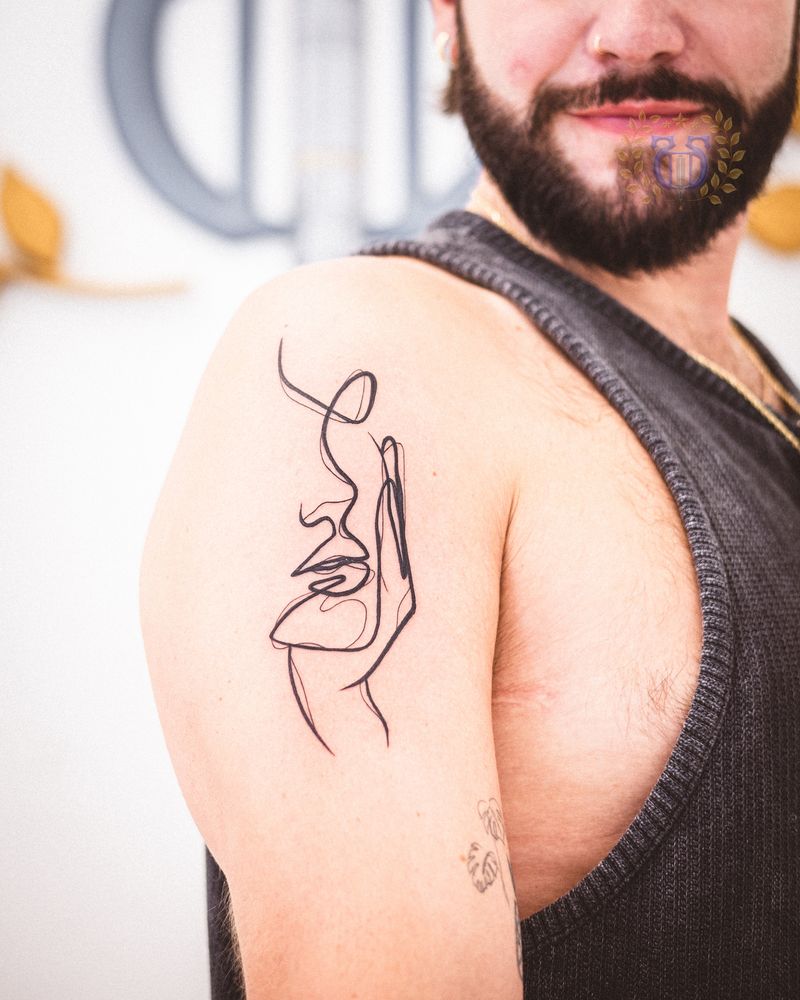
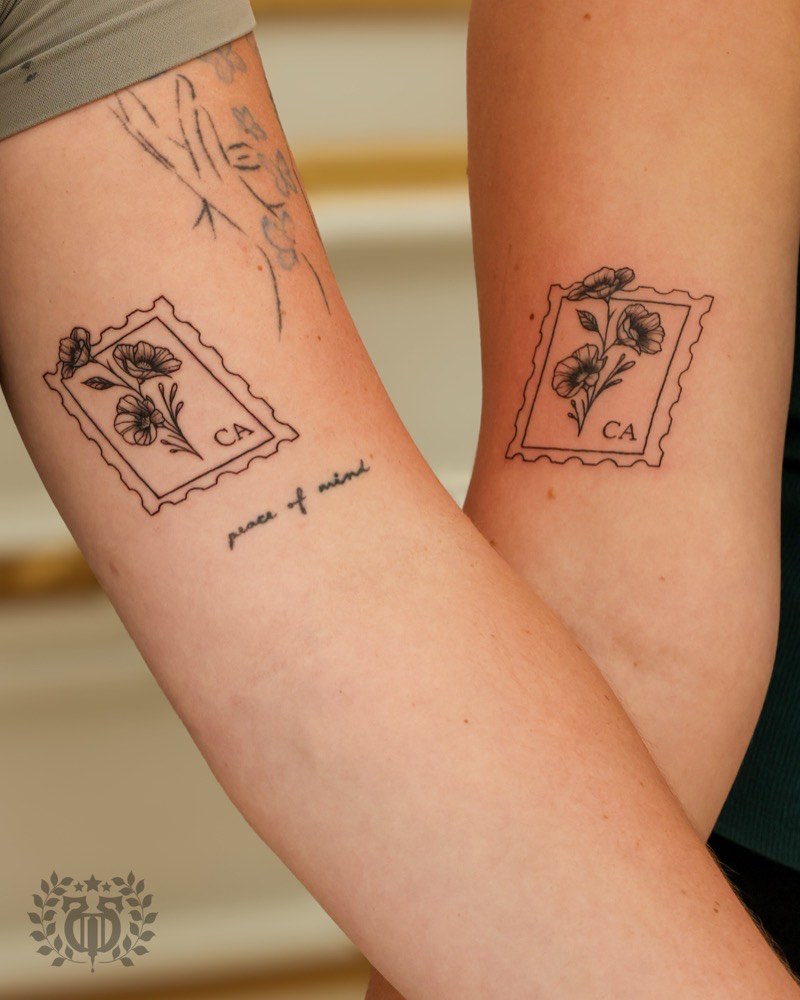
A face, figure, or flower rendered in one unbroken contour. The artist's hand never lifts. Picasso-influenced. Works beautifully on forearm or ribcage at 2–3 inches. Captures gesture without detail, suggesting form through the viewer's completion of the outline.
Single symbol
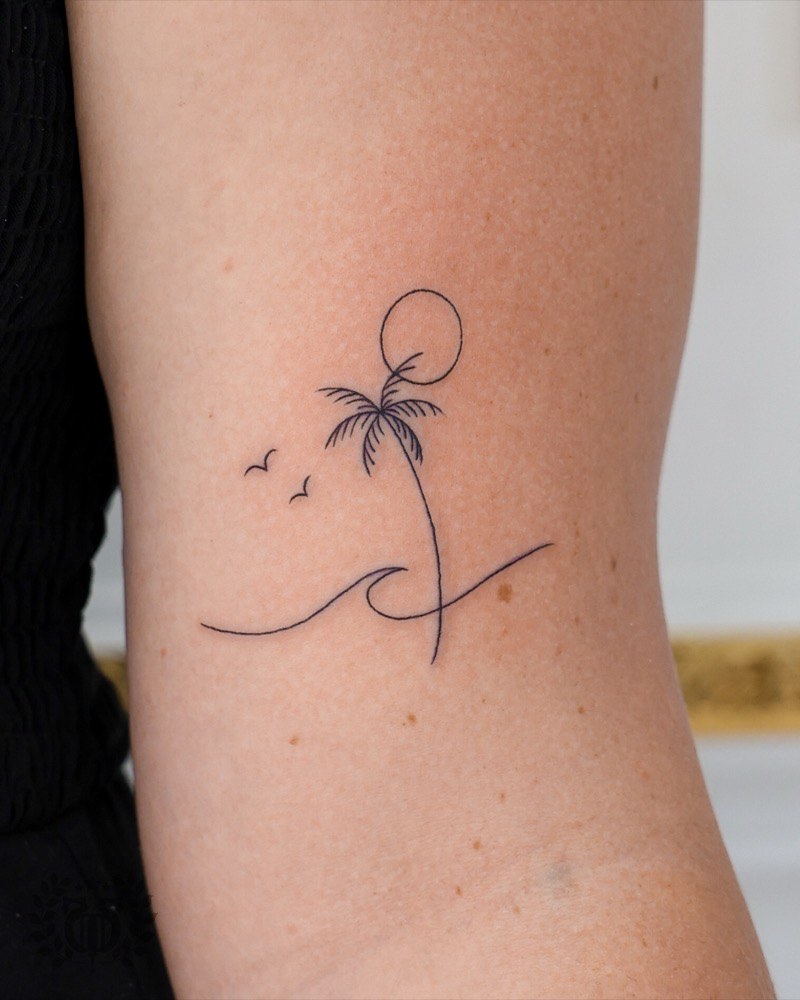
Star, cross, moon, sun — archetypal marks with personal meaning. A five-point star on the ankle, a thin cross at the collarbone, a crescent behind the ear. Universal iconography stripped to its barest form. Quietly permanent; easy to read, impossible to misread.
Roman-numeral date
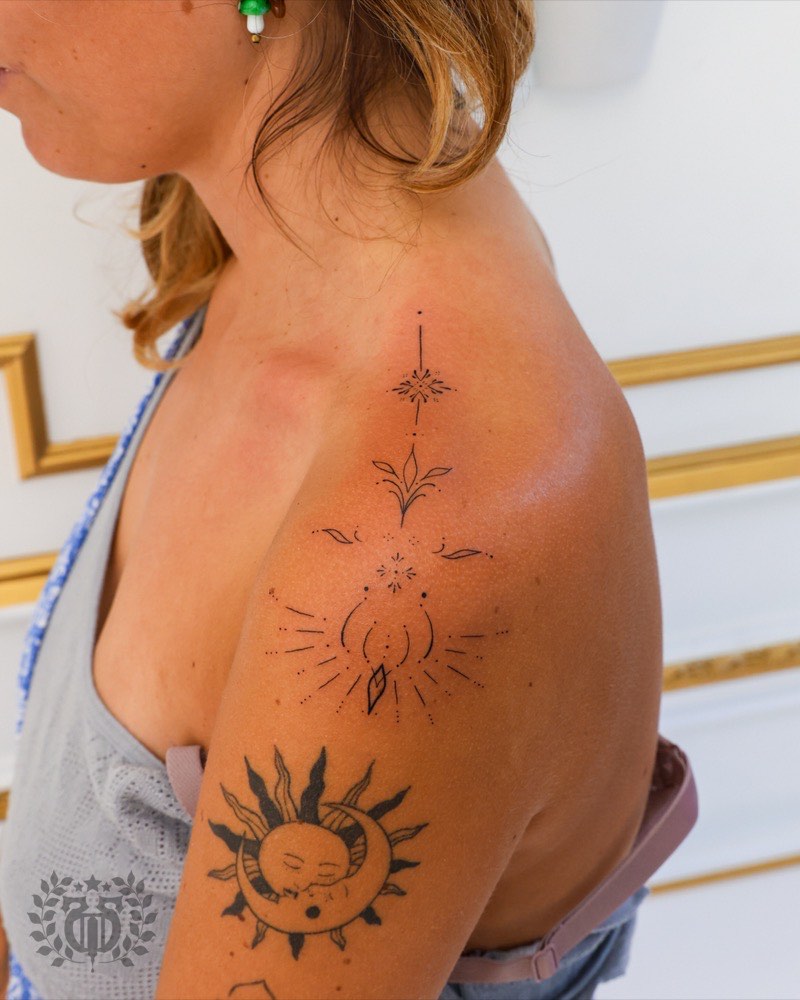
Birth year, anniversary, memorial date rendered in small serif numerals. Often placed along the inner forearm or ribcage. Private coding — readers must decode to access meaning. Looks refined at under 2 inches with clean spacing and period-accurate letterforms.
Single meaningful word
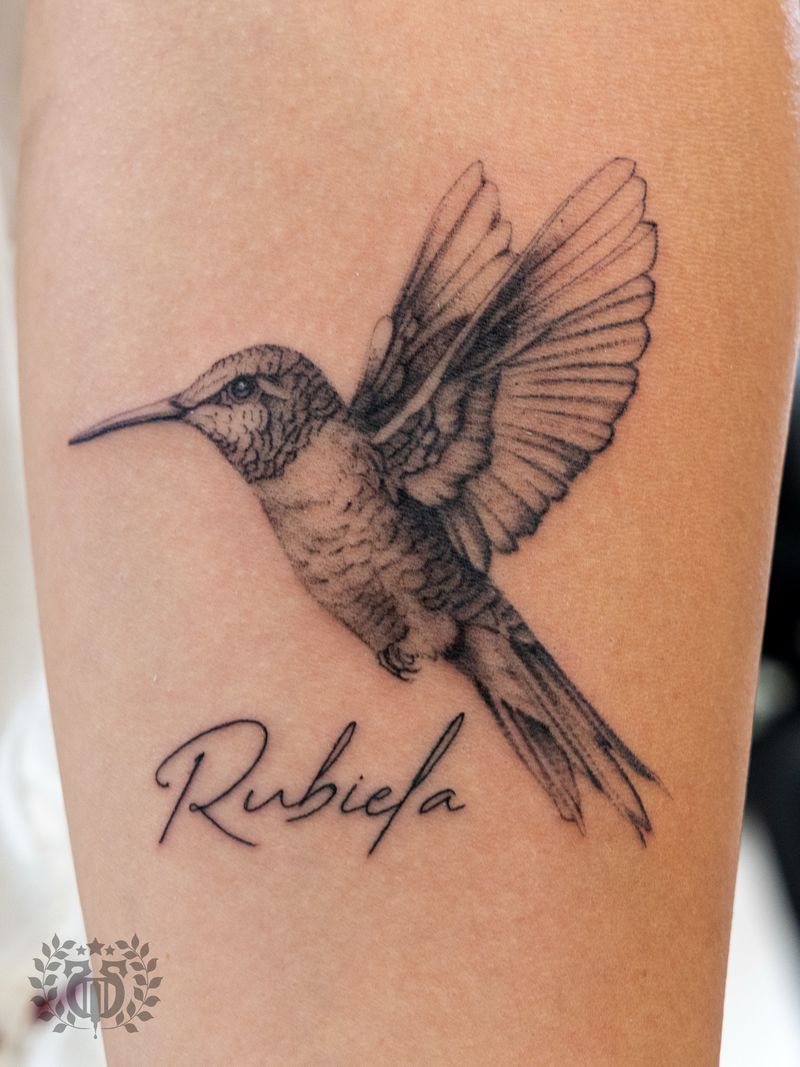
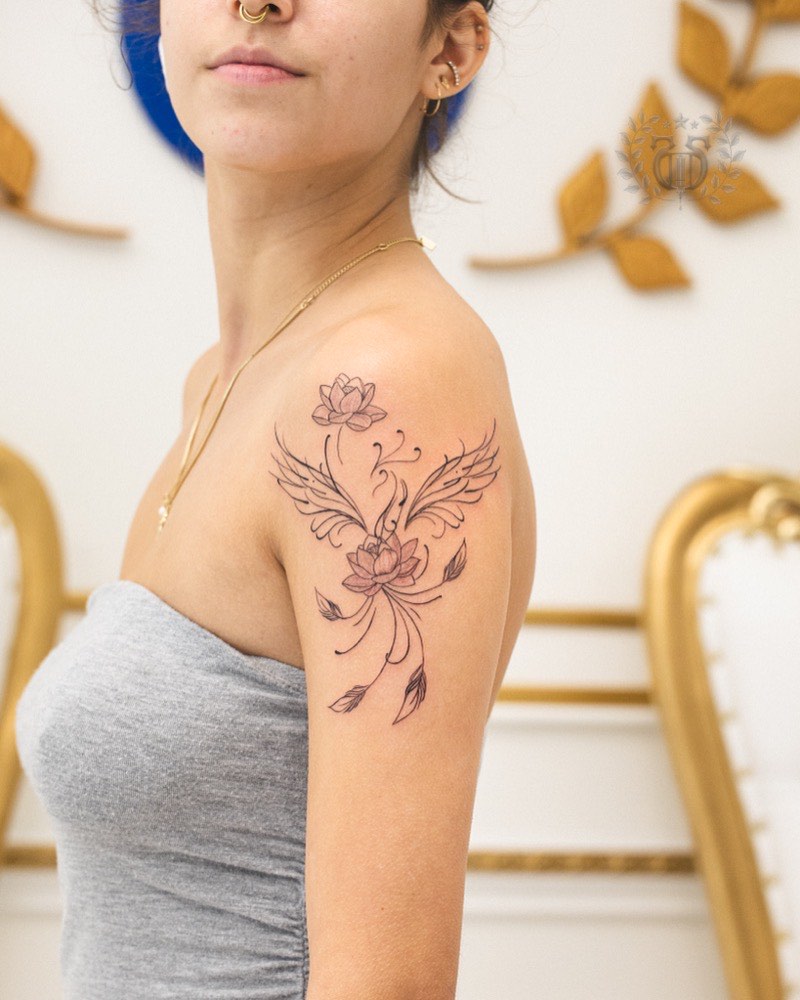
A single word in cursive or sans-serif: “breathe,” “stay,” “hope,” a loved one's name. Half-inch to 2 inches typical. Font choice carries enormous weight here — consult closely on script selection for lifetime legibility.
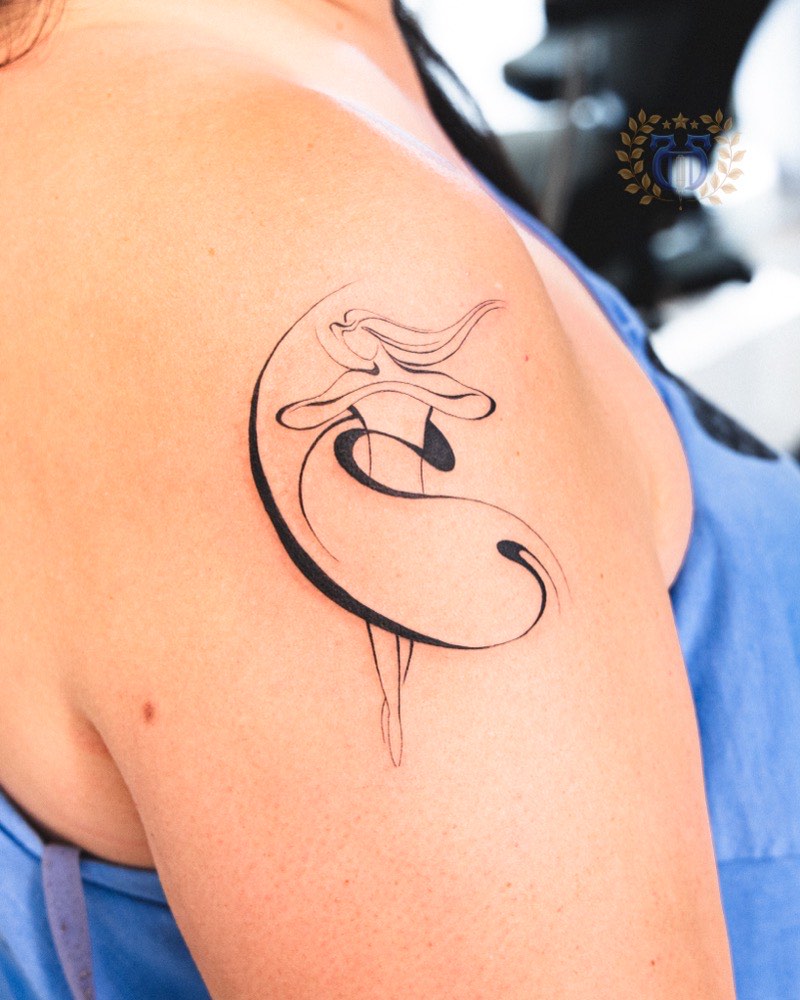
Geometric shape
Triangle, circle, square, diamond. Pure form with symbolic depth. A hollow triangle at the nape, a small filled circle on the wrist, nested geometry at the sternum. Sacred geometry without complexity. Reads cleanly through decades.
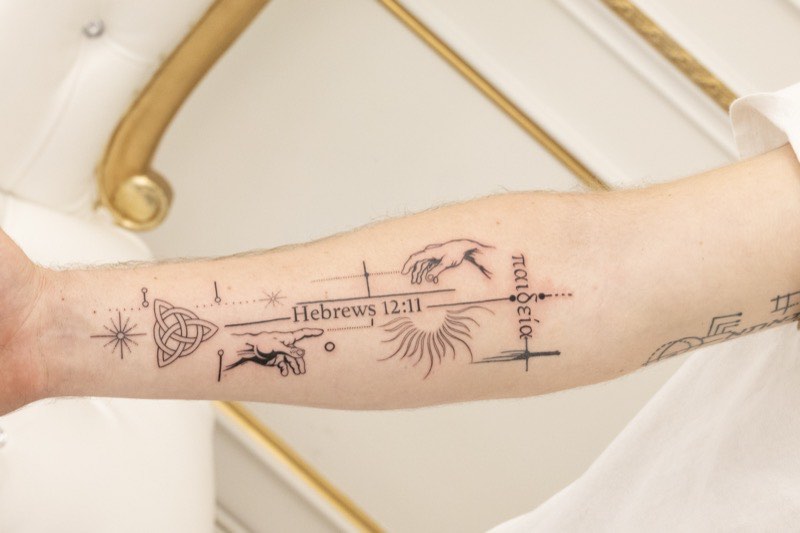
Mountain range
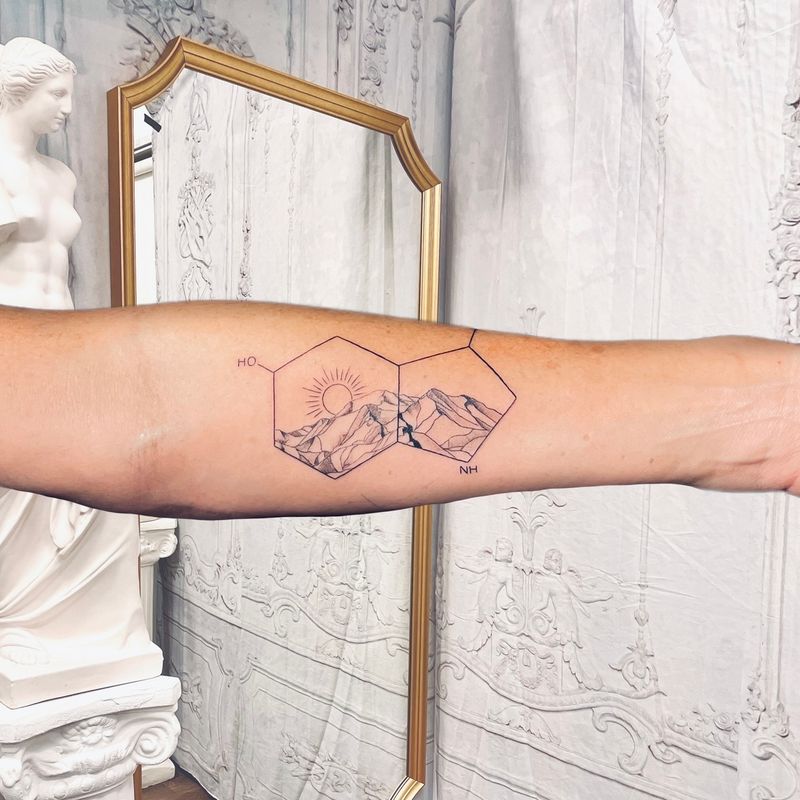
Three triangular peaks in a linear profile. Stoic, grounded, suggestive of challenge and perspective. Commonly placed on the inner forearm or ankle. Sometimes paired with a subtle horizon line or sun disc for compositional balance without breaking the minimalist rules.
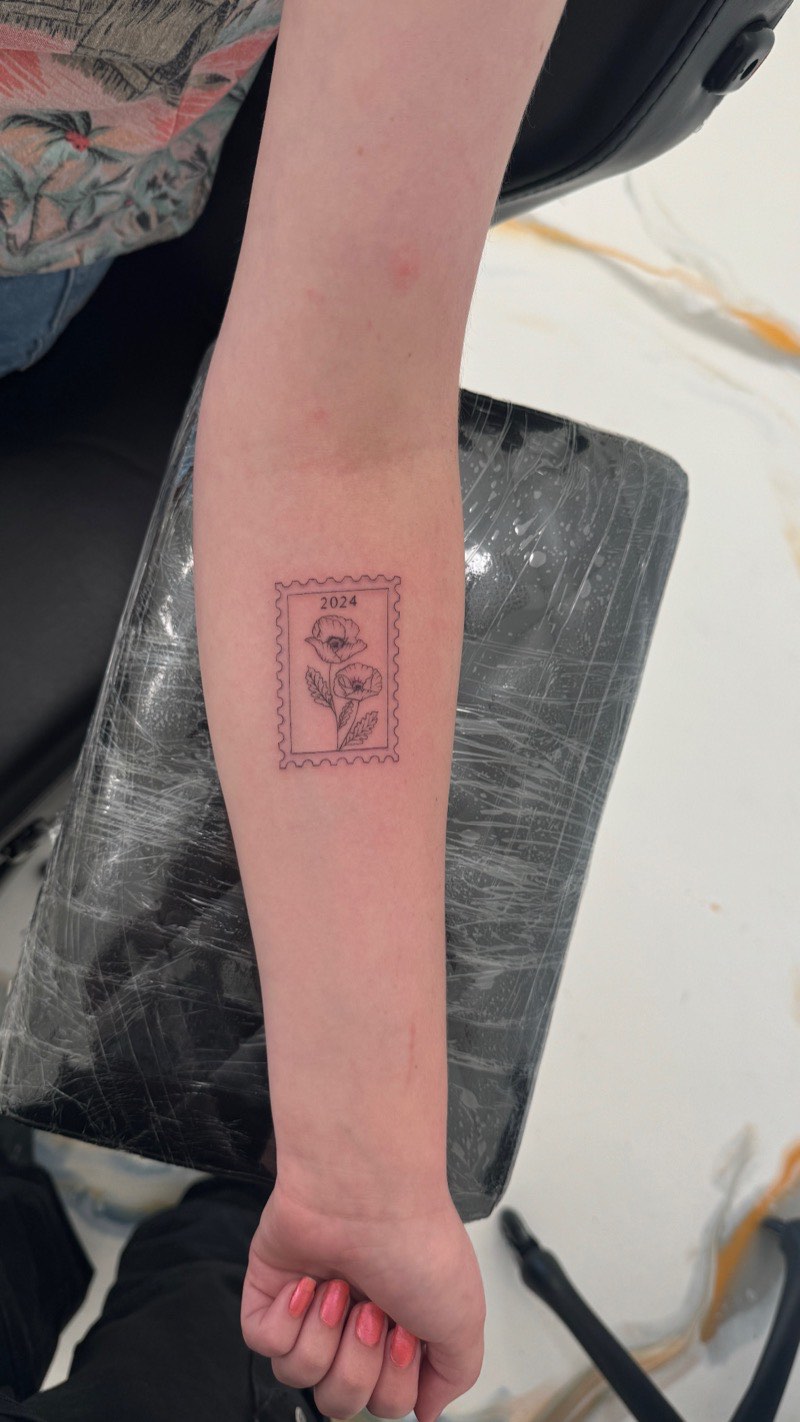
Wave line
A single undulating stroke suggesting water, breath, or continuity. Placed horizontally along the wrist, ribcage, or collarbone. Often chosen by ocean lovers or anyone drawn to fluidity. Variable line weight can add surprising presence to what looks simple on paper.
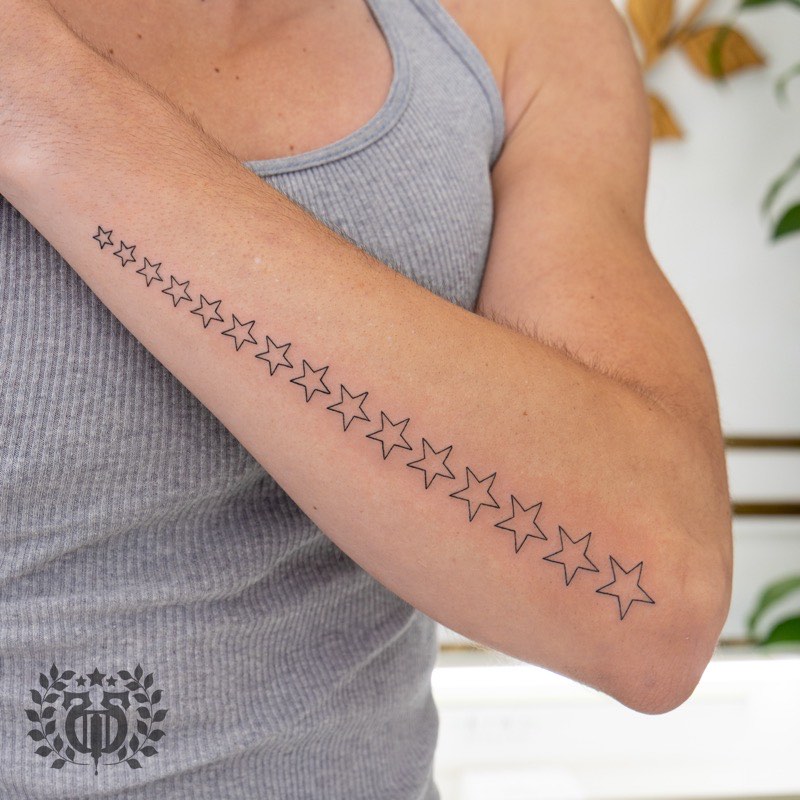
Abstract mark (dot, gesture)
A single dot, a brush gesture, a short dash. The most reductive expression of the style. Often placed on the finger, behind the ear, or at the nape. Marks that function almost as punctuation on the body — quiet, deliberate, unexplained to outsiders.
Below the floor
The floor beneath which nothing reads.
Minimalist is a precise style. Certain requests break the style regardless of the artist's skill.
Miniaturized realism
Minimalism is subtraction, not miniaturization. A detailed portrait shrunk to 1-inch is not minimalist — it's illegible. If you want likeness, you want scale or a different style.
Densely detailed ornamental work
Ornamental tattooing is built from dense pattern. Strip the detail and the style collapses. Minimalist has its own restraint vocabulary; ornamental has its own elaboration vocabulary — they can sit adjacent on a body but rarely inside one piece.
Script paragraphs
Long script breaks minimalism's central rule — restraint as the aesthetic. A single word, a short phrase, a date works. A paragraph at small scale reads as visual noise rather than meaning.
High-friction placements (for hairline work)
Palms, fingers, soles, and feet shed pigment faster than the minimalist aesthetic tolerates. Hairline marks there often need touch-ups inside 2–3 years. Workable only when the wearer accepts the refresh cadence.
Cover-ups over existing dark ink
Minimalist is defined by its absence of density. A cover-up requires the new ink to out-saturate the old — the opposite of what minimalist does. Laser-fade first, then consider a minimalist piece inside the lightened area.
Heavily shaded gradients
Gradient shading belongs to styles with wider needle groupings. Attempting gradient at single-needle scale either heals patchy or pushes the artist out of the minimalist style entirely.
How small
The numbers and the real estate.
Minimalist ages on a narrower margin than most styles. These floors are where pieces are likely to hold legibility at year 10.
The size question, honestly
Below this, internal details blur together as the skin ages and ink spreads microscopically.
Stays legible at year 10. A solitary dot smaller than this tends to read as a freckle rather than a mark.
Shorter strokes read as imperfections rather than deliberate design.
A 2cm mark on a forearm often benefits from being rendered at 3cm for longer graceful aging — larger lines soften without merging.
Placement styles that carry minimalist work
- Inner forearm. Steady skin, moderate sun, flat working surface.
- Outer upper arm. Consistent skin movement, easy to protect from sun.
- Nape & behind ear. Small canvases that amplify restraint.
- Inner wrist. A 2-inch patch becomes a gallery wall for a tiny piece — watch for cell turnover.
- Side of ankle bone. Fragile span that suits small geometric shapes and dates.
- Ribs / sternum. Private placements for pieces the wearer chooses to reveal.
Where a small mark disappears
- Fingers (long-term). High cell turnover; plan for 2–3 year refresh cycles if committing here.
- Palms & soles. Friction sheds pigment; lines blur within months.
- Top of the foot. Shoe friction wears ink faster than most placements.
- Inside of upper arm. Constant bending distorts thin lines; composition loses integrity.
- Behind ear (larger pieces). Micro marks hold; larger pieces age poorly in the crease.
- Over scar tissue. Ink spreads unevenly through scarring; minimalism's precision is unforgiving there.
Minimalist in the wild
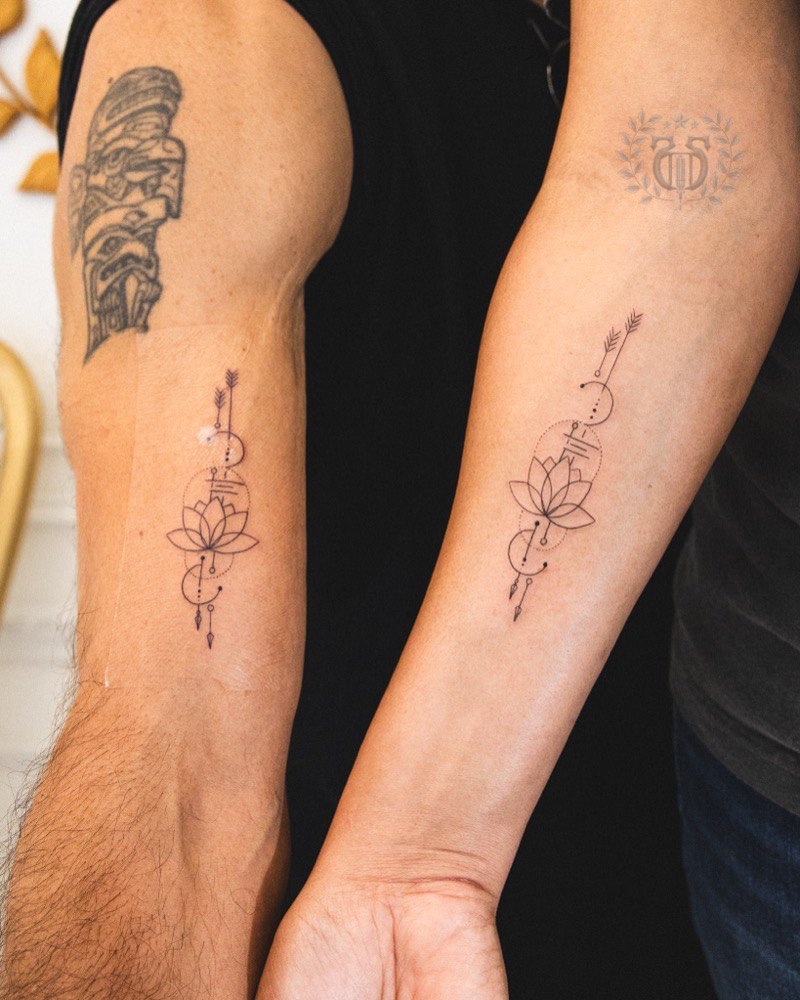
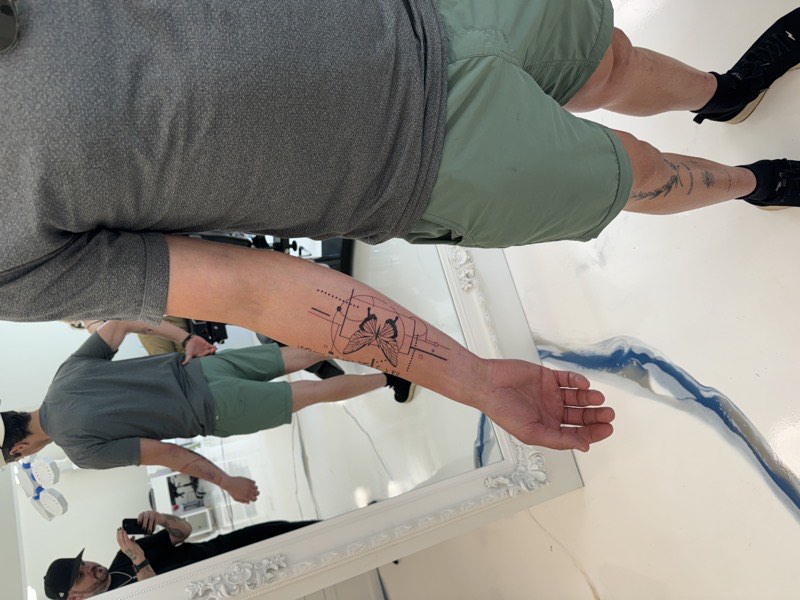
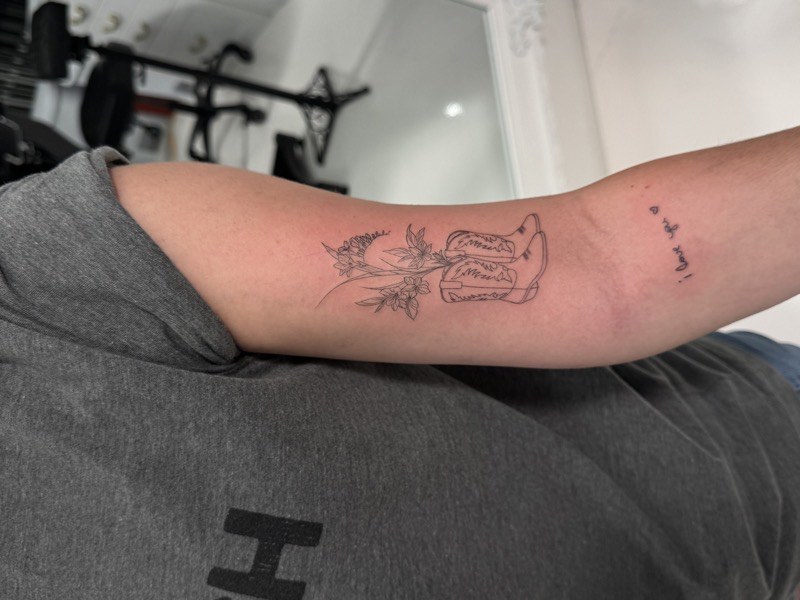
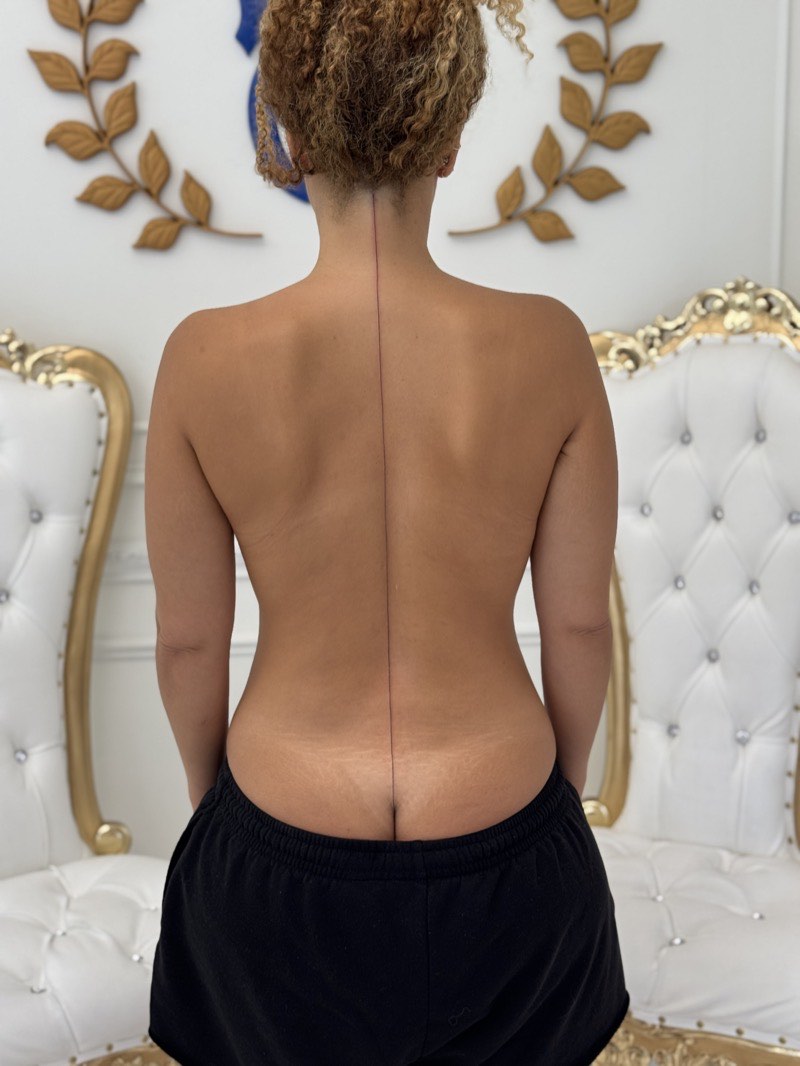
How little turns out to be enough.
How it holds
What happens to a small mark.
Hairline work has a narrower longevity margin than bold styles. Year by year, without the marketing.
Settling, not fading
A healed minimalist piece at one year reads quieter than day-three photos, and that's correct. Edges soften a hair; single dots round slightly. This is the ink finding its final depth, not aging.
The clean-line window
Hairline marks begin their slow translation into lived-in linework. On a script word at 2mm cap height, lowercase stems may read slightly rounder. Most minimalist pieces still read as crisp in this window.
When a small mark needs attention
Fine single-needle lines may ask for a refresh, especially on high-friction placements (fingers, palms). Pieces on forearms, ribs, and upper arms generally hold with no intervention. Dotwork tends to read surprisingly well because the gaps between dots absorb skin movement.
Graceful softening
Micro-text under 2mm may need rework or be accepted as its aged form. Some collectors prefer the watercolor-fountain-pen read at this age. Geometric shapes and symbols hold beautifully through this window with minor refreshes.
The honest long read
Minimalist pieces placed at correct depth still read at 20 years — recognizable, intentional, aged. Pieces placed too shallow by inexperienced artists may be largely gone by year 15. The style rewards specialist execution on the long arc.
Three variables dominate minimalist aging: needle depth, UV exposure, and placement friction. The specialist choice matters more here than in almost any other style — the floor between excellent and mediocre execution is visible at year 10. Specialist small work is priced by precision rather than coverage.
Sizing table
Mark, size, spot.
The sizing table for very small work.
Cousins and myths
Six small-tattoo habits we redirect.
Repeated patterns from first-time minimalist clients. Framing for the next conversation.
“Smaller equals cheaper and easier.”
Minimalist work is among the most time-intensive per square centimeter in tattooing — the margin for error is smallest. Precision is what you are paying for, not coverage.
“I'll just use a generalist for something this small.”
A talented artist in another style is usually the wrong choice for ultra-fine work. The single-needle tradition is a dedicated discipline, not a technique any good tattooer can borrow for a session.
“It's minimal, so I don't need to plan placement much.”
Placement IS the composition in minimalist work. Negative space around the mark has to be planned as carefully as the mark itself. Crowding against an existing tattoo, scar, or freckle cluster kills the piece.
“I want it to look aged from day one.”
Minimalist already softens over time. Pre-aging the design accelerates illegibility. Let the medium do its own work.
“Minimalism is just a trend.”
Minimalism as a visual language has centuries of history — Japanese ma (the power of negative space), Bauhaus reductionism, Matisse cutouts. A well-made minimalist piece will look as considered in 2046 as it does today.
“I want many minimalist pieces scattered across my body.”
Possible, but curate. Unplanned minimalist accumulation usually reads as clutter rather than collection. Plan placement and scale across the body as a whole, even if you add pieces over years.
Your first small piece
Eight steps for a first minimalist piece.
Apollo's path for a first minimalist commission — from reference to long-term care.
Know what you actually want
Bring three or four reference images, even rough ones. The quickest way to clarify a minimalist piece is to see what you're drawn to.
Find a single-needle specialist
Not a generalist who does some minimalist. Their portfolio should be 60–80% hairline or single-needle work, with multi-year healed examples.
Plan placement deliberately
Negative space around the mark is as important as the mark itself. Bring photos of your other tattoos (if any) so the artist can plan spacing.
Ask for the stencil edit
Good minimalist artists routinely edit down at stencil — removing a line, simplifying a shape. Welcome it rather than pushing back.
Commit to the size they recommend
Your artist's suggestion to bump scale up a quarter-inch is usually about longevity, not preference. Trust the recommendation — they've watched their own work age.
Ask about the refresh cadence
High-friction placements need touch-ups every 2–3 years. Forearm and upper-arm work can hold for 10+. Know the cadence before you commit to placement.
Protect it from day one
Broad-spectrum SPF 30+ daily on exposed work, forever. This single habit can double the visible lifespan of a minimalist piece.
Think about accumulation
If you're likely to add minimalist pieces over years, plan the whole region with the artist now. Curated accumulation reads as a collection; unplanned accumulation reads as clutter.
Your mark
Three layers that make a minimalist piece yours.
Minimalist pieces become unmistakable through three small layered choices rather than one big gesture.
The specific mark choice
A moon that matches a birth date, a word only you and one other person use, a line drawing of your dog's silhouette. Specificity is what prevents a minimalist piece from reading as generic.
Weight & medium choices (line vs. dot, solid vs. hollow)
A hollow circle reads entirely different from a filled one. A dotwork triangle reads softer than a linework triangle. These small material choices are where the piece becomes specifically yours.
Placement as private code
Behind the ear for a piece meant to be discovered, inner wrist for a piece you want to see constantly, ribs for a piece you reveal by choice. The placement is part of the meaning.
Small-work habits
Eight requests that come round often.
What keeps good minimalist ideas from landing well — not judgments, a checklist to walk around.
- —Going below the legibility floor for the design's detail
- —Choosing a generalist instead of a single-needle specialist
- —Expecting realism-level detail from a 2-inch piece
- —Skipping sunscreen after healing — UV is the number-one killer of fine lines
- —Placing hairline work in high-friction zones without accepting a refresh cycle
- —Crowding the design up against a scar, mole, or existing tattoo
- —Using a trendy font that will read dated in five years
- —Pre-aging the design rather than letting the medium age itself
Small-work questions
Eight questions about very little ink.
Questions that separate single-needle specialists from generalists who occasionally take small work.
- Do you have small work that is five years old or more?
- What needle configuration and machine do you prefer for single-needle work?
- At this size and placement, what do you recommend — and what would you talk me out of?
- What's your touch-up window, and how do you handle refresh cycles on high-friction placements?
- Do you edit stencils down — removing a line or simplifying a shape — during approval?
- How do you handle negative-space planning around existing tattoos or features?
- Have you ever declined a minimalist commission? What was the situation?
- Is single-needle the majority of your portfolio, or occasional work?
A specialist has a real answer to every one. Vague answers are a signal. Ask what the sitting will cost while you are there.
FAQ
Small tattoos, real questions.
Eight questions about small work, most of which turn out to be one question: how small is too small.
How is minimalist different from fine line?
Fine line describes the technique — thin, precise lines made with a single-needle or tight grouping. Minimalist describes the philosophy — stripping a design to its essential form. Most minimalist tattoos use fine-line technique, but fine-line can also render dense, detailed work. Minimalist is about restraint in composition; fine-line is about restraint in the line itself.
How small can I go?
Our practical floor sits around 1.5–2 inches for most designs. Below that, lines start to blur together as skin ages and ink spreads microscopically. A stick figure might survive smaller, but anything with internal detail — a tiny flower, a word, a face — needs room to breathe. Your artist will tell you honestly where your specific design bottoms out.
Does minimalist age well?
When executed properly, yes. The key is line weight appropriate to the design and placement. Hair-thin lines on high-friction areas like fingers or palms will fade faster. Minimalist pieces on the forearm, ribcage, or upper arm can hold beautifully for decades. Sunscreen and hydration matter more with minimalist work because there's less ink mass to buffer fading.
Can I get my first tattoo in minimalist style?
Absolutely, and many clients do. Minimalist tattoos are often a gentler introduction — shorter sessions, simpler aftercare, less visual commitment. That said, smaller does not mean easier to execute. Your first tattoo deserves a specialist regardless of size, so book with an artist whose portfolio shows consistent minimalist results.
Why is minimalist sometimes more expensive than expected?
Because the artistry lives in precision, not coverage. A single clean line requires the same setup, the same sterile field, the same expertise as a larger piece — and often more steadiness. You're paying for the years of practice that make a 2-inch design look effortless. Shop minimums exist for this reason. Pricing discussed at consultation so there are no surprises.
Can I add detail to a minimalist tattoo later?
Yes, and this is one of minimalist's quiet strengths. A simple outline can be expanded with shading, color, or additional elements as your taste evolves. Many clients return years later to build around an early minimalist piece. Just tell your future artist it's open-ended so they plan composition with growth in mind.
Is minimalist just a trend?
Minimalism as a visual language has centuries of history — traditional Japanese brushwork, Bauhaus design, Matisse cutouts. The current minimalist tattoo wave is a contemporary expression of a very old idea. Trends come and go, but the principle of essential form is permanent. A well-made minimalist tattoo will look as considered in 2046 as it does today.
Does it hurt less because it's small?
Generally, shorter sessions hurt less in total, but the sensation per minute is comparable. Single-needle work actually feels sharper to some clients than a larger magnum grouping because the pressure concentrates on a tiny point. The relief is that you're usually done in 30–90 minutes rather than several hours.
One mark, one spot
Start with one mark, one placement — we'll build the piece around restraint.
Minimalist is a specialist's craft. Bring two or three reference images, the mark you're considering, and the placement you're drawn to. Then we test whether the design survives shrinking. If it does not, the fix is a slightly larger tattoo, not a more careful artist. Cost is discussed in the room.