Tattoo Ideas
Forearm Tattoo Ideas
Ask any artist at our Main Street studio where they would put their own next piece and the forearm comes up more than anywhere else. It is flat, stable, easy to heal, and it holds ink better over the decades than almost any other placement on the body. This guide covers what actually matters when planning a forearm tattoo, from inner versus outer placement to the sun-exposure reality of living in Los Angeles.
Book a consultationWhy the Forearm Is the Best Canvas on the Body
Skin is not a uniform surface, and artists do not treat it like one. Some placements stretch constantly, some sit over bone with no padding, and some spend their lives rubbing against waistbands and shoe leather. The forearm avoids nearly all of those problems. The skin is stable, the muscle underneath gives the needle a firm, even surface to work against, and the area rarely changes shape dramatically with weight gain or age.
That stability matters for more than comfort. Line work stays crisp because the canvas is not flexing and creasing hundreds of times a day the way ribs and elbow ditches do. Healing is straightforward: the forearm does not sweat heavily, does not sit under tight clothing, and is easy to wash and moisturize. Compared to hands and fingers, where ink famously falls out, the forearm holds pigment reliably. If someone asks us for the single highest-percentage placement for a first significant tattoo, the forearm is the answer almost every time. Browse our tattoos page and notice how much of our portfolio lives there — it is not a coincidence.
Inner Forearm vs. Outer Forearm
The inner forearm: the piece that faces you
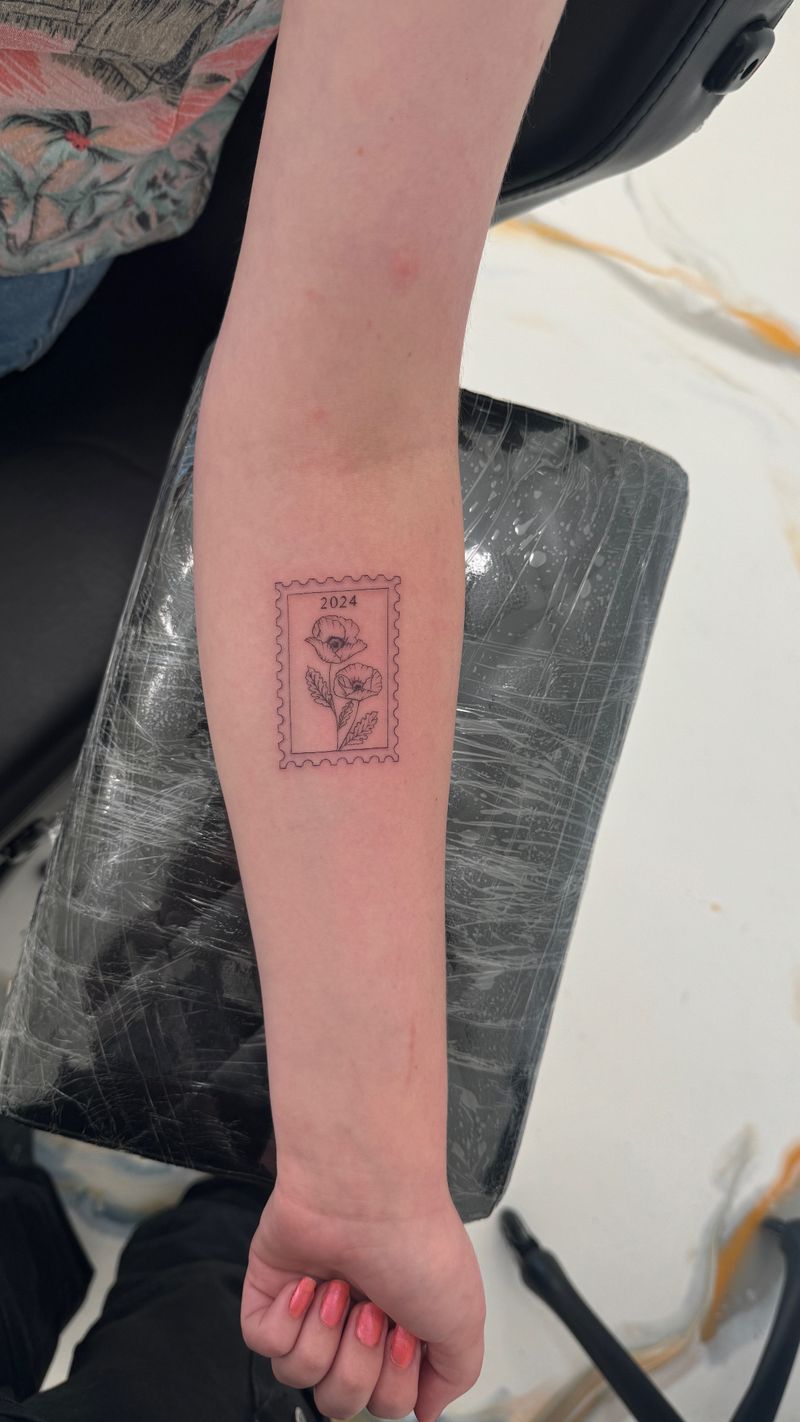
The inner forearm is the placement you see all day, every day, in your own natural line of sight. That makes it the classic home for personal work — script, dates, memorial pieces, a partner's handwriting, anything you want as a private reminder rather than a public statement. The skin here is softer with less hair, which flatters fine-line and delicate botanical work.
Two honest caveats: sensitivity climbs near the wrist and the crease of the elbow, so plan for a spicier session at those borders. And because the inner arm rests against your body, it catches less incidental sun — a quiet advantage for longevity.
The outer forearm: the piece that faces the world
The outer forearm is billboard placement. When you shake hands, reach for a coffee, or rest your arm on a car door, this is the surface people see. It suits bold, graphic work that reads clearly from across a room — traditional eagles and panthers, blackwork, large botanical or animal pieces. The skin is a touch tougher and the session generally sits on the easier end of the pain scale.
The trade-off is exposure, both social and solar. An outer forearm piece is hard to hide in short sleeves, and in LA it will catch more UV than nearly any other placement you could choose. More on that below, because it genuinely changes how we design these.
Vertical Compositions vs. Wrap-Arounds
The forearm gives you two fundamentally different layouts, and choosing early makes every other decision easier.
Vertical pieces run wrist to elbow on one face of the arm. The forearm's natural taper — wider at the elbow, narrower at the wrist — is a gift for compositions with directional flow: daggers, swords, cascading florals, snakes, koi swimming upstream, single-column script. A good artist designs into that taper rather than fighting it, letting the design breathe wide at the top and resolve cleanly at the wrist.
Wrap-around pieces treat the forearm as the cylinder it is. Done well, a wrap creates motion — dragons, waves, wind bars, and ornamental bands were practically invented for this. Done carelessly, wraps have a predictable failure mode: the seam. Every wrap has a line where the design meets itself, and any critical detail placed across that seam will distort when the arm rotates. The professional move is to run the seam along the inner arm where it is least visible and keep focal points — faces, eyes, lettering — on the flats. If an artist proposes a wrap without ever mentioning where the seam lands, ask.
Building Toward a Half-Sleeve Without Painting Yourself Into a Corner
Most half-sleeves in our books did not start as half-sleeves. They started as one forearm piece, and the owner came back. A little foresight makes the difference between a cohesive sleeve and a patchwork you eventually pay to fix.
- Anchor first. Place your strongest, largest piece on the outer forearm as the visual anchor, sized generously. Undersized first tattoos are the most common sleeve-planning mistake we see.
- Leave intentional gaps. Negative space between early pieces becomes background — smoke, wind, water, geometric fill — that ties everything together later. Cramming pieces edge to edge removes that option permanently.
- Respect the ditch. The crease of the elbow moves constantly and hurts more than the rest of the forearm. Plan for it deliberately rather than letting two unrelated pieces collide there.
- Stay in one style family. A fine-line piece next to a bold traditional piece next to soft realism will always read as three separate tattoos. If you are collecting from multiple artists, keep them within a compatible style so the future background can unify the arm.
If a sleeve is even a distant possibility, say so at your first appointment. Designing piece one with piece four in mind costs nothing and saves plenty.
The LA Sun Conversation We Have With Every Client
Here is the honest part. Forearms take more UV than any other commonly tattooed placement, and in Los Angeles that is not a small factor. Your driving arm hangs in the window on the 10, and beach days, patio lunches, and morning runs all happen in short sleeves for eleven months of the year. UV breaks down pigment — fine lines soften first, then solid blacks drift toward gray-blue.
Two practical consequences. First, aftercare here is not just the two-week healing window: a healed forearm tattoo in LA should get SPF 30 to 50 whenever it will see real sun, full stop. A fresh, still-healing tattoo should see no direct sun at all — cover it, do not sunscreen it, until it is fully closed. Second, sun exposure should influence the design itself. On an outer forearm we will often recommend slightly bolder line weights and denser blacks than the reference photo, because that is the version that still looks sharp in 2036. Ultra-fine single-needle work can absolutely live on a forearm, but it belongs on the inner face and it demands a client who is genuinely disciplined about sunscreen. We would rather tell you that before you book than have you learn it from a faded tattoo.
Style Pairings That Work on the Forearm
- Fine-line and botanical — inner forearm, vertical. Soft skin, low sun, close to your own eye line where subtle detail is actually appreciated.
- American traditional — outer forearm. Bold lines and saturated color were engineered to survive sun and time; this is the placement the style grew up on.
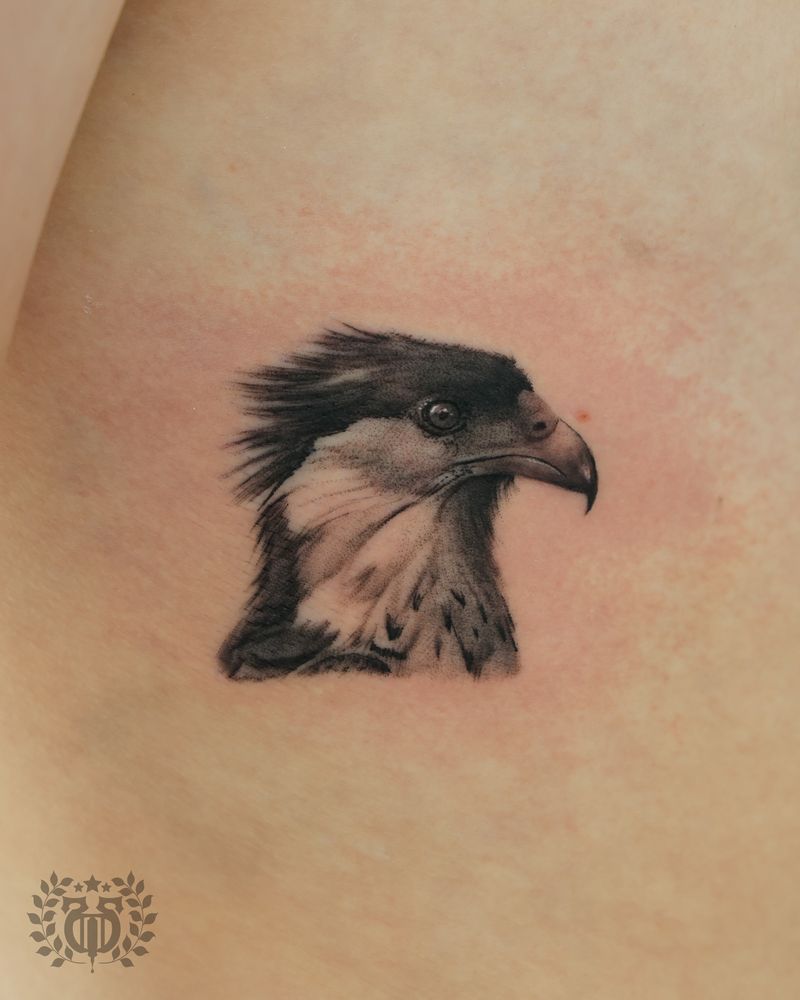
- Black & grey realism — inner or outer vertical panel. The forearm's flat planes let portraits and drapery read without distortion.
- Japanese — the wrap's natural home. Dragons, koi, waves, and wind bars are built for cylindrical composition and scale beautifully into a half-sleeve.
- Blackwork and geometric — bands and ornamental wraps that use the arm's symmetry; precision matters, so seam placement is everything.
- Script and dates — inner forearm, sized honestly. Lettering needs room between strokes to stay legible for decades; we will always advocate for slightly larger than you think.
Planning Your Forearm Piece
The forearm rewards planning because you will see the result every single day. Bring your references, but bring your honest habits too — how much sun you get, whether a sleeve is in your future, whether the piece is for you or for the room. If you are still gathering direction, our tattoo ideas hub covers other placements and subjects. When you are ready to talk specifics, book a consultation and we will map the design to your actual arm — taper, seam, ditch, and all.
The forearm is also the lower half of every sleeve, and a forearm piece planned with that in mind gives you options later. If a full arm is anywhere in your thinking, read our sleeve tattoo guide before you commit to a composition here.
What clients ask about forearm tattoos
Do forearm tattoos hurt?
The forearm is one of the most comfortable placements on the body. The muscle padding and stable skin keep most of the session very manageable, and many clients rate it a 3 or 4 out of 10. Expect sensitivity to climb near the wrist and the crease of the elbow, where nerves sit closer to the surface. If you are weighing whether to carry a forearm piece up over the joint, our guide to elbow tattoo ideas covers how that skin creases and heals.
Which hurts more, the inner or outer forearm?
The inner forearm is generally more sensitive because the skin is thinner and more nerve-dense, especially close to the wrist. The outer forearm is one of the easiest spots on the entire body. The difference is real but modest — placement should be decided by the design and how you want to see it, not by a small gap in comfort.
How long does a forearm tattoo take to heal?
Surface healing takes about two to three weeks, with full healing below the skin closer to two months. The forearm heals faster than most placements because it is easy to keep clean, does not rub against clothing, and does not flex dramatically. Keep it out of direct sun and out of pools and the ocean until it is fully closed.
Will my forearm tattoo fade in the LA sun?
Without protection, yes — forearms get more UV exposure than almost any other placement, and Los Angeles compounds that with year-round sun. Fine lines soften first and blacks slowly shift toward gray-blue. Daily SPF 30 to 50 on healed work dramatically slows this down, and periodic touch-ups can keep a well-made piece sharp for decades.
Can I start with one tattoo and build it into a half-sleeve later?
Absolutely, and it is the most common way half-sleeves happen. The key is telling your artist at the first appointment so the piece is sized and positioned with future work in mind. Well-planned gaps become background later; a cramped or undersized first piece limits every design decision that follows.
Are wrap-around forearm tattoos a bad idea?
Not at all — they are just less forgiving of poor planning. Every wrap has a seam where the design meets itself, and detail placed across that seam distorts as the arm rotates. A good artist runs the seam along the inner arm and keeps focal points on the flat surfaces, which is exactly how traditional Japanese sleeves have handled it for generations.
What tattoo styles age best on the forearm?
Bold styles with strong line weight — American traditional, Japanese, and blackwork — age best, especially on the sun-exposed outer arm. Fine-line and single-needle work can hold up well on the inner forearm with disciplined sunscreen use. Whatever the style, solid technique and sun protection matter more than the specific genre.
Are forearm tattoos a problem for work?
Far less than they used to be, but it depends on your field. A forearm piece is visible in short sleeves and hard to hide without long sleeves year-round, so be honest with yourself about your industry before choosing the outer arm. The inner forearm is naturally more discreet since it faces your body in most postures.