Tattoo Ideas
Moth
Species sets the reading before style gets a vote. Death's-head carries a skull on its thorax and a film's worth of baggage. Luna brings trailing tails that vanish under an inch. Atlas brings wingspan and those snake-head wingtips. Twelve directions, the feathered antennae rushed work always drops, and the pinned-specimen convention behind nearly every moth tattoo.
Book a consultationThe display-case pose
Almost every moth tattoo is drawn in a pose no living moth holds.
Look at a hundred moth tattoos and ninety of them show the same thing. Wings pulled flat and open, left matching right, seen from directly above, every marking on display. That is not a moth at rest. That is a museum drawer. The pose comes out of nineteenth-century entomology, where a collector relaxed a dead specimen, pinned it through the thorax, and spread the wings on a grooved board until they dried flat. Cabinet plates were drawn from those boards. Flash was drawn from the plates. The convention has been copied ever since without anyone naming it out loud. There is nothing wrong with choosing it. But choose it knowing it is a display convention rather than an animal, because the alternative exists and almost nobody asks for it.
What a living moth does with its wings
Most moths rest with the forewings closed over the hindwings, tented like a shallow roof, or swept flat back along the body. Hawkmoths hold a hard swept-back delta that looks more like an aircraft than an insect. Underwing species hide their colour completely until they move. A luna at rest folds those long trailing streamers into one narrow vertical line. Ask for the resting pose and you accept that half the markings stay hidden. That concealment is the entire character of the animal, and it is why a folded moth reads alive and a spread moth reads collected.
Feathered antennae are the tell
A butterfly carries a thin antenna with a small club on the tip. Male saturniids and many hawkmoths carry pectinate antennae: broad, comb-toothed, feathered down both edges, built to pull a single pheromone molecule out of a mile of night air. That one detail is what makes a viewer read moth rather than butterfly, and it is the first thing a rushed artist simplifies away. Look for it in a portfolio before you book. Two hairline curves with a dot on the end is a butterfly wearing moth wings.
The skull sits on the thorax, not the wing
Clients ask for a death’s-head and hand over a reference where the skull has been blown up across the whole forewing. On Acherontia atropos the pale skull-shaped patch sits on the thorax, the small furred section between the wing roots. It is a thumbprint, not a poster. Drawn honestly it is subtle and needs roughly four inches of overall spread to survive healing. Drawn wing-sized it stops being a hawkmoth and becomes a skull with wings attached, which is a perfectly good tattoo and a completely different one.
The outline does the identifying
Scallop, notch, hook. An atlas moth has recurved forewing tips that genuinely mimic a snake’s head, false eye included, which is why the species is called the snake’s head moth in parts of Asia. A luna has the long trailing hindwing tails. A cecropia carries crescent windows on all four wings. Get the silhouette right and the piece names its own species from across a room. Get it generic and no amount of interior shading rescues it.
If you want the pinned version, commit to it
Half a specimen piece is worse than none. Spread wings with no pin, no label and no case is just the default pose with nothing behind it. Committed, it becomes a small object with its own internal logic: pin through the thorax, hand-lettered binomial underneath, a collection date, a ruled border, sometimes a shadow-box frame. That is a real brief, artists enjoy drawing it, and it gives a fine-line piece structure that a floating moth never has.
Mirrored drawings punish drift
A spread moth is a mirrored drawing, so any difference between the left wing and the right one reads instantly. On skin with its own centre line to work against — sternum, spine, nape, mid-back — the body helps you. Set the same moth off-centre on a bicep and the artist has to build the symmetry with nothing anatomical to lean on. Look at the stencil in a mirror before the needle starts. A mirror exposes drift that the eye forgives head-on.
The species ladder
“A moth” is not a design. A species is.
There are more than a hundred thousand described moth species standing behind the sentence I want a moth tattoo, and the client almost always has one particular one in their head without knowing what it is called. Five questions pull it out. Take them in this order. Answer the fifth one first and you will fall for a design your skin cannot physically hold.
Which one, by name?
Death’s-head hawkmoth, luna moth, atlas moth, cecropia, polyphemus, Spanish-moon — each carries a different reading. Death’s-head is memento-mori-coded (Silence of the Lambs cemented it in Western pop culture). Luna is transformation and night-beauty. Atlas is size and majesty. Pick the species first. A generic moth is a shrugged-shoulders tattoo.
What is it for?
Moths carry darker symbolism than butterflies — nocturnal, drawn-to-the-light, transformation through shadow, memento mori. “It’s for the grief.” “It’s for the change I’ve been through.” “I love how they look.” Any of those is enough. “My friend has one” is not a reason.
Spread or at-rest?
Spread-wing reads as display — full symmetrical composition, dorsal view, every marking visible. At-rest reads as contemplation — folded wings, side view, quieter. Different design problem. Decide this before style because the two compositions have different scale requirements.
Realism or stylized?
Realism delivers accurate wing markings, antennal structure, correct abdomen proportions — demands a specialist and at least 5 inches of scale. Stylized takes the moth shape and renders it in fine line, blackwork, or illustrative — works smaller, ages more predictably. Different artistic languages.
What is the biggest the space allows?
Scale sets the style. Under 3 inches eliminates realism wing detail. Under 4 inches compresses death’s-head skull marking past legibility. Atlas moth at under 6 inches loses its whole point, which is massive wingspan. Your honest scale sets your honest moth.
Flash · ready to ink
Moth flash designs
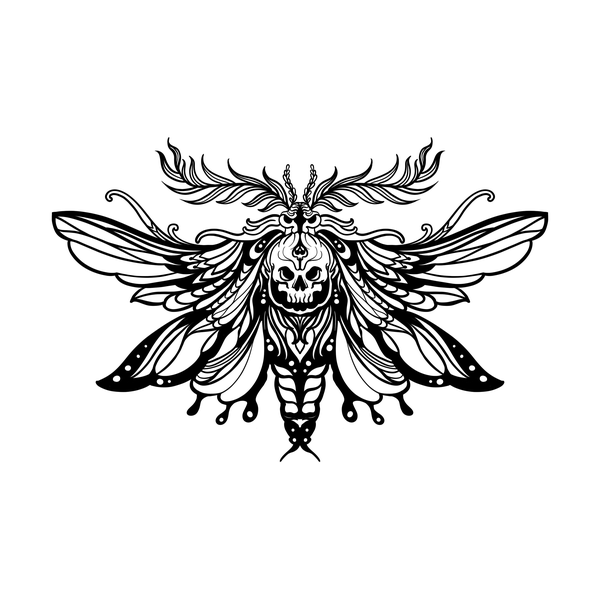
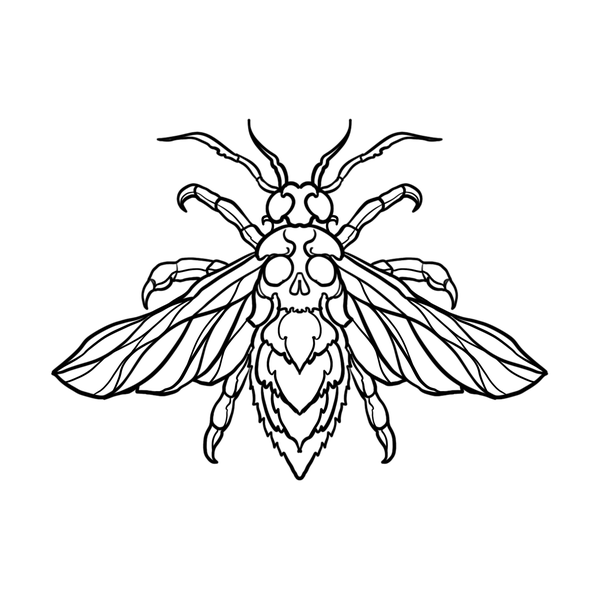
11 hand-drawn designs from our flash collection — book any one as-is, or use it as the starting point for a custom piece. Sizing, placement and linework dialed in at your consultation.

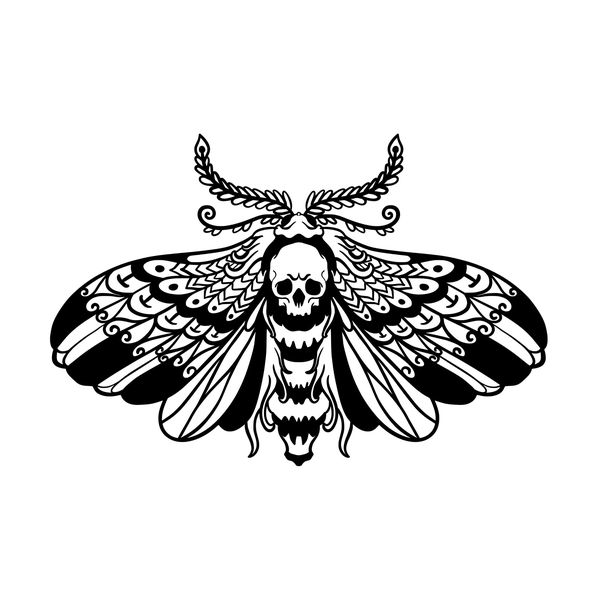
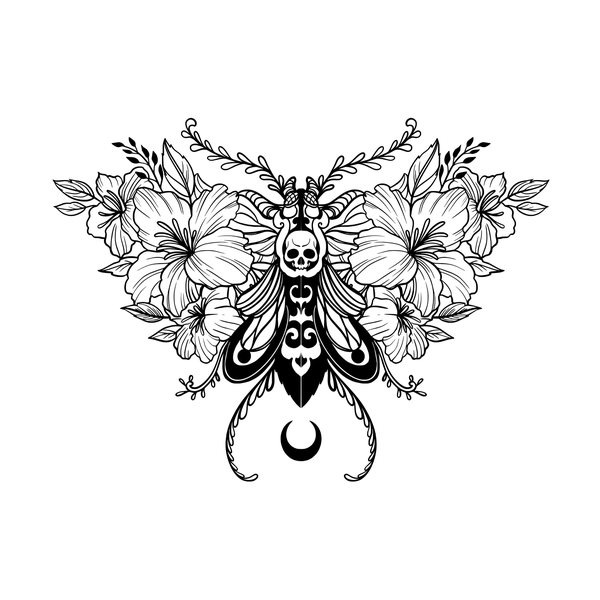
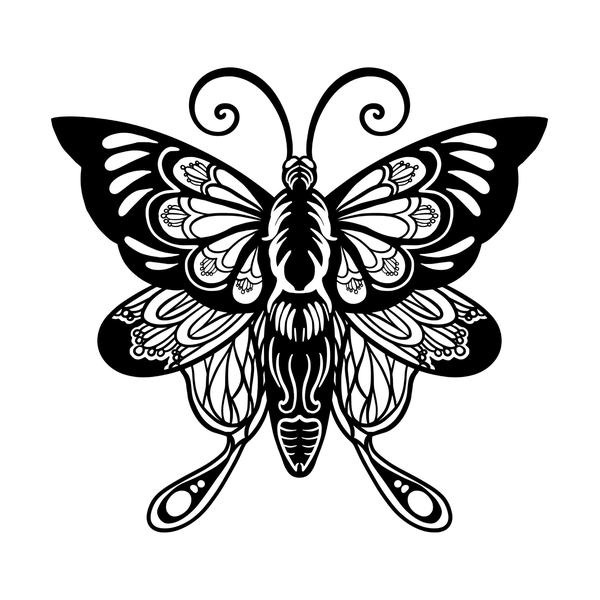
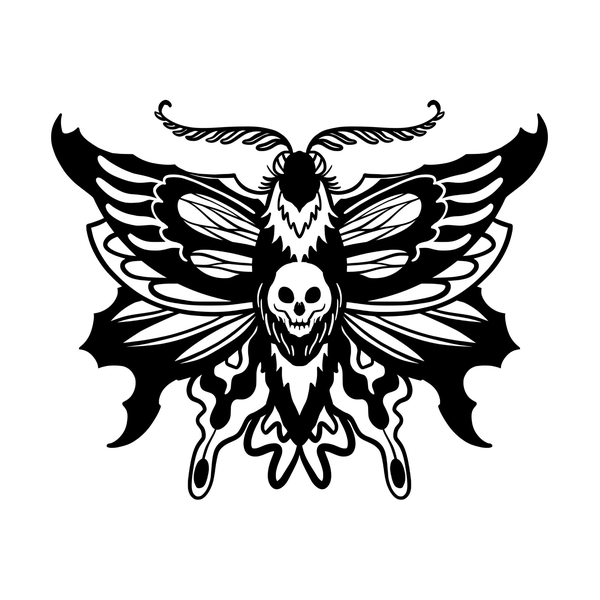
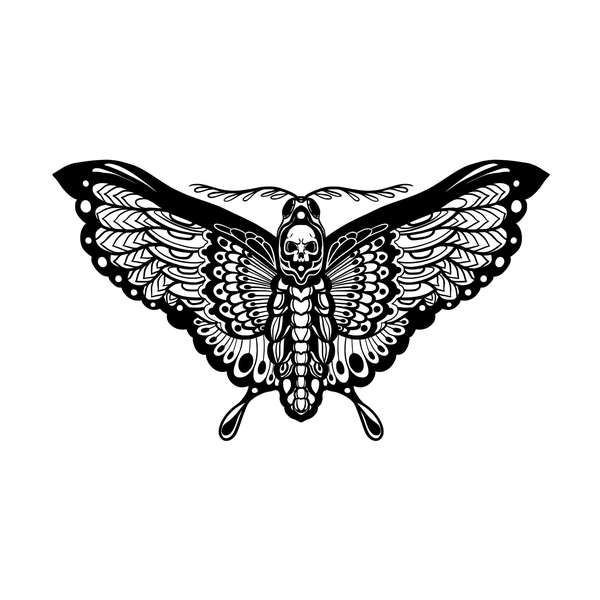
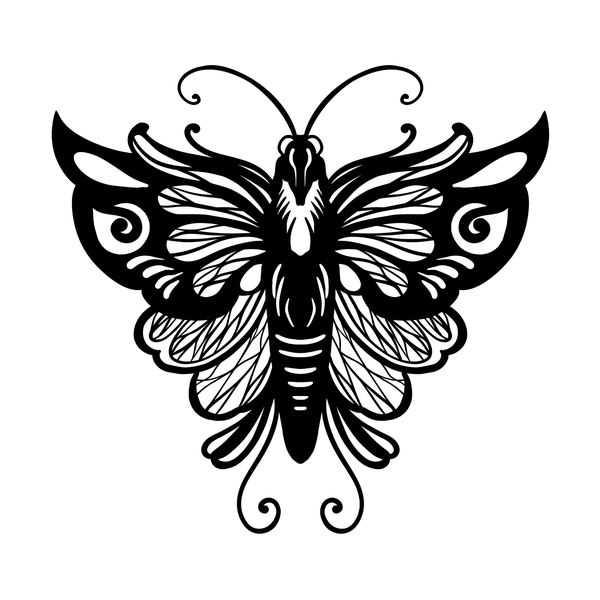
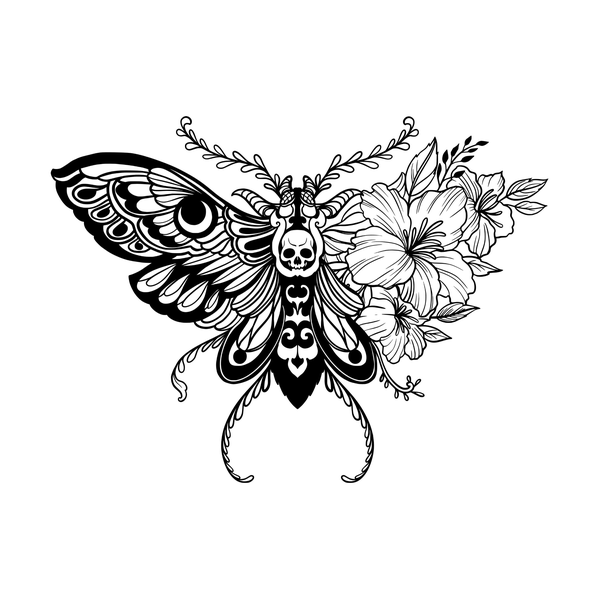
A generic moth is a shrugged-shoulders tattoo. Pick the species first.
Death’s-head hawkmoth carries the weight of Silence of the Lambs. Know what you’re wearing before you wear it.
Moths fold their wings, have feathered antennae, read nocturnal. Butterflies don’t. Know which one you want.
Twelve moths people name
Sorted from species-led at the top to composition-led at the bottom.
A death’s-head realism piece on the sternum and a fine-line moth-and-moon on the inner forearm share a silhouette and nothing else. The first is an anatomy exercise that lives or dies on wing-marking accuracy, and it needs a specialist. The second is a mood piece where the moon does half the work, and a good fine-line artist can hold it. Twelve directions, ordered so that the ones driven by a named species come first and the ones driven by a companion element come last.
The death’s-head hawkmoth
Skull-marked thorax, memento mori iconography
Acherontia atropos — the moth with a pale skull-shape on its thorax. Cemented in Western pop culture by Silence of the Lambs and carried ever since. The most-requested moth design. Realism or black-and-gray illustrative. Size runs 5–8 inches spread. Sternum, upper back, outer thigh. Skull marking requires 4 inches minimum to read.
The luna moth
Pale green, long trailing hindwings
Actias luna — the North American night-saint. Pale jade-green wings, long trailing hindwing tails, false-eye spots. The beauty-coded counterpart to the death’s-head’s memento-mori. Neo-traditional color or fine-line. Size runs 5–9 inches including tails. Outer thigh, upper back, shoulder blade. Trailing hindwings make this a vertical composition.
The atlas moth
The largest moth in the world
Attacus atlas — wingspan up to 12 inches in nature. Translating that scale into tattoo work means committing to a back piece or full thigh panel. Realism or illustrative. Triangular wing tips that read as snake-heads in traditional iconography. Plan for four to six sessions. The moth for clients who want scale itself to be the statement.
The moth-and-moon
Nocturnal pairing, witchcraft-adjacent
Moth with a crescent or full moon behind or above. The contemporary 2020s style — fine-line, single-needle, often with delicate star-field dotting. Size runs 4–7 inches. Inner forearm, sternum, ribcage. The most-requested moth pairing at Apollo for the past three years, across all moth species.
Emerging from a human skull
Memento mori composition
Moth emerging from or resting on a human skull. Black-and-gray illustrative or traditional Americana. Needs 6–9 inches because both elements need space to read clearly — undersize this and the skull compresses. Pairs especially with death’s-head hawkmoth for doubled memento-mori reading.
The moth-and-flame
Drawn-to-the-light tradition
Moth approaching a candle flame — the “moth to a flame” metaphor made literal. Traditional Americana, neo-traditional, or illustrative. Reads as devotion, obsession, or self-destruction depending on composition. Size runs 5–7 inches. Forearm, outer thigh, sternum. The oldest Western moth iconography.
Solid black with negative-space wing patterns
Solid-fill architectural
Moth rendered in solid black with negative-space wing patterns. Reads as shape and silhouette from across a room. Requires healthy skin and a blackwork specialist. Size runs 4–10 inches. Outer forearm, shoulder, outer thigh, upper back. Ages well when laid in evenly, badly when patchy.
Two inches of compressed detail
Ultra-detailed at 1–2 inches
Rendered in miniature realism rather than simplified line. Requires a microrealism specialist. Wing markings compressed to the limit of what skin holds — ages faster than any other moth on this list. Expect noticeable softening at ten years. Inner wrist, behind ear, finger, ankle. A small, detailed moth meant to be private.
Drawn like a field-guide plate
19th-century field-guide style
Moth rendered as a Victorian entomologist would draw it — deliberate line weight, labeled-looking, sometimes shown with pin and label. Pulls from natural-history plate illustration. Ages beautifully because the style is built on line. Size runs 4–8 inches. Inner forearm, spine, sternum, outer thigh.
Burgundy, sage, dimensional bones
Expanded palette, dimensional bones
Bold outlines, burgundy/sage/dusty rose palette, Art Nouveau stem work. Often paired with a flower, a moon, or a skull. Reads ornamental-and-weighty rather than delicate. Size runs 5–8 inches. Upper arm, outer thigh, chest cap, back panel. Where a lot of contemporary moth work lives.
The spread-and-pinned moth
Entomology-specimen style
Moth shown as a specimen in a display case — pin through the thorax, hand-lettered label beneath, sometimes a display-box frame. Pulls from natural-history museum aesthetic. Fine line or illustrative. Size runs 4–7 inches vertical. Inner forearm, spine, sternum, ribcage.
The moth-and-flora
Moth with companion flower
Moth paired with a specific flower — moonflower, night-blooming jasmine, datura — reinforcing the nocturnal theme. Fine line or neo-traditional. Size runs 5–8 inches. Inner forearm, outer thigh, shoulder. A softer composition than skull or flame pairings.
Five body zones
Spread wings need a centre line. Folded wings need a curve.
The pose decides the zone, not the other way round. A symmetrical spread moth wants a body part that already has a mirror line running through it, and there are only four of those worth using. A folded, at-rest moth wants the opposite: a curve it can settle against the way a real one settles on bark. Five zones, and what each one does to the moth you picked.
On the centre line — where a spread moth belongs
Sternum · spine · upper back · nape
The moth at rest on the body’s center line — reads symmetrical, reads as display specimen. Spread-wing moths especially ask for axial placement because the symmetry of the wing markings agrees with the symmetry of the body.
Against a curve — the at-rest moth on bark
Shoulder blade · upper back · hip · inner thigh
The moth draped against a body curve. No style-era shorthand — sits on the body the way a real moth rests on bark. Works for every style from realism to blackwork.
Reads at six feet — flame and skull pairings
Bicep · chest over heart · outer forearm · calf
The traditional and neo-traditional placement. Reads as statement, reads at six feet, reads in a t-shirt. Moth-and-flame, moth-and-skull, traditional Americana moths live here.
Inner forearm — the default 2020s moth
Inner forearm · ribcage · inside wrist · back of upper arm
Reads as “tattoo of a moth” without locking in a specific style. Good for fine line, illustrative, moth-and-moon. The inner forearm is the default 2020s moth placement.
Out of the room’s eyeline — microrealism zones
Inner bicep · underboob · inner thigh · behind ear · nape
Private style — a moth for the wearer, not for the room. Microrealism and small fine-line moths live here. The piece that stays mostly inside the wearer’s eyeline.
Six styles, six conversions
What each style does to a wing marking.
Wing markings are the whole subject, and every style handles them differently. Realism reproduces them. Blackwork throws them away and keeps the silhouette. Traditional redraws them as three flat shapes with a heavy outline around each. Illustrative converts them into line weight and hatching. Pick the conversion before anyone starts drawing. You cannot swap it later without redrawing the piece from scratch.
Black-and-grey realism — species accuracy, five-inch floor
Photorealistic wing markings
Photorealistic rendering of moth anatomy — wing markings, antennae, eye spots, abdomen segmentation. Realism has a hard floor here at about five inches, because the wing markings are the entire content of the piece. Bring a specific reference photo of the species you want. A generic realism moth is an inventory moth, and it shows.
Single-needle — hairline antennae, softens on flex
The dominant 2020s style
Hairline work, botanical-accuracy wing outlines, often black-and-gray with optional muted wash. Honest caveat: single-needle softens faster on high-flex zones. On a forearm, sternum, or ribcage, it holds. The default moth-and-moon style.
Neo-traditional — ornament wins over accuracy
Expanded palette, dimensional bones
Bold outline, burgundy/sage/dusty-rose palette, dimensional shading. Where much contemporary moth work lives in 2026. Gives you ornament and color without committing to full realism. Two sessions common for anything over five inches.
Traditional Americana — the moth-and-candle lineage
Sailor Jerry flash lineage
Bold outline, flat red/green/black palette. Pulls from flash-book Americana. Moth-and-flame is the most traditional-coded pairing. Holds for decades because the thick outline scaffolds the flat color.
Blackwork — negative space carries the markings
Solid-fill graphic
Moth shape rendered in solid black, negative-space wing patterns. Architectural rather than decorative. Cover-up friendly. Requires a blackwork specialist. Ages well when even, badly when patchy.
Plate illustration — the entomologist’s line weight
19th-century plate illustration
Moth rendered the way a Victorian plate would render it: deliberate line weight, hatching instead of smooth grey, the composition sitting as if on a page rather than on skin. Because everything is carried by line rather than by tone, it holds its shape for decades. Editorial rather than iconographic, which suits people who want the moth to look studied instead of worn.
Measured against the thorax patch
The skull marking is the ruler.
Four honest brackets. The death’s-head thorax patch is the single most useful test in this whole subject: if it still reads as a skull at the size you have in mind, every other marking on the wing will survive too. If it does not, you are buying a silhouette and should design one deliberately.
Eight companions
What you put underneath decides whether it reads gothic or botanical.
On its own the moth is a fairly neutral shape. Put a candle under it and it becomes a statement about obsession. Put a datura bloom beside it and it becomes a night-garden piece with no mortality in it at all. Put a human skull under a death’s-head and the memento mori doubles up on itself. Eight companions, and the reading each one forces on you whether you intended it or not.
Beneath a crescent
The 2020s default pairing. Fine-line or single-needle. Inner forearm, sternum, ribcage. Most-requested moth composition.
Settled on a human skull
Memento mori. Illustrative or traditional. Death’s-head + human-skull doubles the reading. 6–9 inches, forearm or thigh.
Circling a candle
Traditional Americana. Drawn-to-the-light metaphor made literal. 5–7 inches, forearm or chest.
Pinned by a blade
Flash-book composition. Moth pinned by a blade. Traditional or neo-traditional. Bicep or forearm.
In a datura bloom
Night-bloom botanical companion. Fine line or neo-traditional. 5–8 inches, outer thigh or shoulder.
Against a named star pattern
Nocturnal pairing, contemporary fine-line. Moth with a named star pattern behind. Inner forearm or spine.
With an open eye
Eye of Providence or human eye. Symbolic pairing — seeing-in-the-dark theme. Neo-traditional or illustrative.
With a line of hand lettering
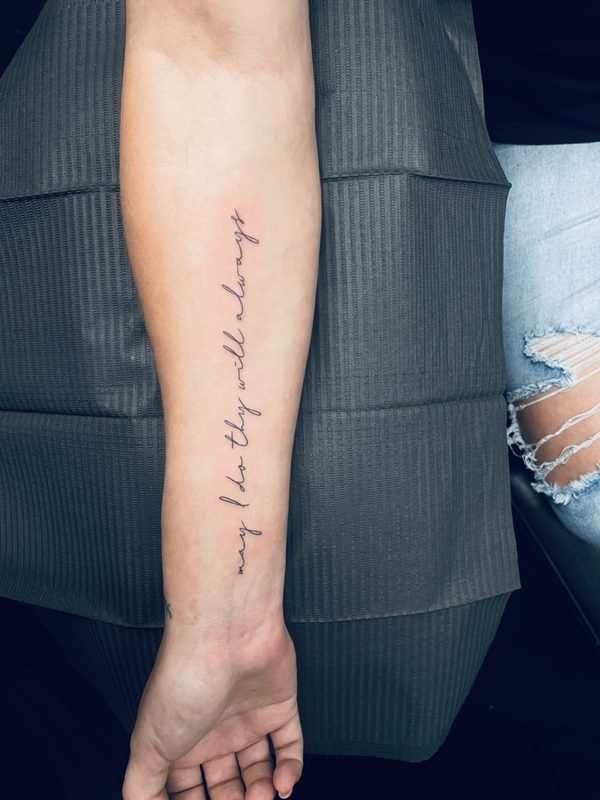
Short quote or name. Banner beneath the moth or hand-lettered script. Fine-line single-needle. Inner forearm or sternum.
Where moth work fails
Eight things that go wrong between the reference photo and the healed skin.
Every one of these is cheap to fix on paper and expensive to fix in skin. Read them before the deposit rather than after it.
The unnamed moth
Booking “a moth” without picking a species. Result: an inventory moth with no specific wing markings, no particular reading. Fix: pick the species first. Bring a reference photo of the species, not a Pinterest board of twelve species mashed together.
The Silence-of-the-Lambs problem
Wanting a death’s-head hawkmoth without knowing its pop-culture weight. Not wrong — but know what you’re wearing. Specialists see clients surprised by the association six months later. Fix: watch the movie or read about the species before the consult.
A skull patch at two inches
Wanting a death’s-head with full skull marking at 2 inches. The skull dissolves. Fix: if you want the skull to read, 4 inches minimum. If you only have 2 inches, pick a silhouette moth with no marking detail instead.
Realism booked without a species photo
Booking a realism moth without a specific species reference. The artist renders a generic moth that aesthetically could be anything. Fix: bring a Wikipedia-quality species photo. Without a named species the artist has to invent one, and invented moths all end up looking like each other.
The right style on the wrong skin
Fine line on a palm is gone in three years. Solid black across a knuckle goes patchy and stays patchy. Every style has a short list of skin it should never be laid on, and any artist who has been working a decade knows their own list by heart. Fix: ask them for it, then ask which placements THEIR version of this style has held up on at the ten-year mark.
The butterfly mix-up
Walking in wanting a moth and leaving with a butterfly (or vice versa). Moths fold wings at rest, have pectinate antennae, stockier bodies, and read nocturnal. Butterflies have club antennae, spread wings at rest, read diurnal. Different symbolism. Fix: know which one you want.
Booking the opening instead of the portfolio
Booking realism moth work with a generalist rather than a specialist. Moth wings and antennae are technical — generalists render them wrong. Fix: pick the specialist. Wait three weeks for the right portfolio rather than settling for this week’s opening.
The Pinterest mashup
Forty-seven saved images handed over with “something like these.” The result belongs to no species and reads as an average of everything. Fix: cut it to three and name the one thing you want from each — the wing outline from the first, the antennae from the second, the palette from the third. Three named elements beat thirty vague ones every time.
Ask for a healed moth at one year. Wing markings are where the drift shows first.
Name the species or the artist invents one, and invented moths all look alike.
Moths carry darker symbolism than butterflies — nocturnal, drawn-to-the-light, transformation through shadow. That’s the whole appeal.
Before you sit down
Six answers that make the first sketch close.
None of these six need research. They need a decision. A first draft is only ever as specific as the brief it was drawn from, and “a moth, kind of like this one” is not a brief.
Which named species?
Death’s-head hawkmoth, luna moth, atlas moth, cecropia, Spanish moon, generic moth — each carries a different reading. Pick the species before the style. A generic moth is a shrugged-shoulders tattoo.
Name the reason in one sentence
Memorial, transformation, grief, night-beauty, drawn-to-the-light, pure aesthetic. Moths carry darker themes than butterflies — name the theme in one sentence. That sentence is the tattoo.
Spread or at-rest?
Spread-wing is display — symmetrical, dorsal view, every wing marking visible, reads as specimen. At-rest is contemplation — folded wings, side view, quieter, asymmetrical. Different design problem with different scale requirements.
Which of the six styles?
Realism for species detail, fine line for moth-and-moon, neo-traditional for color and ornament, traditional for flame and flash pairings, blackwork for graphic statement, illustrative for specimen plate. Pick before pencil touches paper.
Which body zone?
Axial (sternum, spine, upper back) for symmetrical spread-wing pieces. Classical (shoulder blade, hip) for soft-style work. Bold (forearm, bicep, calf) for traditional pairings. Modern (inner forearm) for moth-and-moon. Intimate (behind ear, inner bicep) for microrealism.
What is your size ceiling?
A 3-inch fine-line moth-and-moon is 2–3 hours. A 6-inch death’s-head realism piece is 4–6. An atlas moth back piece is four to six sessions. Know your ceiling before you fall in love with a design above it.
First moth
Name the species, take four inches, keep it black-and-grey.
Nothing on this list is exciting, and that is the point. Eight settings that produce a moth you will still be glad about at forty. Every one of them is reversible upward later: you can add colour to a black-and-grey moth and you can grow a composition around it, but you cannot subtract detail once the skin holds it.
Matched sets
One species, one night, different wings.
A matched moth set has to work as a solo piece on every body in it. Build that in at the sketch stage. Retrofitting it after a fallout stops being a design conversation and becomes a cover-up conversation.
Siblings mostly. Grief groups sometimes.
Sibling sets most commonly, occasional partner pairs, friend groups bonded by a shared transformation. Grief groups sometimes match moths as a memento-mori set. Different relationships invite different compositions.
Match the species, vary the moment
Same species, one variation per person — different wing orientation, different moon phase behind, different placement — so each piece still belongs to its wearer.
Make it work as a solo piece first
If a breakup, an estrangement or a death would ruin the piece, redraw it now so it stands alone. That is not cynicism about the relationship. It is the same planning you would do for anything else you intend to keep for fifty years.
One stencil, one artist, one afternoon
Matching moths across studios drift in wing proportion and line weight. The only way matching moths actually match is if the execution is identical.
Three layers
The porch light, the date, and the part you never explain.
Three layers, and nearly everyone stops after the first. Species, style, size and placement are the layer that gets argued about in the consult. The other two take about ten minutes to decide and are the reason a moth stops looking like the moth in everyone else’s feed.
Layer one — the bones: species, style, size, zone
Species, style, size, placement. These are the bones. They decide whether the piece reads as death’s-head memento mori or luna beauty or atlas-scale statement. Most clients start and stop here — which is why most moth tattoos look like every other moth in the feed.
Layer two — the moth that was actually there
A specific species tied to a story — the moth that lived in the porch light of a childhood home, a luna that appeared during a particular week of grief, a species native to a lost region. A companion element — a specific flower, a named constellation, a hand-lettered date. Nine times out of ten this is one sentence long and takes the artist five minutes to draw.
Layer three — the part nobody gets told
What the moth marks for you. Nobody else needs to know. The private layer keeps the piece from feeling generic — even if strangers read it as a standard moth, you know what’s underneath. That’s enough. That’s often the whole point.
FAQ
Eight moth questions, answered the way we answer them at the counter.
Eight questions covering moth symbolism, moth-vs-butterfly, first-tattoo guidance, aging, scale, death’s-head pop-culture weight, placement, and memorial moths.
What does a moth tattoo symbolize?
Moth symbolism runs darker than butterfly symbolism. The moth is nocturnal, drawn to the light at cost to itself, and lives short cycles — which has given it a constellation of meanings across cultures: transformation through shadow rather than through color, memento mori (the death’s-head hawkmoth in particular), obsession and devotion (the moth-to-a-flame metaphor), the beauty found in night rather than day, and change that happens in private rather than in public. Different species carry different weights — the luna moth reads as beauty and rebirth, the death’s-head reads as mortality and the gothic, the atlas moth reads as majesty and scale. Pick the species deliberately; the reading follows.
What’s the difference between a moth tattoo and a butterfly tattoo?
Moths fold their wings at rest and have feathered or pectinate antennae; butterflies spread their wings at rest and have clubbed antennae. Moths have stockier bodies and read nocturnal; butterflies have slender bodies and read diurnal. The symbolism differs accordingly: butterflies carry daytime transformation, rebirth, joy, hope. Moths carry nocturnal transformation, memento mori, drawn-to-the-light devotion, and a cooler aesthetic style. Different imagery, different meaning. Pick which one you actually want before you book — specialists see mix-ups weekly, and the two are not interchangeable even though both are Lepidoptera.
What’s the best moth tattoo style for a first tattoo?
Fine-line single-needle at 4 inches on the inner forearm or sternum. Pick a species first — death’s-head for memento-mori reading, luna for beauty-coded, or a specific species tied to personal meaning. Fine line is the dominant 2020s moth style, carries every species cleanly, and doesn’t require a realism specialist. Plan on two to four hours in one sitting, at $100 an hour with Blue, Hannah or Rick or $350 with Raa or David, with the final figure set by artist, size, design and placement. Book with an artist whose HEALED fine-line portfolio at 1-year-plus is documented — not just their fresh-wrap Instagram feed. Boring is the correct answer for your first moth.
Which moth tattoo ages best?
Traditional Americana and black-and-gray illustrative age best — bold outlines scaffold the internal rendering as ink drifts. Blackwork ages well when laid in evenly. Neo-traditional holds up because the heavy outline survives long after the burgundy and sage have gone quiet. Fine line softens faster because the hairline weight is at the limit of what skin holds — plan for a touch-up at 7–10 years. Realism ages well on stable placements and poorly on high-flex zones — wing markings in particular lose crispness on high-folding skin. If you want a moth that will look right in 2055, pick traditional or blackwork. If you want current aesthetic over long-term stability, pick fine line and plan for touch-ups.
How big should a moth tattoo be?
Depends on the species and style. Under 2 inches works for microrealism or fine-line silhouette — wing marking detail blurs past that. 2–4 inches is fine-line stylized moth territory, works for most moth-and-moon designs. 4–8 inches is the working sweet spot for death’s-head realism, luna with trailing tails, neo-traditional compositions, and detailed illustrative plates. 8 inches and up is atlas moth territory, back pieces, chest panels — planned from day one as compositions. Work backwards from the one marking you most want to keep. That marking sets the minimum size, and the minimum size decides which species is even available to you.
Is a death’s-head moth tattoo bad luck or too morbid?
It depends on what you want to say and where you place it. The death’s-head hawkmoth (Acherontia atropos) carries memento-mori weight both in historical European folklore and in modern pop culture (cemented in the West by Silence of the Lambs). That’s the appeal for many clients — the moth represents thinking about mortality deliberately rather than avoiding it. It’s not bad luck in any serious superstition; it’s a deliberate choice to wear a symbol of death as a reminder to live. If the pop-culture Silence-of-the-Lambs association bothers you, pick a luna moth, atlas moth, or a native species with different symbolic weight. If the memento-mori reading is what you want, the death’s-head is the most-requested moth at most studios for exactly that reason.
Where is the best placement for a moth tattoo?
Depends on the species and composition. Spread-wing moths (death’s-head, luna, atlas) benefit from axial placements — sternum, spine, upper back — because the body’s symmetry agrees with the moth’s. At-rest moths work on curves — shoulder blade, hip, outer thigh. Moth-and-moon fine-line compositions default to the inner forearm or ribcage. Small microrealism moths live in intimate placements — behind ear, inner wrist, ankle. Atlas moths at full scale commit to a back piece or thigh panel. Pick placement based on which species and style the piece is in.
Should I get a moth tattoo for someone I lost?
Yes, with a caveat. Moths are a strong memorial motif because of their memento-mori weight and their nocturnal transformation symbolism — clients often describe the moth as “the change that happened inside me after they died.” Death’s-head and luna moths carry memorial reading especially well. The caveat: wait. Specialists see memorial moths booked within three months of a loss that the client wishes they had delayed. Grief is still changing shape at that point, and a moth chosen in month four is usually chosen by a version of you that is still in shock. Wait until the design feels settled rather than urgent. Nothing about this subject expires.
Got a species in mind?
Bring a species name and one photograph of it.
That is genuinely the whole preparation. Apollo moth consults start from the species and build outward through pose, zone, style and size, in that order. Blue Mason has been tattooing since 2007 and the studio sits at 2625 Main St in Santa Monica. Walk out with a drawing whose species, pose, scale and placement all agree about what the piece is for.