Tattoo Ideas
Flower
Petal count and overlap are what make a bloom identifiable. Drawn generically, a flower reads as no flower at all. This is the page for choosing which one: peony, chrysanthemum, poppy, sunflower, iris, hibiscus, magnolia, with the Japanese botan and kiku conventions handled properly and rose, lily and lotus sent to their own guides.
Book a consultationSpecies first
Nobody actually wants a flower. They want a species.
This page exists to answer one question: which bloom. Rose, lily and lotus each have their own guide, so what follows is the rest of the garden, arranged so you can choose from it. Everything downstream — style, scale, placement, palette — is decided by the species, so the species goes first.
Which bloom, specifically?
“A flower tattoo” is a category, not a design. A peony, a poppy, a daisy, a cherry blossom, a magnolia, and an orchid are six different design problems — different silhouettes, different palettes, different scale requirements. The first decision is always the species. The second is everything else.
Why this flower and not another?
Birth month (the Victorian language of flowers). A place (California poppy, Hawaiian hibiscus, English rose). A relationship (one flower per child, one per parent). A memorial. Beauty, without a story. Pick the reading and the specific bloom will narrow itself. The bloom carries the reading; the style carries the bloom.
Single stem or botanical composition?
A single peony is a different tattoo than a peony-and-chrysanthemum pair, which is different again from a mixed bouquet. Each bloom you add needs its own minimum size, so a three-flower piece is not one flower tripled. It is three flowers, each at its own floor, plus the space between them.
Botanical accuracy or stylized?
A Redouté-style plate and a neo-traditional stylized bloom answer different questions. The plate asks you to identify the plant; the stylized version asks you to enjoy the shape. Botanical accuracy wants scale and stable skin. Stylized work wants bold edges and forgives being small.
What size have you actually got?
Scale decides which blooms work. Under 2 inches eliminates the petal-count realism of peony and chrysanthemum. Under 3 inches eliminates botanical accuracy for most compound flowers. A small daisy composes cleanly at 1.5 inches; a small peony almost never does.
“A flower tattoo” is a category, not a design. The first decision is always the species.
Some blooms scale. Some don’t. Know which one you’re asking for before you ask for it small.
The Victorian language of flowers is a real tradition. Use it on purpose.
Flash · ready to ink
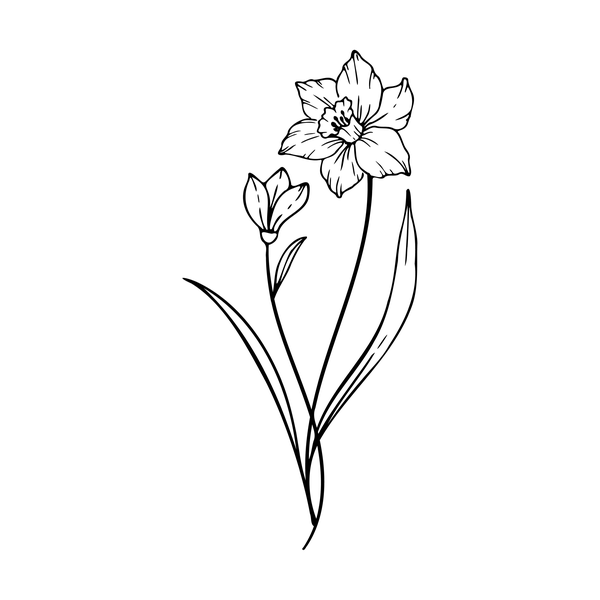
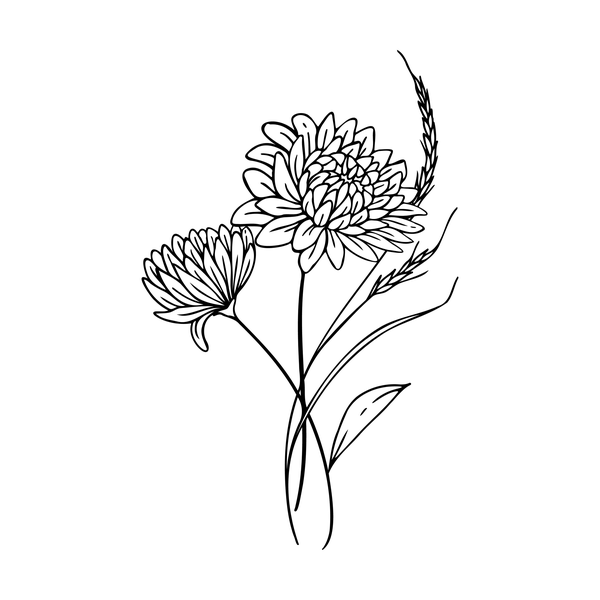
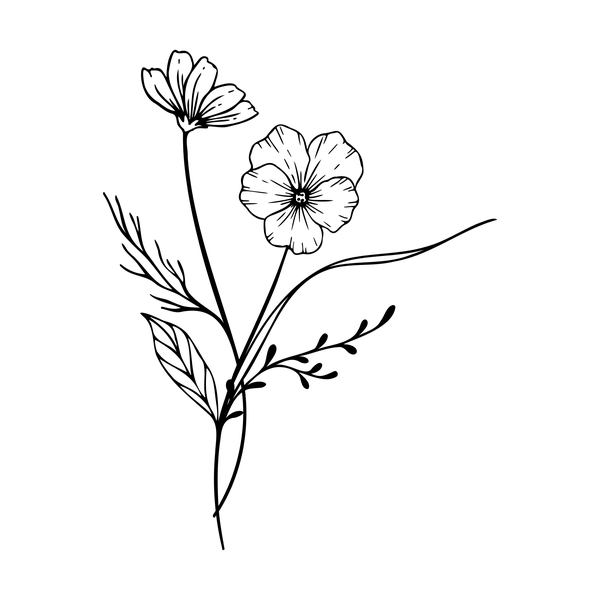
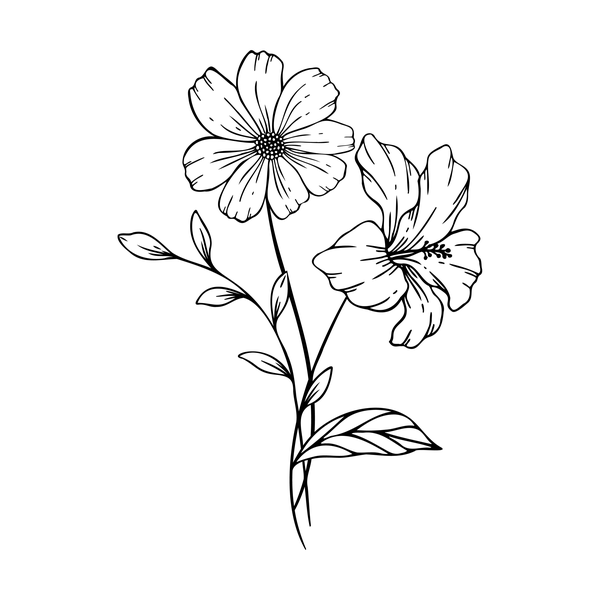
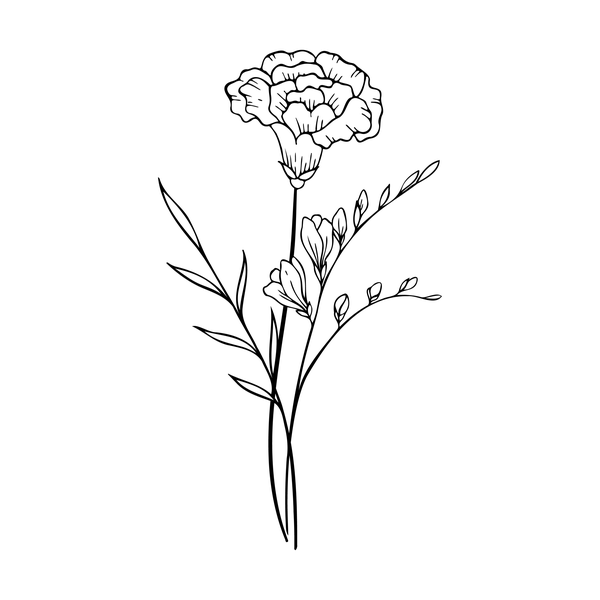
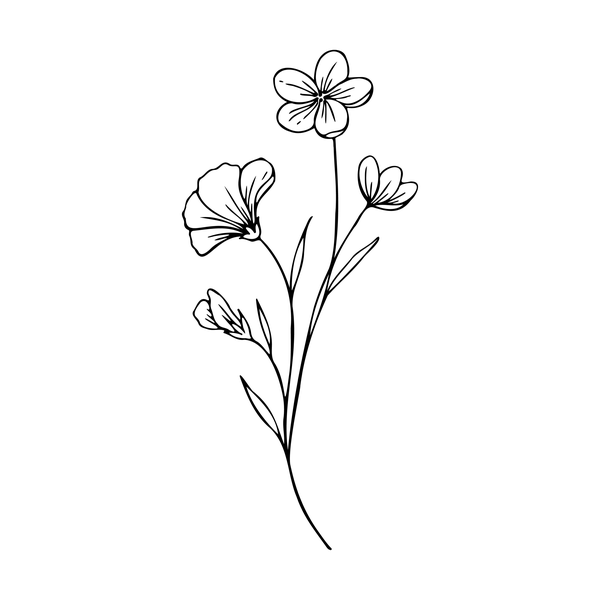
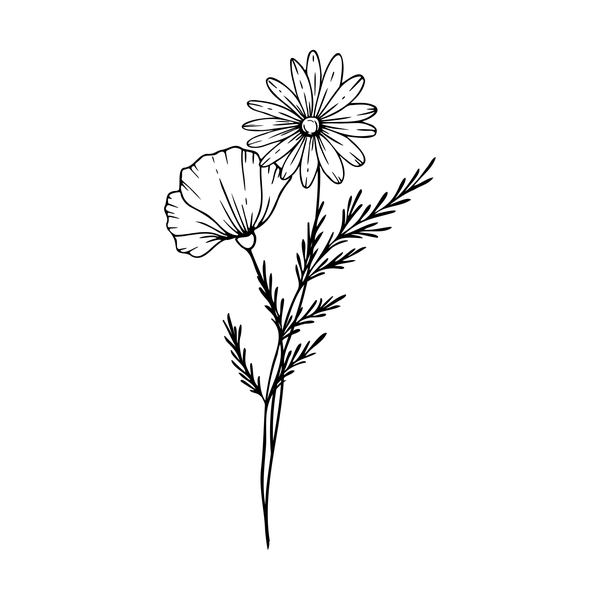
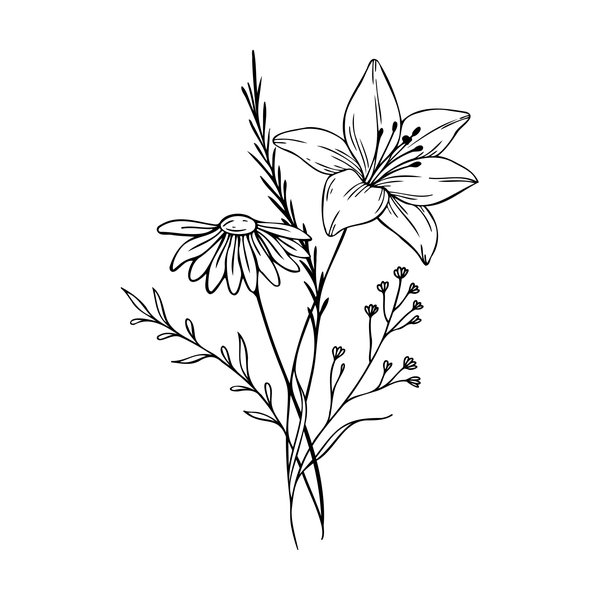
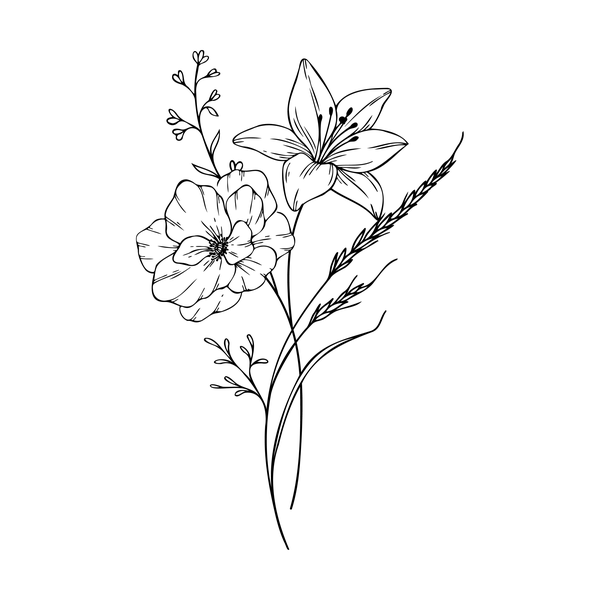
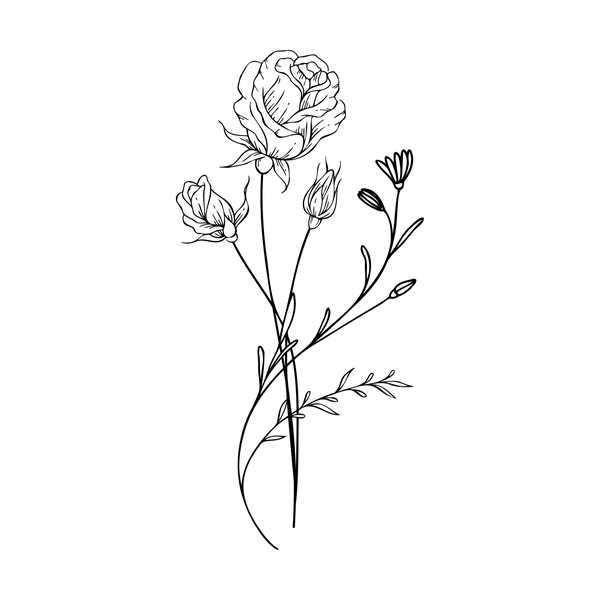
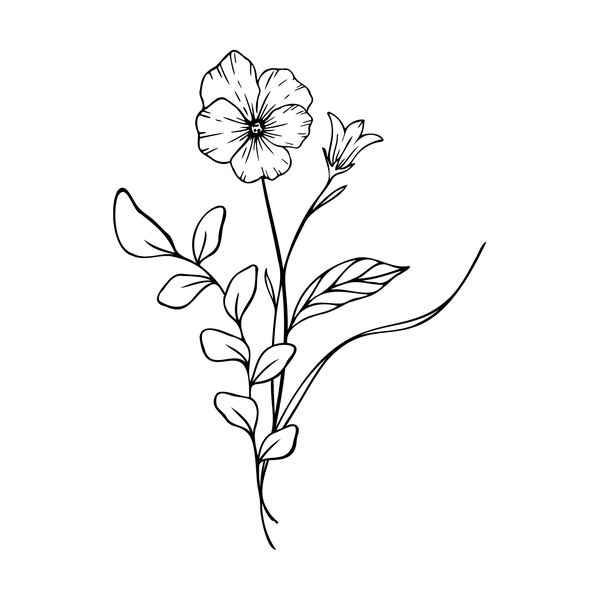
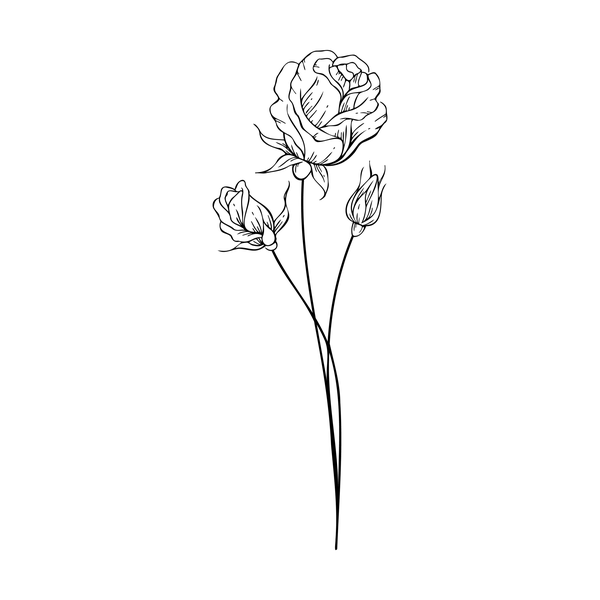
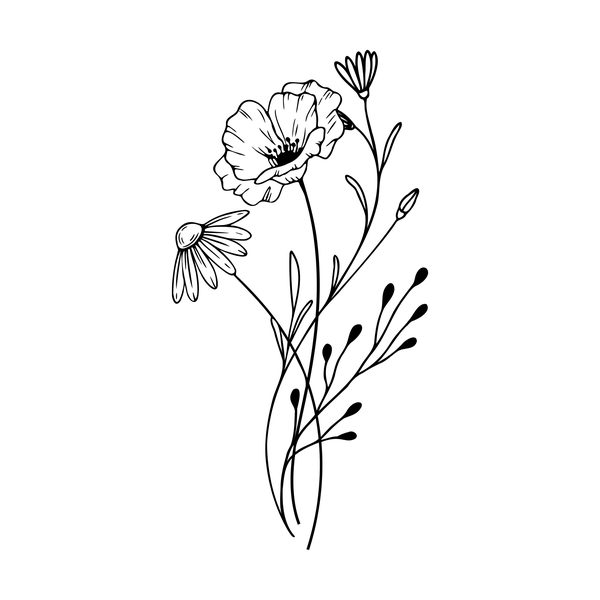
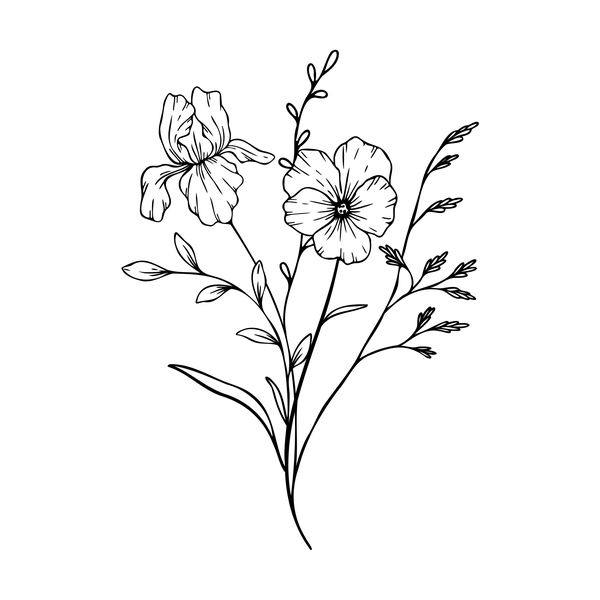
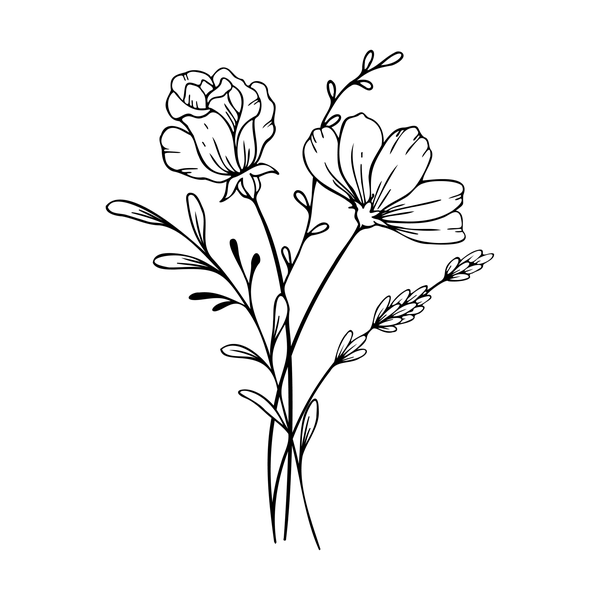
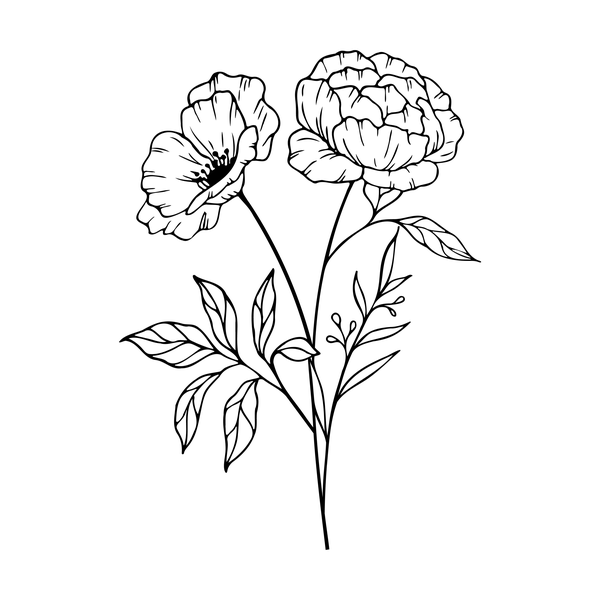
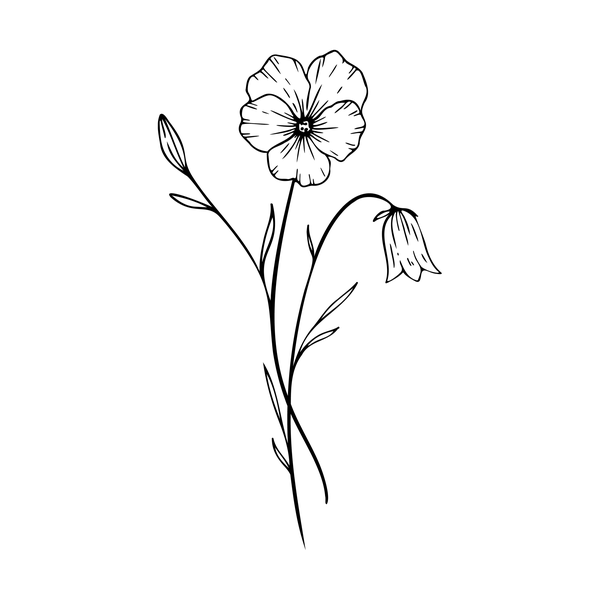
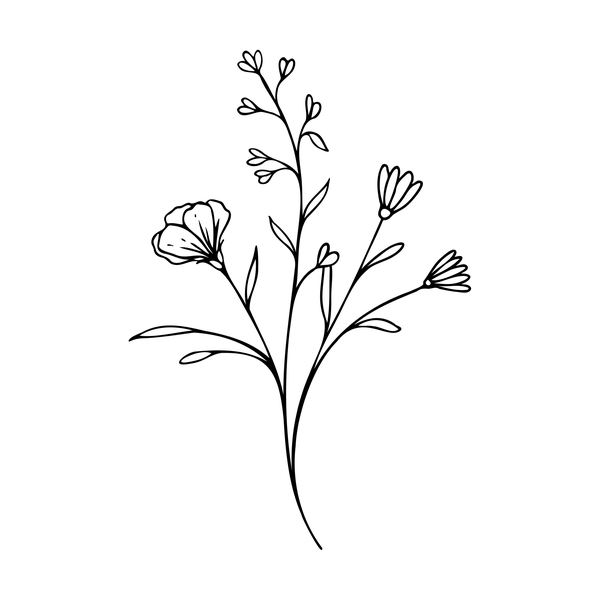
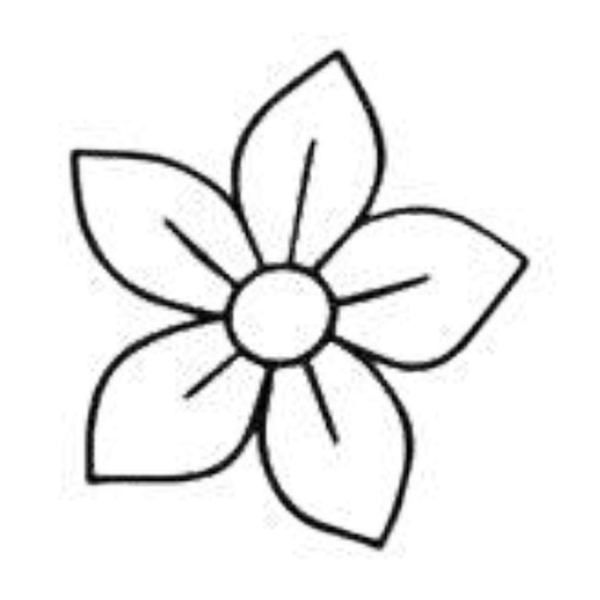
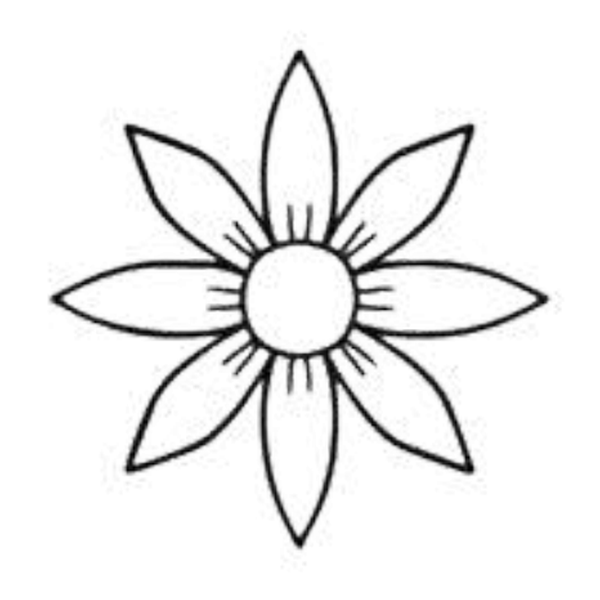
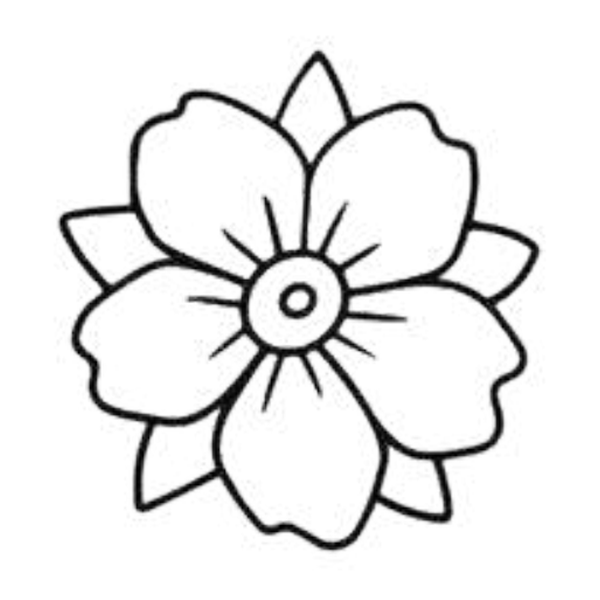
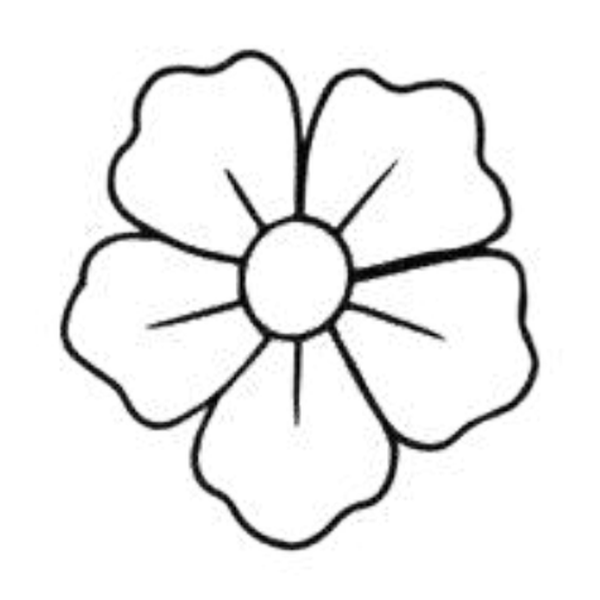
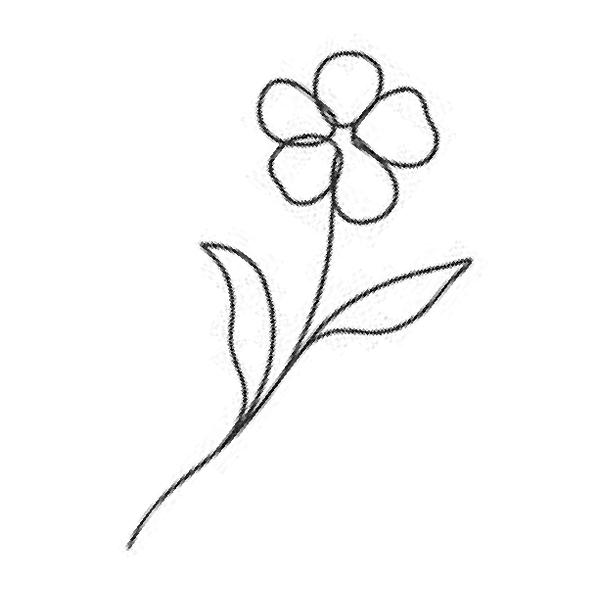
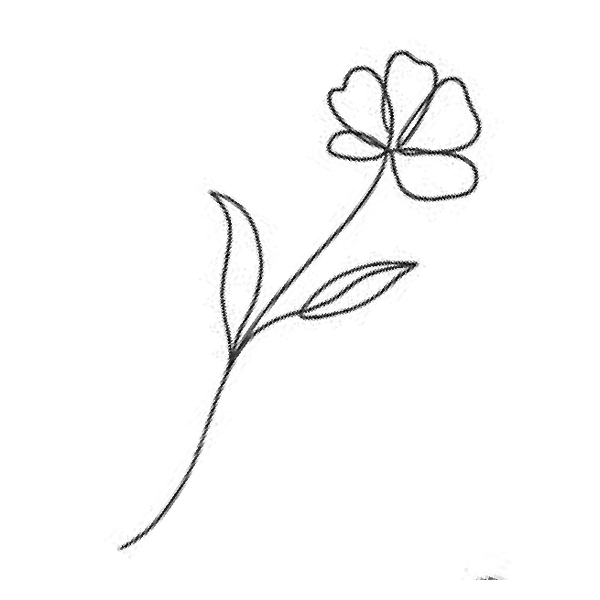
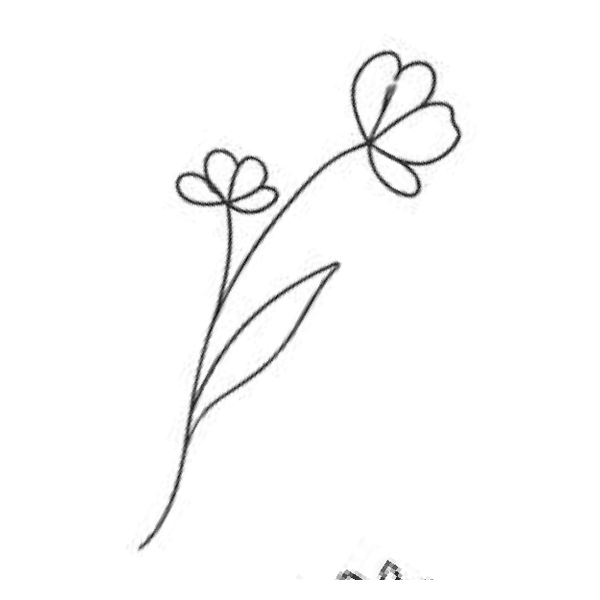
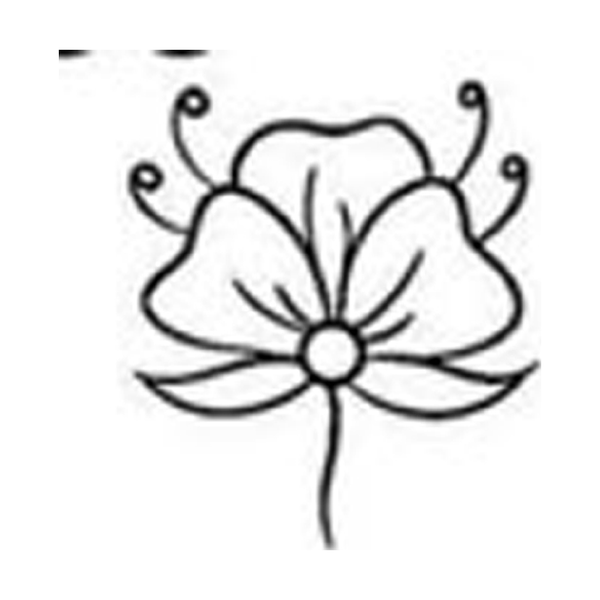
Flower flash designs
26 hand-drawn designs from our flash collection — book any one as-is, or use it as the starting point for a custom piece. Sizing, placement and linework dialed in at your consultation.
Twelve blooms
Twelve blooms, minus the three with their own pages.
These are the twelve that come up often enough in American shops to have settled answers. Rose, lily and lotus are missing on purpose: each carries enough history to need a page of its own, and each has one. What is left is the working list, with honest notes on what every species costs in inches and hours.
The peony
Layered petals, signature Japanese flower
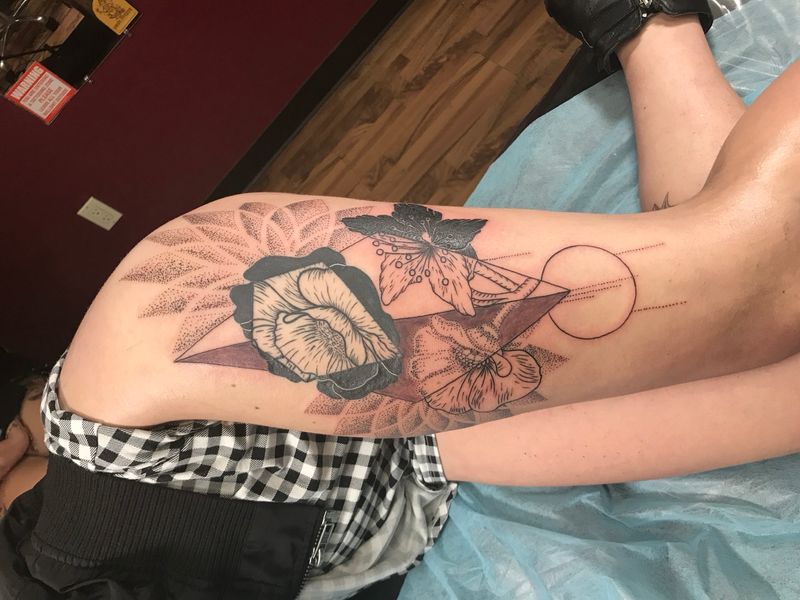
The most-requested flower tattoo in American shops after the rose. In Japanese tattooing it is the botan, and it rarely stands alone: the canonical pairings put it with the shishi lion-dog or with a snake, where the softness of the bloom exists to set off the animal. Structurally the peony is a mass, not a diagram. Dozens of ruffled petals fold over one another with no readable count, so what carries the flower at six feet is the lumpy, irregular outer silhouette rather than any interior detail. That is also why it will not shrink. Take a peony below four inches and the mass has nothing to be a mass of. Neo-traditional or Japanese style carries it best; outer thigh, shoulder, full upper arm. One of the very few blooms that genuinely rewards scale.
The chrysanthemum
The other great Japanese flower
Tight radial petals, usually drawn as a sphere or a half-open bloom. In Japan it is the kiku: the imperial flower, the sixteen-petal chrysanthemum used as the emperor’s seal, and in tattooing a symbol of longevity and of autumn. That seasonal reading is why it so often shares a sleeve with the peony’s spring. It is also the hardest radial form on this page to keep legible. Every quill runs from one tight center, so any two that drift off true read as a wobble the eye catches immediately, and the center is the first place ink spread will close up. Ask to see a healed kiku center before you book one. Works at 5–10 inches Japanese, 3–5 in fine line or illustrative. Thigh, upper arm, back panel.
The daisy
The smallest bloom that still reads
The default choice for clients wanting a small, recognizable, cheerful flower. Composes cleanly at 1.5–3 inches — few flowers do. Fine line or American traditional style. Inner wrist, ankle, finger, behind the ear. Common for birth-month commemoration (April). Reads as restraint and intention both.
The tulip
Single stem, clean silhouette
A tall stem, a closed or slightly open cup, one or two leaves. The most architectural flower tattoo because the silhouette is nearly geometric. Fine line carries it most cleanly. 3–6 inches vertical. Inner forearm, spine, sternum. Often chosen by clients who want a flower that doesn’t read as overtly feminine.
The poppy
Four thin petals, a strong silhouette
Three separate things arrive under this one name, and clients regularly mean one without knowing the others exist. In Britain and across the Commonwealth the red poppy is the remembrance flower, tied to the Flanders battlefields and worn for the war dead, and on a British or Australian client that is almost always the reading. Separately, the poppy is the opium plant, and a portion of clients intend exactly that — usually asking for the seed pod visible, which is the detail that makes the reference explicit. Third, the California poppy is a different plant altogether: Eschscholzia californica, four papery orange petals, the state flower since 1903. Say “poppy” in an LA shop and you will be asked which one. Whichever you mean, bold red or saffron in traditional or neo-traditional carries it. 3–5 inches, outer forearm, bicep, shoulder.
The sunflower
Large face, clear meaning
One of the most-tattooed flowers in American shops, especially among clients marking survival, recovery, or return to joy. Neo-traditional or illustrative style. Needs 4–7 inches because the face is the composition — smaller than that, it stops reading as a sunflower and starts reading as a daisy. Outer thigh, shoulder, upper arm.
The iris
Three falls, three standards
A flower with a distinctive six-petal architecture — three upright petals (standards) and three drooping ones (falls). Van Gogh’s flower, the French fleur-de-lis root. Illustrative or botanical style rewards the detail. 4–7 inches. Outer thigh, upper arm, inner forearm. The bloom that rewards careful drawing.
The hibiscus
Tropical, five-petal, bold
The Hawaiian state flower, a staple of Pacific Rim tattooing, and a common tribute for clients with island heritage or personal history. Traditional or Neo-Traditional in saturated color. 3–6 inches. Outer calf, shoulder, outer thigh. Often rendered in the saturated orange-red-yellow palette the bloom carries in life.
The magnolia
Large open bloom, southern style
Broad, cup-shaped, often rendered white or pale pink with deep green waxy leaves. A Southern US regional flower and a common tribute for clients from Louisiana, Mississippi, or Georgia. Illustrative or neo-traditional style. 5–8 inches. Outer thigh, upper arm, ribcage. Rewards the scale it asks for.
The cherry blossom
Five-petal, branch-carried, Japanese style
Sakura. Rarely rendered alone — almost always as a small cluster or branch carrying multiple blooms and buds. Japanese traditional or Japanese modern style. Often a supporting element in a larger composition. 4–12 inches depending on branch length. Shoulder, upper arm, full sleeve panel.
The forget-me-not
Tiny five-petal, memorial style
Small clusters of tiny blue blooms. One of the most-chosen memorial flowers because the name carries the tribute without a banner. Fine line or single-needle, sometimes with a single muted blue wash. 2–4 inches for a small cluster. Inner forearm, ribcage, behind the shoulder. The memorial flower that doesn’t announce itself as one.
The orchid
Complex architecture, fine-line style
A flower with some of the most distinctive petal architecture in the garden — the labellum (lip), the column, the three outer sepals. Rewards fine-line or illustrative rendering more than bold flash. 4–8 inches. Outer thigh, ribcage, upper back. Bring a specific species reference (moth orchid, cattleya, cymbidium) — orchid without reference reads as a generic bloom.
Why a species reads
Petal count and petal overlap are the whole readability problem.
A flower is recognized the way a face is: by a small number of structural facts the viewer reads without thinking. Get those wrong and nobody accuses you of anything. They just fail to name the flower, which is the one outcome you were trying to avoid.
The count does the identifying
A poppy is four petals. A hibiscus, a cherry blossom and a forget-me-not are five. An iris is three standing up and three falling down, which is why it looks like nothing else in the garden. A daisy is a ray count you don’t tally but do register as “many, identical, radiating”. Change any of those numbers and the drawing quietly stops being that species. Viewers rarely notice consciously. They just look at it and think, flower. And a tattoo that reads as flower rather than as poppy has become decoration, which is exactly the thing this page exists to prevent.
Overlap separates peony from chrysanthemum
Both are filed under many petals, and they are built in opposite ways. A peony is irregular: ruffled petals of unequal size folding over one another with no pattern, giving a soft lumpy outline and a silhouette that reads as volume. A chrysanthemum is strict: quills of near-equal length radiating evenly from a tight center, giving a clean disc. Drawn by someone who hasn’t noticed the difference, both come out as the same round bloom with lines in it. That single collapse is the most common failure in modern floral flash, and it is why so many peony tattoos look like each other rather than like peonies.
Which blooms survive being made small
Countable ones. If a species is identified by four or five distinct petals and a clear center, it holds at two inches and it holds at year twenty, because the ink spreading a fraction either way doesn’t change the count. Daisy, poppy, forget-me-not, cherry blossom, tulip all pass. If a species is identified by a mass — peony, chrysanthemum, magnolia, full-blown garden rose — shrinking it removes the only information it had. Below four inches those become a shaded circle with a suggestion of petals, and time turns the suggestion into a smudge.
The pictogram problem
Five rounded petals around a dot is not a flower. It is the symbol for a flower, the thing a child draws, and it ages into a symbol of a symbol. Plenty of people get one on purpose and there is nothing wrong with that. But if you came here wanting a specific bloom, the test is simple and worth applying at the sketch stage: point at the drawing and ask the artist to name the species. If neither of you can, the stencil isn’t finished.
Style by species
Every bloom has a style that flatters it and one that flattens it.
A Sailor Jerry peony loses the thing that makes a peony a peony: the outline flattens the mass. A fine-line hibiscus loses its saturation, which is most of what a hibiscus is. Read this list as six answers to the question your species already asked.
American Traditional — built for poppy and hibiscus
Sailor Jerry flash lineage
Bold outline, flat red and green, yellow highlights. The most-stencilled flower tattoos in American shops for a century. Ages better than any other style because the outline holds as color drifts. Best for poppies, hibiscus, small roses. Less suited to peony and chrysanthemum, which want dimensional shading.
Neo-traditional — where the peony and the sunflower live
Expanded palette, dimensional bones
Burgundy, dusty rose, sage, muted gold. Bold outline scaffolds expanded color. Where most mid-scale modern flower work lives in 2026 — peonies, chrysanthemums, magnolias, sunflowers. Two sessions is common for anything over five inches.
Fine line — daisy, tulip, forget-me-not, orchid detail
The dominant 2020s style
Hairline work, botanical accuracy, often black-only. The contemporary LA style and the most-requested floral style in the studio today. Softens faster than bold lines — plan for touch-ups at seven to ten years on high-flex placements. Best for daisy, tulip, forget-me-not, orchid detail.
Japanese traditional — botan and kiku, and why they travel together
Tebori lineage, compositional style
Peonies and chrysanthemums are the two great flowers of Japanese tattooing. Rendered in saturated color with bold black outline and distinctive wind-and-water background. Part of a larger composition, not a standalone piece. 6 inches and up. Shoulder, upper arm, full sleeve panel.
Botanical plate — Redouté line weight, field-guide accuracy
Victorian plate illustration
Detailed stem, field-guide leaves, etching-style line weight that thickens on the shadowed edge of every petal. Because the identity of the flower is carried by line rather than by fill, this is the style least damaged by thirty years of skin drift. Pulls from Victorian botanicals, Redouté, contemporary scientific illustration. Best for iris, orchid, magnolia, wildflower clusters.
Watercolor — the bloom without an outline
Splash, wash, bleed
Line-drawn bloom with saturated color wash behind. Contemporary fine-art style. Honest caveat: watercolor ages faster than line-based work because the splashes lack outline scaffold. Touch-up at year seven to ten is standard. Best for hibiscus, poppy, abstract wildflower compositions.
Scale honesty
Four tiers, sorted by petal count.
Blooms whose identity is a countable number of petals shrink well. Blooms whose identity is a mass of uncountable petals do not shrink at all. That single split explains this whole table.
Five placement styles
Where a bloom sits decides whether it is ornament or announcement.
One neo-traditional peony. On a shoulder cap it follows the deltoid and reads as decoration worn on purpose. On a ribcage the same drawing reads as something kept private. Nothing about the flower changed.
Draped — the bloom against a curve
Shoulder blade · upper back · hip · outer thigh · inner bicep
The flower reads as ornament draped against a curve. No style announcement — the bloom sits on the body the way a real flower sits on a branch.
Public — saturated color, legible at six feet
Bicep · outer forearm · calf · chest
The traditional placement and the traditional style. Reads as statement, reads at six feet. Poppies and hibiscus in particular live here — the saturated color and bold silhouette want a public placement.
Inner forearm and ribcage — the 2020s default
Inner forearm · ribcage · sternum · spine · inside wrist
These placements read as “a flower tattoo” without locking in a style-era. Good for fine line, good for neo-traditional, good for illustrative. Inner forearm and ribcage are the two most-requested modern flower placements.
Sternum and underboob — the bloom nobody else sees
Sternum · underboob · inner thigh · behind ear · nape of neck
Private style. Often paired with fine line or single-needle because the style matches. The bloom that lives mostly inside the wearer’s eyeline — and in the memory of whoever else has been invited in.
Panel work — Japanese sleeves and full-back botanicals
Full back · full sleeve · dual chest panel · full thigh · rib-to-hip panel
Not placements — compositional commitments. Botanical compositions, Japanese-canon peony-and-chrysanthemum sleeves, full-back floral panels. Planned from day one, executed across four or more sessions.
Eight compositional pairings
Eight things worth putting next to a flower.
Every one of these adds a second focal point, which means every one of them adds inches. A bouquet is not a flower tattoo with more flowers in it; it is a composition problem with a different minimum size.
Bouquet / multiple blooms
One flower per child, per parent, per sibling, per loss. Neo-traditional or illustrative style. Thigh, ribcage, back panel. Works best when each bloom is a specific species rather than generic “flower.” Cross-reference the floral style page for the craft notes.
Flower + banner
Memorial style. A banner carrying a name, a date, or a short phrase, with a flower softening the letter forms. Traditional or neo-traditional. Bicep, chest, outer forearm. Ages as well as the lettering does.
Flower + butterfly or moth
The transformation composition. Fine line or neo-traditional. Upper arm, outer thigh, shoulder blade. See the butterfly ideas guide for the insect side.
Flower + bird (hummingbird, swallow)
Hummingbird-and-hibiscus, swallow-and-poppy. Traditional or neo-traditional. Outer arm, shoulder, chest. Cross-links: hummingbird, swallow.
Flower + skull
Memento mori. The flower is the living thing, the skull is the reminder. Traditional through realism. Thigh, upper arm, back panel. See skull ideas.
Flower + name
The dedication style. A single bloom wrapping a script name. Fine-line or neo-traditional. Inner forearm, ribcage, sternum. Build the flower so it works if the name ever comes off — the same design hygiene as any partner-name piece.
Wildflower cluster
Untamed composition — prairie flowers, California natives, Pacific Northwest blooms. Fine-line or illustrative style. Outer thigh, ribcage, spine. Honors place rather than bloom. Cross-link: wildflower ideas.
Flower + moon
Celestial-botanical composition. Night-blooming flowers (moonflower, evening primrose, night jasmine) pair most cleanly. Fine line or single-needle. Ribcage, sternum, spine. See moon phase ideas.
The language of flowers
The Victorian flower dictionary, and the parts of it that still work.
Floriography was a genuine 19th-century convention with printed dictionaries behind it, and four strands of it are still legible to ordinary people today. Use those four and the bloom does the work a banner would otherwise have to do.
Birth-month flowers
The Victorian birth-month language assigns a flower to every month — carnation for January, violet for February, daffodil for March, daisy for April, lily for May, rose for June, larkspur for July, gladiolus for August, aster for September, marigold for October, chrysanthemum for November, poinsettia for December. A clean single-flower piece that carries a birth reading without a banner.
State and regional flowers
California poppy, Hawaiian hibiscus, Louisiana magnolia, Texas bluebonnet, Alaska forget-me-not. Flowers that carry place in a way a coordinate tattoo can’t. Particularly common among clients who moved away from home or who carry the place as identity rather than address.
Memorial flowers
Forget-me-not (universal memorial), white chrysanthemum (East Asian funeral flower), red poppy (Commonwealth remembrance, veterans), white lily (funeral classic), rosemary (Shakespearean remembrance). Pick the flower whose specific memorial reading matches the loss.
Pairings from the language
Red and white roses together (unity). Daisy and violet (innocence and faithfulness). Chrysanthemum and cherry blossom (autumn and spring, full cycle). The Victorian floriography is a real tradition, not a Pinterest trick — pair with intention and the piece carries a reading your grandmother could decode.
Bring these to the consult
Six answers, and the first one is a species name.
If you can answer the first one, the other five get much shorter. If you can’t, the first hour goes on it anyway.
Which bloom, exactly?
“A flower” is not a brief. Peony, chrysanthemum, daisy, tulip, poppy, sunflower, iris, hibiscus, magnolia, cherry blossom, forget-me-not, orchid — each is a different design. Pick the species before the style. The species carries the reading.
Birth month, place, or loss?
Birth month, place, relationship, memorial, survival, or pure aesthetic. Pick one primary. A flower can carry more than one reading, but the piece has to be built around the one that matters most.
One stem, or several?
A single stem, a paired composition, a bouquet, a wildflower cluster, or a supporting element in someone else’s larger piece. Every extra bloom brings its own minimum size with it, so the answer here sets the floor for the whole tattoo.
Botanical or stylized?
Field-guide accuracy or bold flash silhouette? Redouté or Sailor Jerry? The answer is not about taste alone — botanical needs more scale and more chair time than stylized does. Be honest about both.
Public, private, or panel?
Bold (forearm, bicep, calf), classical (shoulder blade, hip), modern (inner forearm, ribcage), intimate (sternum, inner bicep), or statement (full back, full sleeve). Match placement to style and to what the piece is for.
How many inches does the bloom get?
A 3-inch fine-line daisy is one hour. A 6-inch neo-traditional peony is three to five. A Japanese peony-chrysanthemum sleeve is eight to twelve sessions minimum. Know your ceiling in time, budget, and sitting — before you pick a bloom that asks for more than you can give.
Ask an artist to name the species in their own portfolio. The answer tells you everything.
A tattooed peony at three inches is a smudge. At six, it’s a peony. The bloom sets the scale.
If this is your first flower, pick the species first, the style second, and the size third. In that order.
Where florals fail
Eight ways a flower stops being a flower.
Six of these eight are decided before the stencil is cut, which is the good news: they cost nothing to avoid and a great deal to undo.
The generic-flower trap
Picking “a flower” without picking which flower. Result: a bloom that reads as decoration and looks like every other non-specific flower on Instagram. Fix: name the species at the consultation. If you don’t know which flower you want, you don’t know what you want yet.
Shrinking a mass-petal bloom
Wanting a photorealistic peony with full petal detail at 2 inches. The detail doesn’t fit — blurs within five years. Fix: if you want the bloom, commit to the scale. A compressed peony is just a pink smudge at year seven.
The reference pile
Thirty saved images, bits picked from each, artist asked to combine. Result: a flower that belongs to no specific designer. Fix: cut to three, and say what each is for. This one is the petal shape. This one is the palette. This one is the size on the body.
The style-bloom mismatch
American Traditional peony. Fine-line magnolia. Watercolor sunflower. Every bloom has styles that serve it and styles that fight it. Fix: ask the artist which blooms their portfolio consistently carries well. That’s the honest answer.
The palette-without-reason mistake
Blue rose, black daisy, purple hibiscus — recolored without thinking about what the non-natural palette does to the reading. Some blooms wear unnatural color well (roses, lotus). Most don’t. Fix: if you want non-natural color, commit to it on purpose, and cite a reference the artist can actually execute against.
Booking the name at month three
A flower wrapping a partner’s name, booked at month three. Fix: build the flower so it works as a single-element piece if the name ever needs to go. Not cynicism — design hygiene. Same rule as any partner-name composition.
Judging botanical work off day-one photographs
Choosing an artist from shiny-wrap Instagram. Fresh petal edges are crisp regardless of how tightly they were packed, so the photograph tells you nothing about spacing. Fix: ask for a healed peony at one year and again at five. If the layers still separate, that artist knows how much room petals need.
The matching-drift mistake
Two people, two shops, two months apart, “same design.” They will drift. Fix: same artist, same day, same stencil. Matching florals are their own design problem — treat them as one.
The first-flower guide
A first flower should have petals you can count.
Daisy, tulip, small rose, poppy. Each one is a countable arrangement rather than a mass, which is exactly why each holds at three inches. Eight decisions worth making deliberately.
Personalization
Species, cultivar, reason. In that order.
Most people arrive with the first of these and leave the other two to the artist, which is how a garden’s worth of clients end up wearing the same bloom.
The species
The species. Whether it’s a peony, a poppy, a daisy, an orchid, or a wildflower cluster. This is the bone of the piece. Every other decision is carried by this one.
The cultivar
A specific cultivar — a Sarah Bernhardt peony rather than a peony, a Hawaiian white hibiscus rather than a hibiscus. Cultivars differ in petal shape and edge, and an artist working from a named one draws something nobody else is wearing.
The reason you picked it
What it marks for you — a birth month, a place you came from, a month you survived. Nobody else needs to know. The private layer is what keeps the piece from ever reading as generic decoration.
FAQ
Eight questions that come up once the species is named.
Eight questions covering species choice, aging, first tattoos, scale, meaning, multi-flower compositions, LA-specific style preferences, and pricing.
What flower tattoo should I get?
Start by naming which flower you actually want — “a flower” is a category, not a design. The twelve most-requested blooms in American shops are peony, chrysanthemum, daisy, tulip, poppy, sunflower, iris, hibiscus, magnolia, cherry blossom, forget-me-not, and orchid. Each carries different meanings, different scale requirements, and different style pairings. The honest decision ladder: pick the bloom (species), pick the meaning (birth month, place, relationship, memorial, aesthetic), pick the composition (single or multi), pick the style (fine line, neo-traditional, Japanese, illustrative), pick the placement, and confirm the scale. A flower tattoo that answers those six questions cleanly is the flower that’s actually yours.
Which flower tattoo ages the best?
Depends on the style more than the species. American Traditional flowers age best — bold outline plus flat color holds through decades of skin drift. A Traditional poppy, hibiscus, or small rose at age 20 still reads at age 50. Neo-traditional ages well because the outline scaffolds the expanded palette. Fine line softens faster — plan for touch-ups at seven to ten years. Japanese traditional ages beautifully because the composition is built on bold line and saturated fill. Watercolor ages fastest. If you want a flower that reads cleanly at year thirty, pick Traditional, Neo-Traditional, or Japanese, and commit to the bolder outline work those styles ask for.
What’s the best flower tattoo for a first tattoo?
Daisy, tulip, small rose, or poppy at 2–4 inches. All four carry at smaller scales, all four work in simpler styles, and all four forgive the learning curve of living with a new tattoo. American Traditional works for poppy and rose; fine line works for daisy and tulip. Forearm, outer calf, or ankle — all three placements hold color cleanly and are easy to live with. Plan for one sitting of one to two hours with a mid-to-senior artist. Hourly rate depends which artist you book, and the final number depends on artist, size, design and placement. The honest advice: don’t pick your hardest flower for your first flower.
What size should a flower tattoo be?
Depends on the bloom. Daisy, forget-me-not, small tulip, single cherry blossom — all compose cleanly at 1.5 – 3 inches. Peony, chrysanthemum, sunflower, magnolia, iris — all want 4 – 8 inches minimum because the petal count and interior detail need room. Anything smaller and the bloom compresses into the generic round flower shape that every species collapses toward. Decide the species first and let it name its own minimum. If you want a peony, commit to at least four inches. If you only have two inches to give, you want a daisy or a forget-me-not, not a compressed peony.
Are there meanings behind different flower tattoos?
Yes, and the Victorian language of flowers (floriography) is the longest-standing system. Carnation means remembrance. Rose means love, with the color doing the talking — red for romantic, white for memorial, yellow for friendship. Lily means purity and renewal. Chrysanthemum means longevity in Japan and mourning in much of Europe. Sunflower means faith and joy. Forget-me-not means memorial and fidelity. Birth-month flowers assign one bloom to each month. State and national flowers carry place. Memorial flowers (white lily, red poppy, white chrysanthemum) carry loss. Pick the flower whose meaning matches your brief — the reading is built in, you don’t have to build it on top.
Can I get multiple flowers in one tattoo?
Yes — bouquets, paired compositions, and wildflower clusters are all common and well-supported in most styles. One flower per child, one per parent, one per milestone is a standard dedication structure. Neo-traditional and illustrative carry multi-flower compositions most cleanly. The honest rule: each bloom should be a specific species, not a generic flower. A peony-and-chrysanthemum pair reads as intentional. Two generic round blooms read as filler. Composition multiplies scale — a three-flower bouquet usually wants five to eight inches minimum for each bloom to read clearly.
Which flower tattoo styles work best in Los Angeles?
Fine line and single-needle dominate LA flower tattooing in 2026 — the city has more fine-line specialists per capita than anywhere else in the country, and the dry climate works kindly with healed hairline work. Neo-traditional is strong as well, especially for larger peonies and sunflowers. Japanese traditional remains the gold standard for peony and chrysanthemum compositions — Apollo and our peer shops carry Japanese-trained and Japanese-adjacent artists who can execute a full sleeve in that canon. American Traditional is less dominant here than in East Coast or Midwest shops, but the artists who carry it carry it well. Match your bloom to the LA style that’s strongest for it.
How much does a flower tattoo cost in LA?
Flower pricing at Apollo scales with four factors: overall scale, style complexity, color versus black-and-gray, and session count. A small fine-line daisy or single tulip is typically a single session at two to four inches. A mid-scale neo-traditional peony, sunflower, or magnolia usually spans one to two sessions. A detailed illustrative bouquet or orchid runs two to four sessions. Japanese-canon compositions — peony-and-chrysanthemum shoulder caps, full floral sleeves — run four to eight sessions minimum. Hourly rate depends which artist you book, and the final number depends on artist, size, design and placement. We quote from the sketch, never from the idea.
Ready to name the bloom?
Name the species out loud. Everything else follows from it.
Species before style, every time. Come in able to name the bloom, whether that's peony, chrysanthemum, poppy or iris, and the petal count, the overlap and the placement resolve themselves. A generic flower is the one request we'll push back on.